Lessons learned about concussions after my injury experience
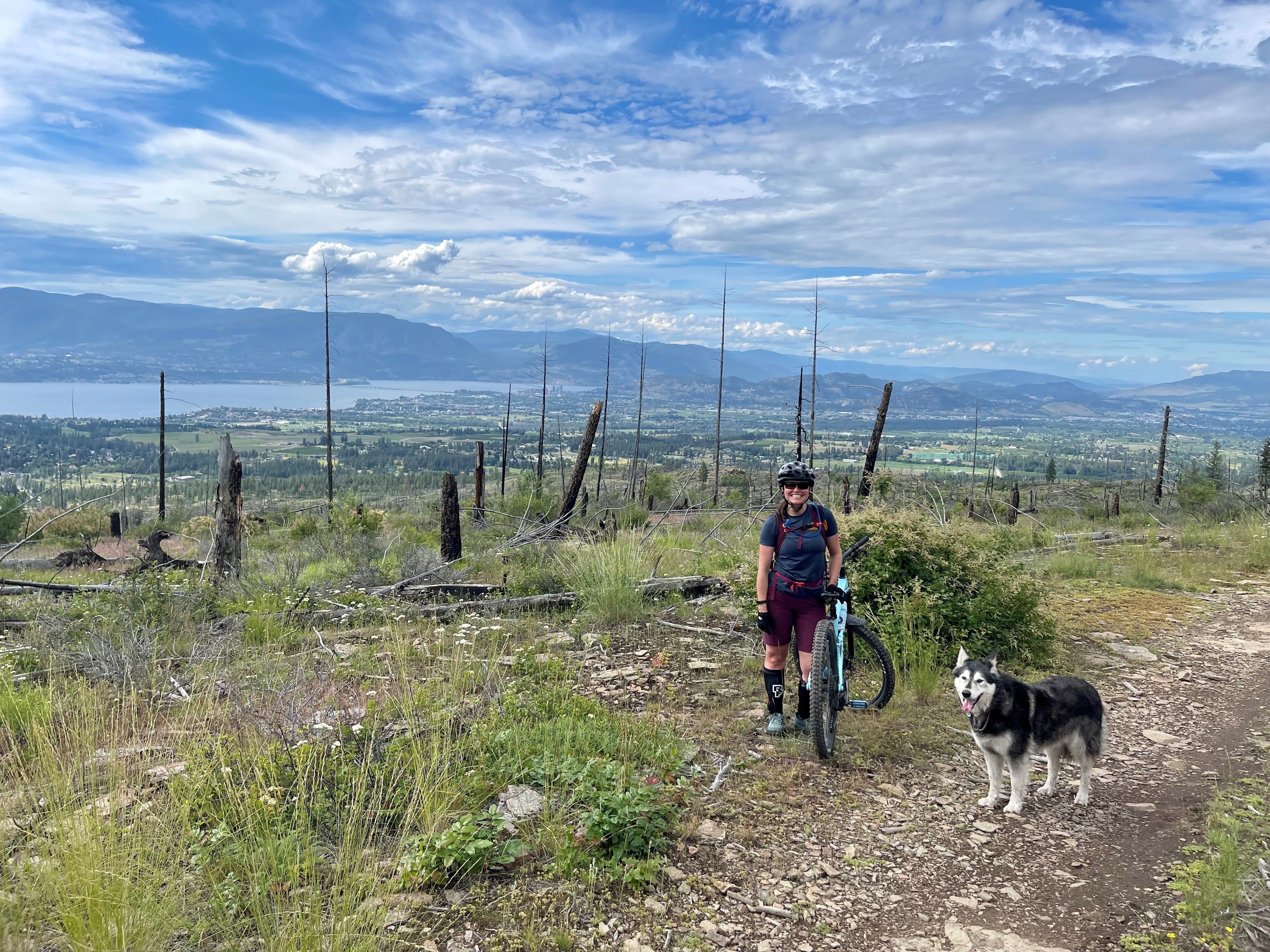
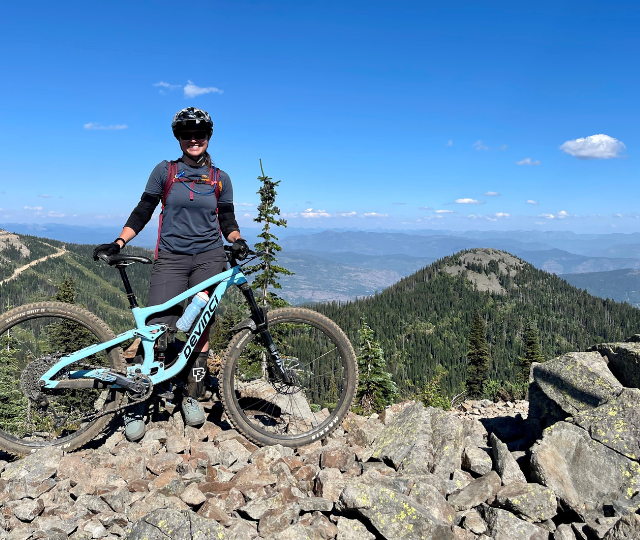
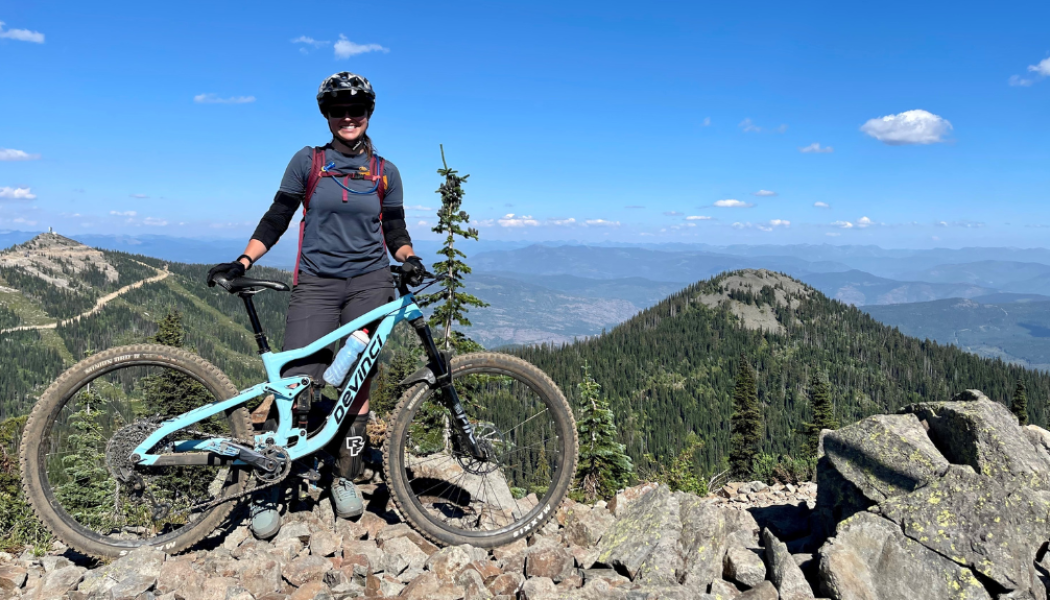
There’s little I love more than cruising down a sweet single track on my mountain bike. Add my dog and some pals into the mix and you have a recipe for my perfect day! Even though I’m a confident rider and have the skills and experience to tackle most of what the trails throw at me, things can still go sideways, and unfortunately brain injury is a real risk of the sport I love.
Earlier this spring, my season was off to a great start. I was feeling fit and confident, and even tackled a bike everyday challenge where I mountain biked for 24 days straight before a knee injury from a running accident put me out for a few days. But I recovered quickly and was back on the bike in a matter of days.
However, in mid-May I had a crash that showed me first hand the possible consequences of the sport I am so passionate about.
It was a lovely spring evening on Knox Mountain in Kelowna, on a trail I’ve done many times with a group of supportive pals, where I took a crash that caused me to experience my first concussion and started me on a new journey of recovery, learning, and rebuilding my confidence to get back on my bike.
Here’s my story of brain injury and recovery, and the lessons I learned from the experience.
A concussion can happen to anyone at any time
A concussion can happen to anyone at any time, however common causes include falls, motor vehicle crashes, and sports and recreational activities.
In my case, I hit my head on the ground after my body took the initial impact of my fall off my bike. The impact of the fall hurt, but I didn’t lose consciousness. Thankfully, I was wearing a quality full-face helmet, as well as elbow pads, knee pads, and gloves, which together helped ensure my injuries were far less serious.
A common myth around concussions is that if you don’t lose consciousness or you don’t hit your head, you don’t have a concussion. However, a blow to the head is not the only way you can sustain a concussion; a concussion can be caused by a direct blow to the head, face, neck, or a blow elsewhere on the body with an ‘impulsive’ force transmitted to the head. Concussions occur from blows to different parts of the body of varying force.
A relatively minor impact can result in a concussion while a high-force hit might not, making it difficult sometimes to know for certain whether a particular blow will lead to a concussion.
Signs and symptoms of a concussion can be delayed
Another common misconception is that if a person isn’t showing any signs or symptoms of a concussion at the time of the injury, they don’t have a concussion.
This was the case with me; in the moment I felt beat-up from the impact and a bit shook up, but I figured I was good to keep on riding the rest of the planned downhill track. Luckily, one of my friends had advance first aid training, and after assessing me and seeing the crash, made the right call to send me down the easy ride out option with a person in front of me and behind me. In the moment, I thought it might have been overkill but, in hindsight, I’m grateful for her precautionary instincts that got me down the mountain safely without risk of another fall.
In my case, like in many concussion cases, my symptoms didn’t really set in until the next morning when I woke up with one of the worst headaches of my life.
Signs and symptoms of a concussion can be delayed for several hours or even a few days following an incident. Following a potential concussion-causing event, the person should be watched for signs and symptoms for 48 hours before assuming that a concussion has not occurred.
After consulting with a friend who is a nurse in the emergency department, I determined it was best to visit my family doctor to get an assessment. It’s important to seek medical attention if the injured person is showing symptoms or behaviour that is unusual for them or concerning.
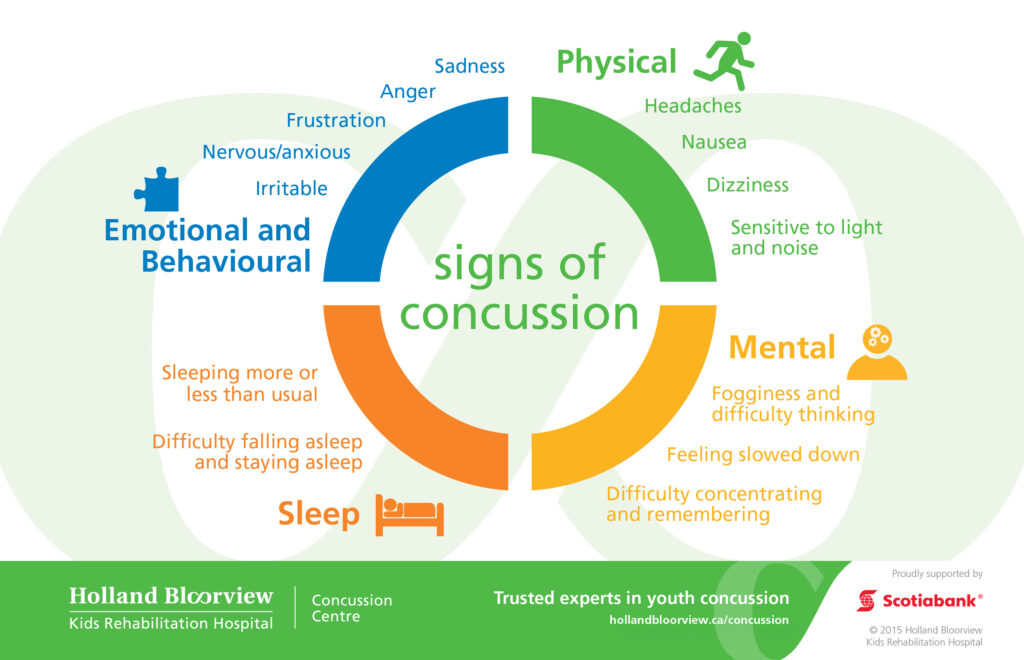
The following infographic from the Concussion Awareness Training Tool is a list of signs and symptoms consistent with a concussion. If any of these signs or symptoms are present, medical attention should be sought.

Any head injury needs to be taken seriously
What I learned from this experience is that any head injury needs to be taken seriously, and that most concussions, when managed with the guidance of a medical professional, resolve without complications. However, it's worth noting that on some occasions, concussion injuries can be more serious and can result in long-term disabilities.
The real danger of most concussions occur when the injury is not recognized or is managed incorrectly. Returning to full activity too soon may result in more severe symptoms or long-term problems. Also, returning to high-risk activities (contact sports, dangerous job duties) before full recovery and medical clearance can put you at risk of sustaining another concussion with more severe symptoms and a longer recovery period.
This was one of the hardest facts for me to swallow; I was sidelined after having just started my best biking season yet. However, with the help of my doctor and support tools like My Concussion, from Vancouver Coastal Health, I learned how to manage my symptoms and get on the road to recovery.
Respecting my limits and pushing where I could, I recovered fairly quickly and have been back on my bike for some time now. It took a bit to build up my confidence and I had to remind myself that the skills I’d built over years on my bike hadn’t gone away; I just needed to unlock them again. And, in time and with the support of my pals, I was able to do just that.
In the sport of mountain biking and many other adventure sports, we push our boundaries and that’s often what we love about the sport. Taking risks and reaching for those big rewards is what fuels us. But, when it comes to concussions, it’s important to understand they are a big deal, and someone with a concussion or a suspected concussion needs to seek medical attention: this can include going to the your family doctor, emergency department, or calling 9-1-1.
In fact, if the person shows any of the Red Flag Symptoms, call 9-1-1 immediately.
Red Flag Symptoms:
- Neck pain or tenderness
- Double vision
- Weakness or tingling/burning in arms or legs
- Severe or increasing headache
- Seizure or convulsion
- Loss of consciousness
- Deteriorating conscious state
- Vomiting
- Increasingly restless, agitated, or combative
Taking risks can make life fun, but be prepared
I hope sharing my experience doesn’t discourage anyone from taking those risks that make life so fun, but I do hope that by you reading my story and checking out the resources I shared, you feel better prepared should you or someone you know experience an injury that results in a concussion. Because, in life, there are risks and rewards, and for me finding that balance in between is what makes it worth living.
Happy Trails!
Shayne is a communications consultant for Interior Health, residing in Kelowna, B.C. She can often be found riding her bike with her furry sidekick Josie, throughout the interior of B.C.
Talking to your teens about drugs shows you care they make safe choices—it doesn't encourage drug use. Here's how to have talks with an open heart and mind.
/stories/how-talk-teens-about-drugs-and-other-substances
Cottonwoods Care Centre coordinator Lia Sambrielaz has been sharing small acts of kindness at IH for 37 years.
/stories/we-are-ih-coordinator-motivated-help-long-term-care-clients
Our 9-part video series teaches about the purpose and importance of advance care planning (ACP) and why it gives peace of mind to you and your loved ones.
/stories/lets-talk-about-advance-care-planning-your-voice-your-choice
A funding initiative is helping the Cariboo Chilcotin Métis Association (CCMA) grow food security in ways that reflect knowledge, culture and community needs.
/stories/funding-helps-williams-lake-metis-community-support-food-security
Meghan Johnston became a registered psychiatric nurse after watching people struggle to navigate the health-care system and witnessing the barriers they faced.
/stories/we-are-ih-psychiatric-nurse-finds-meaning-crisis-team-role
Jasmine Mingaud found relief and stability after connecting with the Central Okanagan PCN where a team helped her manage chronic pain and life challenges.
/stories/how-primary-care-team-changed-one-womans-chronic-pain-journey
STAY CONNECTED
Receive news, alerts, public service announcements and articles right to your inbox.