Types of imaging procedures
Medical imaging is a method doctors use to create pictures of your organs, tissues and bones. These images help them diagnose health issues and plan treatments without needing surgery.
- Bone Density Testing
- Computed Tomography (CT) Scan
- Echocardiogram
- Fluoroscopy
- Interventional Radiology / Angiography
- Magnetic Resonance Imaging (MRI)
- Mammography
- Nuclear Medicine
- X-ray (How to self-schedule your x-ray)
- Ultrasound
- Videonystagmogram
Please contact us if you have questions or comments for Medical Imaging Services. You can also ask the person conducting your procedure at the time and place of service any questions you have.
Medical imaging tests and appointments
When your health-care provider requests a medical imaging test, such as a CT scan, MRI or ultrasound, the requisition is sent to the local medical imaging facility that can do the required procedure.
Once a spot becomes available, the booking office will contact you with the date, time and location of your appointment, by phone or letter, depending on the priority of your procedure. You will also receive a text or phone call closer to your appointment to confirm the details.
Keeping your contact information up to date
By keeping your contact information such as your address, phone/cell number and email address up to date, you can ensure we can contact you without delay. You can update your information in several ways:
- By contacting your physician’s office
- In MyHealthPortal
- Through the Province of BC's Health Gateway
Self-scheduling x-ray appointments
Patients located in select communities can self-schedule their own x-ray appointments on MyHealthPortal. More locations will be available in the future. Please note a requisition from your physician is required before you book your x-ray.
Scheduling your test at another hospital
To reduce waitlists across the region and improve access to timely medical imaging services, Interior Health is sending text or voice messages to patients on select medical imaging waitlists at certain hospitals.
Waitlists at smaller hospitals are typically shorter. If you choose a nearby hospital, you will reduce your wait time, have your test done sooner, and won’t lose your place in line.
Current scheduling options
This initiative is currently being conducted for patients on a waitlist for a CT scan at Kelowna General Hospital or Royal Inland Hospital, offering the option to have your test performed at a nearby hospital.
- If you’re on the CT scan waitlist at Kelowna General Hospital, you can choose to have your test at Penticton Regional Hospital or Vernon Jubilee Hospital.
- If you’re on the CT scan waitlist at Royal Inland Hospital, you can choose to have your test at Shuswap Lake General Hospital.
We will be expanding this program to include other medical imaging tests and hospitals in the near future.
How we will contact you
A text or call will appear from a 250 area code, and sometimes an 833 area code.

You may receive a text that looks like this from Interior Health asking if you wish to schedule your test at another hospital.
If you have not received a text or voice message about scheduling your test at another hospital:
- We may not have texted or sent you a voice mail yet.
- Your hospital may not be part of the program.
- We may have an incorrect or out-of-date cell phone number in our records. Please see Keeping your contact information up to date.
- It’s possible we sent you a text and it was missed. Please know that after five days, you’ll no longer be able to respond to the message. If you find an Interior Health text that’s older than five days old, please contact the phone number in the text message for help.
If you received a text or voice message about scheduling your test at another hospital:
If you received a text or voice message about scheduling your test at another hospital and you have not replied, or if you replied but have changed your mind, please consult our frequently asked questions below, or call the number in the text or your hospital’s medical imaging department.
Frequently asked questions about scheduling your test at another hospital
We give patients five days to respond after sending a text. If we don’t receive a reply, we don’t make any changes to your appointment status. You remain on the waitlist at your hospital and will be contacted with an appointment time when one becomes available.
If you entered an incorrect number as your response, you will be able to contact us using the number provided in the text message and request a correction.
If you entered a number outside the provided options, the system informs you that it could not recognize your response and prompt you to enter a valid number again.
If an incorrect response is entered a second time, the system provides instructions to contact support for assistance. If you require further assistance, you can contact us using the number provided in the text message.

If you select "No preference," you will be scheduled at the earliest available location based on your original place in line.
 |
 |
The system can only process responses with the number corresponding to your selection. To ensure your response is recognized, please reply with the number corresponding to your selection.
By being open to having your scan completed at an alternative nearby hospital, you will have a shorter wait time and be able to have your medical imaging test completed sooner.
No, rescheduling at another location will not affect your position on the waitlist. We are offering alternative locations for medical image testing to help reduce wait times across the Interior Health region, allowing you to be seen sooner.
The goal is to offer our patients choices while balancing waitlists across the region. The texts are also meant to prompt patients to remove themselves from the waitlist if they no longer need the test. This will free up a spot for another patient.
We provide you a phone number to call in the text messages if you have any questions or if you change your mind after selecting an option.
The Interior Health booking office will contact you directly to schedule your appointment at a time that works for you.
Accessing and viewing your results
We use a region-wide picture archiving and communication system (PACS) to store, exchange, retrieve and manage medical images over a network. Your diagnostic images can be accessed by health-care professionals at any time of day from anywhere with a connection to the PACS network.
You can also access and view your medical imaging reports, including x-rays, CT scans and ultrasounds, in MyHealthPortal. Please note you will not be able to see the medical imaging scan. These images are provided to a radiologist for review.
It will take four days for your medical imaging report to show in your MyHealthPortal after a physician has viewed and signed off on the report.

Radiation safety FAQ
X-rays are used in many medical imaging procedures. They are a form of invisible energy that can pass through the body and allow us to look inside the body to find disease, broken bones, or other problems. X-rays are also a source of radiation. Find answers to your frequently asked questions about radiation below.
Your health is important to us and x-rays are only taken if needed. There is a small risk with any medical drug, test, or therapy. X-rays might very slightly increase cancer risk.
X-rays are used for mammograms, radiographs, and CT scans. When your doctor requests an exam that uses x-rays, it means that in their expert opinion the benefits gained from the imaging information outweighs any risk from the x-ray radiation.
There is very little risk from medical radiation. The main concern is the possibility of future cancer from the x-rays. The risk of cancer from an x-ray exam is a fraction of a per cent per exam, and might be zero. This risk is very small compared to the risk of naturally occurring cancer, which is between 14 per cent and 40 per cent. The dose you have received from past x-rays will not increase your chance of developing cancer from the current exam.
X-ray radiation dose is measured using millisieverts (mSv) just like temperature is measured using Celsius (°C).
Background radiation (the radiation in our environment) varies throughout our health region. Within the Interior Health region you get between 1.8 to 7.9 mSv per year depending on where you live.
Different exams require different amounts of radiation. More radiation is required to image thicker body parts. CT gives more detail and generally uses more radiation than x-ray exams.
| Exam | Radiation Dose | Equivalent Background Radiation (assuming 3 mSv/yr) |
| Knee x-ray | 0.01 mSv | 1 day |
| Chest x-ray | 0.02 mSv | 2 days |
| Lumbar Spine x-ray | 0.2 mSv | 3 weeks |
| Mammography | 0.4 mSv | 7 weeks |
| Head CT | 2.1 mSv | 8 months |
| Chest CT | 9.2 mSv | 3 years |
| Abdomen/Pelvis CT | 12.7 mSv | 4 years |
As long as your exam is clinically appropriate, the health benefits of the x-ray diagnosis far outweigh the x-ray dose risks.
Nevertheless, we always try to reduce x-ray and CT doses through radiation safety and quality assurance initiatives.
In some cases there are alternatives to X-rays. Ultrasound (US) and Magnetic Resonance Imaging (MRI) do not use x-rays and do not increase cancer risk. However, US and MRI may not provide the diagnostic information needed. Doctors know the best exam to perform to maximize the health benefit to patients.
It is safe for children to have X-rays. The doctor who requests the x-ray determines if the health benefit of the exam outweighs any potential risks from radiation.
The amount of radiation used for children is lower than what is used for adult exams. Your doctors and Interior Health employees take extra precautions when performing x-rays on children.
It is safe for people who are pregnant to have X-rays. The requesting doctor, x-ray staff, and radiologists take great efforts to identify pregnant patients. In most cases, the health benefit of having the x-ray exam far outweighs the potential risk to the unborn child. Your doctors and Interior Health employees take extra precautions for both pregnant people and people of childbearing age.
Be sure to notify your doctor or x-ray technologist if you are pregnant.
We have used patient shielding for x-ray exams for over 70 years. This practice is changing. Modern scientific studies show radiation risk from medical imaging is much lower than we thought. We now know that previous shielding practices are not necessary.
Essential care partners during medical imaging exams – Frequently asked questions (FAQ)
Interior Health supports the presence of essential care partners whenever it is safe and appropriate.
Space in waiting areas may be limited. Patients are encouraged to bring an essential care partner if they need help with communication, mobility, or other important support during their visit.
Staff will try to support the patient’s request to have an essential care partner present. If this is not possible, staff will explain why and work with the patient and essential care partner to make a plan that supports safe and quality care.
An essential care partner is a person chosen by the patient to help support them during their care. This person helps the patient feel safe, supported, and understood during their visit. An essential care partner respects the patient’s dignity and confidentiality.
An essential care partner may be:
- A family member
- A close friend
- A substitute decision maker
- A caregiver or support worker
Staff includes all Interior Health employees, students and volunteers working on behalf of Interior Health.
An essential care partner may be asked to stay outside the exam room if:
- The patient does not want them present
- Their presence could affect safety, privacy, or care
- Their presence hinders the exam or procedure
- Radiation safety or infection control rules cannot be followed
- They refuse to follow staff direction or wear required protective equipment
Yes. Depending on the exam or procedure, Essential care partners may need to wear protective equipment.
For some exams, there may be exposure to radiation. Staff will explain the risks and provide safety equipment such as:
- A lead apron
- A thyroid shield
To help prevent the spread of infection, staff may also ask essential care partners to wear:
- A mask
- Gloves
- A gown
Staff will provide the equipment and explain how to use it correctly.
Yes. If a patient is in the custody of law enforcement or correctional services, security or law enforcement personnel may stay with the patient during the exam or procedure. This may limit the presence of an essential care partner.
No. The use of personal recording devices (ex. audio, video, photography, or cameras) within the medical imaging exam room is not permitted. You will be required to delete recordings (AR1000 Photography, Videotaping & Audio-Recording in IH Owned Facilities or Served Care Areas).
Prenatal images will be offered at time of obstetrical ultrasounds.
Patient’s requesting access to medical images may obtain copies by submitting a request for access to personal health records.
Children requiring supervision must be accompanied by a responsible adult other than the patient and the essential care partner.
Travel and Indigenous support
- View travel assistance options
- If you self-identify as Indigenous, additional support information is available on the Indigenous Peoples, Families & Communities webpage
Pediatric medical imaging resources
Preparing a child for a medical imaging appointment can be easier with the right information. Interior Health’s pediatric medical imaging resources are designed to help parents and caregivers explain imaging exams in a simple and reassuring way.


Travel nurses Michaela and Nick moved from Ontario to B.C., finding careers, community and a new home in Coldstream.
/stories/2026-09-18/travel-nursing-brings-ontario-couple-new-home-coldstream
By sharing his story, Dave hopes others struggling with addiction understand that recovery is possible and that support is available.
/stories/2026-09-17/what-worked-me-daves-healing-journey-addiction
For IH, wildfire preparedness is shaped by years of experience, regular training, exercises, inventories and relationships with partners across the region.
/stories/2026-09-15/ih-prepares-wildfire-season-long-smoke-arrives
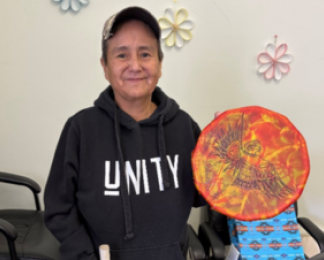
IH’s CMH redevelopment team travelled around Cariboo to reconnect with Indigenous communities and share how their input is shaping the hospital's new building.
/stories/2026-09-10/closing-circle-indigenous-communities-shaping-future-cmh
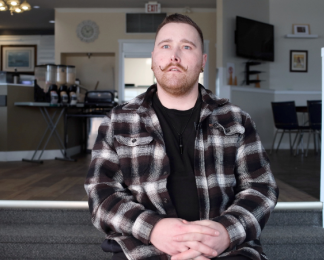
Chris Turner turned to addiction as a teenager, but through his recovery has become a mentor to give hope to others battling addiction.
/stories/2026-09-09/what-worked-me-chriss-focus-daily-skills-helps-recovery


Find tips for walking, biking or rolling to school safely. Learn how to make it safer to travel to school in your community.
/stories/2026-09-04/how-walk-bike-or-roll-school-safely
STAY CONNECTED