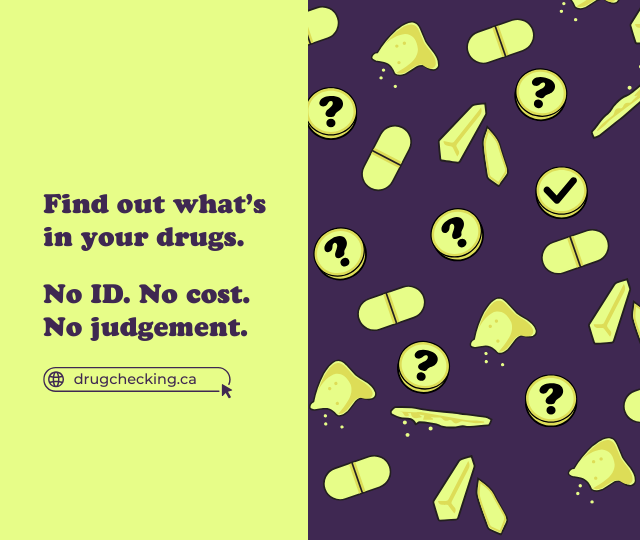
As the toxic drug emergency continues, drug checking is one way to reduce the risk of using unregulated drugs. Drug checking provides the most accurate information about what is in drugs, so people who use drugs can make informed choices about where, when and how much to use.
- The service is fast, free, confidential, and is legal at approved sites. Samples can be as small as a grain of rice and results are typically available within 10 minutes.
- The staff who provide the service are non-judgmental and, no matter the results, we don’t confiscate drugs, and they can be returned to you.
- Whatever reason you choose to use drugs; we want you to bring in or drop off a sample for testing before you use.

Where you can get your drugs checked
Interior Health has drug checking services in Kamloops, Cranbrook, Nelson, Penticton, Kelowna and Vernon. Fentanyl test strips are available for people to take home and check their own drugs, and can be picked up at close to 100 locations throughout the region. To find a drug checking location near you, visit drugchecking.ca.
How your drugs are checked
Interior Health uses FTIR (Fourier-Transform Infrared Spectroscopy), an instrument that uses infrared light to reliably detect the composition of drugs.
Drug checking also uses test strips to check for the presents of fentanyl and benzodiazepines (a.k.a benzos).
Drug checking and drug poisoning facts
- Overdose is now the leading cause of death in B.C. for people between the ages of 10 and 59, surpassing homicides, suicides, accidents and natural diseases combined.
- 53 per cent of opioids checked in the Interior in June 2025 contained benzos. The addition of benzos in opioid drugs has made overdose response more difficult because naloxone doesn’t work on benzos.
- Fentanyl is often present in all opioid-type drugs, from pressed pills like oxycodone and Percocet to “down” and heroin. It's also sometimes found in other drugs as well.
Why carry naloxone and how to use it
Naloxone is a widely available medication that can temporarily reverse the effects of an opioid overdose. It has been a vital tool in combatting the toxic drug crisis.
How to use Naloxone
Naloxone is available through the provincial Take Home Naloxone (THN) program. The program provides training and naloxone kits free of charge. For more information, visit HealthLinkBC.
Get alerts to your phone and stay safe
For up-to-date information on toxic drug alerts, sign up for text alerts by sending the keyword JOIN to ALERTS (253787). When there’s a drug or toxic drug alert, IH shares information on the Media Centre & Alerts page.
Get help today
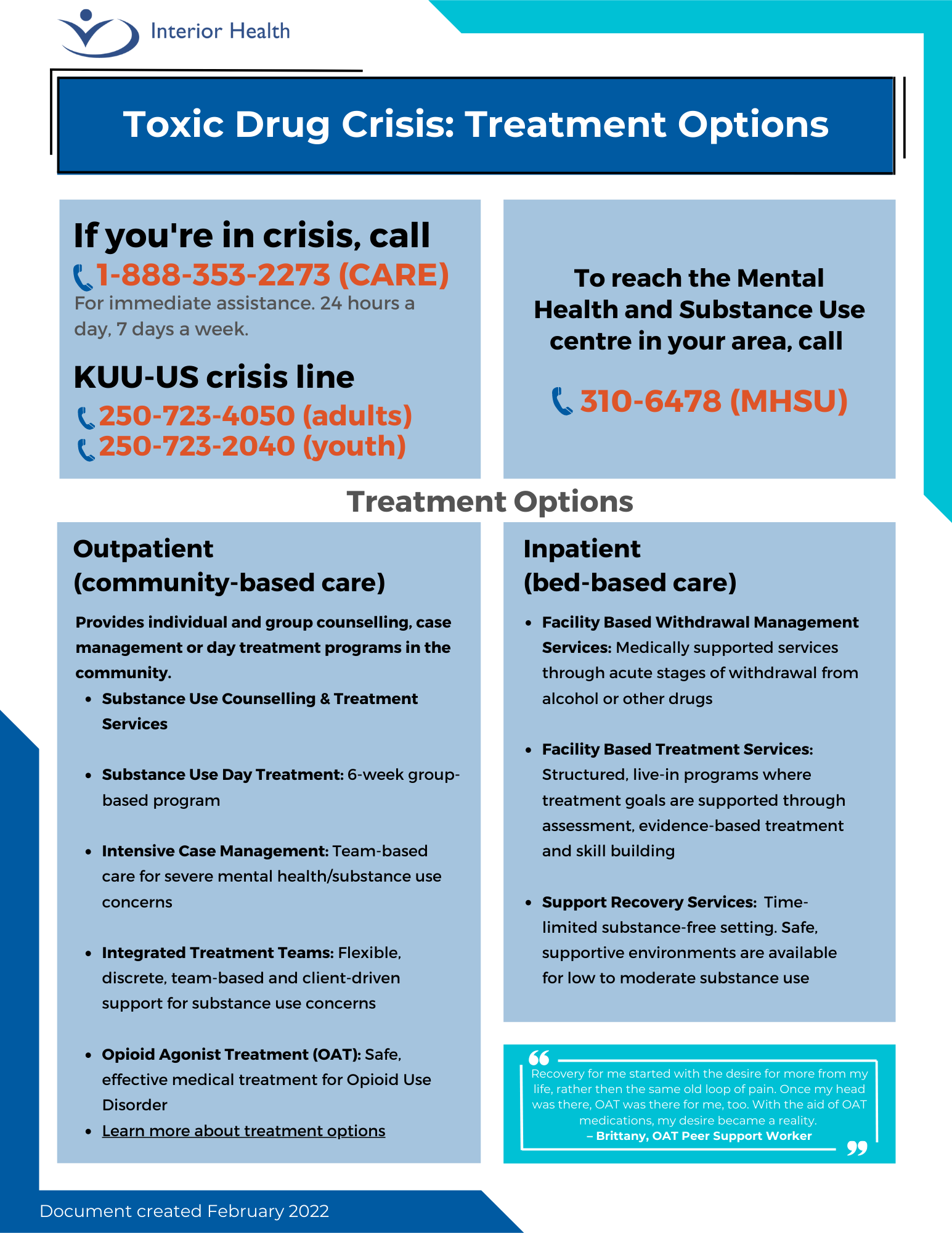
Call 310-MHSU (6478) to reach your local Mental Health and Substance Use Centre for support in your community.
If you’re experiencing feelings of hopelessness or thoughts of self-harm, you can call one of these numbers. These services are available 24 hours a day, seven days a week, including holidays:
Check out more stories like this
Talking to your teens about drugs shows you care they make safe choices—it doesn't encourage drug use. Here's how to have talks with an open heart and mind.
/stories/how-talk-teens-about-drugs-and-other-substances
Cottonwoods Care Centre coordinator Lia Sambrielaz has been sharing small acts of kindness at IH for 37 years.
/stories/we-are-ih-coordinator-motivated-help-long-term-care-clients
Our 9-part video series teaches about the purpose and importance of advance care planning (ACP) and why it gives peace of mind to you and your loved ones.
/stories/lets-talk-about-advance-care-planning-your-voice-your-choice
A funding initiative is helping the Cariboo Chilcotin Métis Association (CCMA) grow food security in ways that reflect knowledge, culture and community needs.
/stories/funding-helps-williams-lake-metis-community-support-food-security
Meghan Johnston became a registered psychiatric nurse after watching people struggle to navigate the health-care system and witnessing the barriers they faced.
/stories/we-are-ih-psychiatric-nurse-finds-meaning-crisis-team-role
Jasmine Mingaud found relief and stability after connecting with the Central Okanagan PCN where a team helped her manage chronic pain and life challenges.
/stories/how-primary-care-team-changed-one-womans-chronic-pain-journey
STAY CONNECTED
Receive news, alerts, public service announcements and articles right to your inbox.