



Spring is here and warmer weather means more people will be spending time outdoors in tall grasses or wooded areas. This can also mean an increased chance of getting tick bites.
What are ticks?
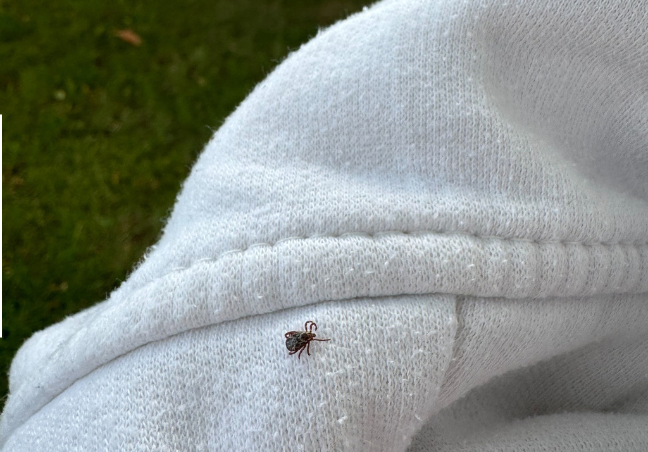
Ticks are small bugs that bite and feed on the blood of humans and animals. Most tick bites do not result in illness, but some bites can transmit disease.
Any tick bite should be cleaned because infection can occur whenever there is a break in the skin.
Fortunately, there are precautions you can take to prevent illnesses that may be transmitted from tick bites.
How to protect yourself from ticks
There are easy things you can do to protect yourself from ticks.
- Walk on cleared trails wherever possible especially if you're in areas with tall grasses or trees
- Wear a hat, long sleeves, pants and close-toed shoes
- Choose light-coloured clothing so you can spot ticks more easily
- Tuck pant legs into socks or boots and tuck your shirt into your pants
- Apply insect repellent containing DEET or Icaridin on uncovered skin
- Carefully check clothing, gear and your full body when leaving an area where ticks may live, including the scalp (covered or not), groin and underarms. If you find a tick, check very carefully for other ticks
- Check young children for ticks
- Put the clothes you wore in the dryer on a hot setting for at least 10 minutes to kill loose ticks
- Take a shower to remove any loose ticks on your body
- Regularly check household pets for ticks
- Keep grass near trees in your yard short
How to remove ticks safely
Most people don’t notice when ticks bite due to special proteins found in the insect’s saliva. That’s why it’s important to check for ticks after being in areas where ticks are found.
- Wear gloves when removing the tick
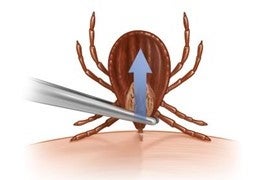
- Use tweezers or forceps to gently grasp the tick close to your skin
- Be careful not to crush the tick as this could cause it to inject its stomach contents into the bite wound and increase the chance of infection
- Without squeezing, steadily lift the tick straight out of the skin
- After removal, clean the area with soap and water. You may disinfect the wound with antiseptic cream
When to see a health-care provider to remove a tick
- See your health-care provider to remove the tick if it has buried itself deep into your skin. This happens if the tick has been on you for several hours or days.
- When a tick has burrowed deep into your skin, it is very hard to remove the tick without leaving some mouth parts behind, which can cause an infection.
- You can also see a health-care provider if you have concerns or need assistance removing a tick.
What are the symptoms of tick-borne diseases?
The symptoms of many tick-borne diseases can be quite similar:
- Fever
- Headache
- Muscle and joint pain
- Rash
These can occur days to weeks after a tick bite.
In rare cases, toxins released from ticks can lead to paralysis, especially if the tick is attached for several days. But the symptoms fade once the tick is removed.
Lyme disease is the most common tick-borne disease in B.C. and North America. In B.C., less than one per cent of ticks tested carry the bacteria B. burgdorferi that cause Lyme disease.
Most ticks in the Interior region are the wood tick which do not carry the Lyme disease bacteria. The wood tick can carry other diseases, however, such as Rocky Mountain spotted fever, although these diseases are rare in Canada.
If you have symptoms after being bitten by a tick, report them to your health-care provider right away. Lyme disease and other tick-borne infections can be treated with antibiotics and early diagnosis and treatment can help prevent complications.
Check out more stories like this


3 Minute Read
Community & Culture
Travel nurses Michaela and Nick moved from Ontario to B.C., finding careers, community and a new home in Coldstream.
/stories/2026-09-18/travel-nursing-brings-ontario-couple-new-home-coldstream


3 Minute Read
Community & Culture
By sharing his story, Dave hopes others struggling with addiction understand that recovery is possible and that support is available.
/stories/2026-09-17/what-worked-me-daves-healing-journey-addiction
6 Minute Read
Health & Wellness
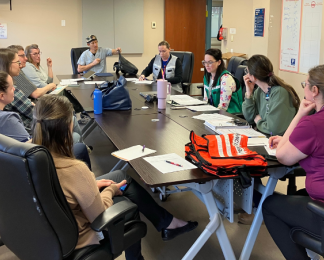
For IH, wildfire preparedness is shaped by years of experience, regular training, exercises, inventories and relationships with partners across the region.
/stories/2026-09-15/ih-prepares-wildfire-season-long-smoke-arrives

3 Minute Read
Community & Culture
IH’s CMH redevelopment team travelled around Cariboo to reconnect with Indigenous communities and share how their input is shaping the hospital's new building.
/stories/2026-09-10/closing-circle-indigenous-communities-shaping-future-cmh


3 Minute Read
Community & Culture
Chris Turner turned to addiction as a teenager, but through his recovery has become a mentor to give hope to others battling addiction.
/stories/2026-09-09/what-worked-me-chriss-focus-daily-skills-helps-recovery


5 Minute Read
Health & Wellness
Find tips for walking, biking or rolling to school safely. Learn how to make it safer to travel to school in your community.
/stories/2026-09-04/how-walk-bike-or-roll-school-safely
STAY CONNECTED

Top