Dear Community Leaders,
As we look towards summer 2023 with the potential of extreme heat and wildfires, Interior Health (IH) would like to share information and resources that can help protect residents in our region. We know that extreme heat and wildfire smoke can be serious health hazards. While weather events are outside our control, we can work together to prepare and apply what we have learned in recent years.
Heat and health
Heat events are projected to become hotter, more frequent and longer as the B.C. climate changes. Prolonged periods of extreme heat can lead to severe illness and death, and heat is the leading weather-related cause of death in Canada. People can be impacted differently and some are more at risk than others. Seniors, people with mental health conditions and children are most vulnerable to being harmed by extreme heat.
Indoors vs. outdoors
During the 2021 heat dome, the majority of deaths across B.C. occurred indoors in private residences. Inside our homes, temperatures continue to rise after the sun goes down and the evening is when indoor temperatures are the highest. This can be especially dangerous when there are consecutive hot days.
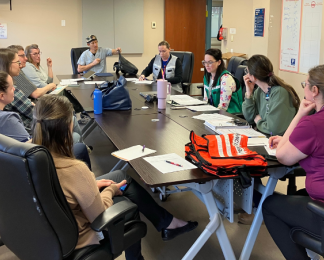
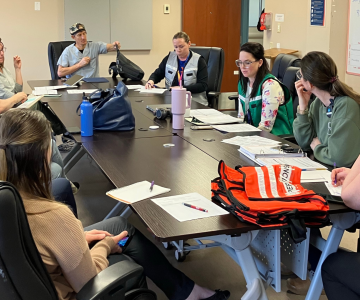
Being prepared can save lives during extreme heat. We encourage local governments to make plans and identify cooler spaces in the community, both inside and outside, and to help people who may need assistance to set up or move to cooler places during a heat event.
Preparing for extreme heat
BC Provincial Heat Alert and Response System (BC HARS): 2023 lays out criteria that Environment and Climate Change Canada (ECCC) will use to issue a Heat Warning or an Extreme Heat Emergency. Additionally, many municipalities are developing their own heat response plans. Preparing for extreme heat by developing systems and plans can save lives.
Actions community leaders can take:
- Develop a community preparedness and response plan for extreme heat - here is an example from the Village of Ashcroft
- Prepare community heat messages using trusted information from the British Columbia Centre for Disease Control (BCCDC) and/or Interior Health, and amplify heat warnings as appropriate
- Promote and encourage neighbourhood check-ins during heat events, especially for the elderly and those more socially isolated
- Extend the operating hours of cooled spaces (e.g., libraries, community centres) and publicize their locations/hours through all feasible media sources
- Provide extended public access to amenities like drinking water, spray parks, swimming pools and shaded/covered areas
- For rural communities, consider using a local school, meeting hall or other gathering place (including shaded outdoor areas) as a temporary cooling space
- Consider establishing overnight cooling centres to support populations susceptible to heat
Actions Interior Health will take:
- Support the development of community heat preparedness and response plans
- Participate in regional briefing calls with local governments and First Nations to provide public health advice
- Share heat warnings and broadcast public health messages about the prevention of heat-related illness
- Provide public health messages that can be shared through community heat response communications
- Develop and implement Interior Health organizational heat response plans
- Monitor clients and patients who are vulnerable to heat-related illness
- Provide public health surveillance data from previous heat events to inform decision-making
Smoke and air quality
As summers get hotter, wildfire activity due to climate change is predicted to increase. While heat is often more localized, wildfire smoke can blow in from other provinces and other countries; poor air quality can persist for days and be unpredictable.
People exposed to wildfire smoke may experience health impacts such as irritation of the nose and throat, cough and shortness of breath. People with chronic lung or heart conditions, infants, children and pregnant people, are at higher risk of complications.
Steps local governments can take to protect community members from the health impacts of wildfire smoke are:
- Pay regular attention to local air quality advisories and publically share smoky skies bulletins; notice the levels of fine particulate matter (PM2.5)
- Create or locate clean air shelters, or cleaner air spaces available to the public (libraries, shopping malls, community centres, etc.)
- Educate residents about hazards and provide a plan to follow in case of a wildfire and/or smoke
- Consider re-scheduling outdoor public events to reduce time spent outside in smoky conditions
Of special note
- If there is extreme heat during an air quality advisory, people should prioritize cooling down. Heat is typically more dangerous than short-term exposure to poor air quality
- While fans can help you feel more comfortable, they do not lower body temperature when outdoor and/or indoor temperatures are over 35C. At that point, fans simply blow hot air over the skin and can cause increased body temperature. When outdoor air temperatures are cooler than indoor air temperatures, use fans in windows to blow cooler air from outside into a room
- Preparing for heat, and managing the health risks of extreme heat, must centre on those who are socially isolated and living with lower socio-economic status
Interior Health is committed to working with community partners in all sectors to protect the health of the population. The IH Healthy Communities Program and Office of the Medical Health Officers are available to support community planning related to heat and wildfires. You can find your assigned Healthy Communities team member here. Please contact us at healthycommunities@interiorhealth.ca
Sincerely,
(Signed)
Dr. Martin Lavoie
Interim Chief Medical Health Officer
Dr. Silvina Mema
Deputy Chief Medical Health Officer
Dr. Carol Fenton
Medical Health Officer
Dr. Jonathan Malo
Medical Health Officer
Dr. Sue Pollack
Medical Health Officer
Dr. Fatemeh Sabet
Medical Health Officer