
Breadcrumb
Explore Stories
Health & Wellness
Ticks are arachnids that feed on animal blood in order to grow and reproduce. Compared to insects, which have six legs, ticks, like spiders and other arachnids have eight legs.
They are hematophages, meaning they meet all their nutritional needs through eating blood, and need a blood meal to grow from one life stage to another. This adaptation evolved 120 million years ago!
Did you know ticks have special proteins in their saliva that prevent animals from noticing that they have been bit? Some researchers are studying these proteins to try to develop medicines.
Ticks cannot fly or jump, so adult ticks “quest” for an animal to bite by climbing to the top of tall grasses and other vegetation, holding on with a few legs and extending the others so they can hop on to an animal (such as a deer, dog or human) as they brush past. They need the grass in order to quest, but they like to stay in the shade, so they are most often found in grassy areas close to trees.
There are more than 20 species of ticks found in British Columbia. The main species of ticks that bite humans in B.C. are the Rocky Mountain Wood Tick and the Western Black-legged Tick. You can read more about B.C. ticks here.
Most of the time, tick bites are harmless. We know from testing programs that the risk of infection from a tick bite is very low (only around one per cent of ticks tested in B.C. have the bacteria that can cause Lyme disease). Even if a tick has a germ that can cause illness, removing the tick within 24-36 hours of a bite can prevent an infection.
Prevent tick bites: Keep grass near trees in your yard short, so that adult ticks don’t have a place to climb up. When hiking, stick to defined trails rather than walking through long grass. If that’s not possible or likely, wear long pants. You can tuck your pants into your boots or socks to make sure no ticks can get inside. You can also use an insect repellent that contains DEET.
Check for ticks: You likely won’t feel tick bites so it’s important to check for ticks. After spending time in the outdoors, check yourself and your loved ones (especially kids and/or dogs) for ticks. Ticks prefer areas with thin skin, so they usually climb towards the groin, armpits or head/neck, so be sure to check all those places.
Remove ticks: Learn how to safely remove a tick yourself. If you’re not comfortable, you can see your family doctor to help you remove a tick and submit it for testing.
Submit ticks for testing: Ticks found on B.C. residents can be tested for free at the BCCDC Public Health Laboratory if submitted by a physician. Commercial tick tests are not recommended. If you’ve removed a tick yourself, and you want to submit it for testing, save it for your doctor by putting it in a container with a tight lid with a damp cotton ball to keep it alive. Write down the location where you think the tick came from, and make an appointment with your doctor as soon as you can.
Community & Culture
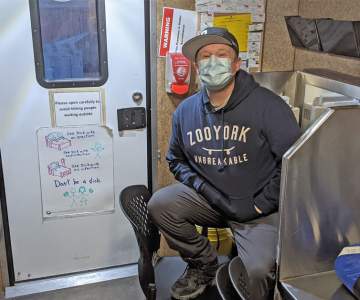
Fifty-year-old Shane is an active volunteer, a former hockey player and a trivia buff.
Like many couples, he and his wife Joanne often tease each other.
“She doesn’t have a volume switch. I’ve been trying to find it for years,” he says of Joanne, who is so soft-spoken you need to lean in close to hear her.
“I didn’t come with a volume switch. Or a return policy,” Joanne quietly quips back.
Joanne and Shane moved to the Okanagan a few years ago, but it wasn’t easy. They spent time living outdoors when they were unable to find housing. Money ran out quickly.
Having experienced both substance use issues and homelessness, they know about shame and blame firsthand.
“Every homeless or drug addicted person I know has been impacted by stigma. If you carry a back-pack, you’re not allowed to use a washroom, even in a business where you eat every day,” Shane says.
”Stigma is everywhere. We need to get rid of it, for everyone. Not just for the homeless or addicted but as a race.” He pauses. “Whoa I’m getting deep now, holy cow.” He laughs to lighten the mood, but his words are true.
It was the impact of stigma that spurred Shane to begin advocating for marginalized people in their community. He is a co-founder of VEPAD – Vernon Entrenched People Against Discrimination – a support group of sorts, that is active in harm reduction efforts, community clean-ups, and education.
“Don’t paint everybody with the same brush and don’t be so quick to judge. It can happen to anyone. I’m proof of that,” Shane says. “I come from an upper middle class family. I was always a confident person until 10 years ago.”
“I’d never used drugs in my life. I didn’t drink much. All of a sudden one night I had a line of cocaine put in front of me, and I fell in love with it right then and there. I couldn’t get enough of it. I lost everything to it.”
The stigma surrounding homelessness and substance use weighs on you, Shane says, until you are looking down all the time and it feels like nobody cares about you.
When they were invited to share their lived experience at a business event, Shane realized how many people and agencies there are in town that do care.
“And now I guess we’re one of them,” he says, referring to VEPAD. “And I like that.”
Watch the video and learn about Shane's story. Check out more resources about stigma and substance use. Help #EndStigma.
Shane’s story is part two in a four part series of stories and videos about the stigma faced by those impacted by substance use.
Health & Wellness
We live in a society that not only normalizes alcohol use, but seems to endorse it. “It’s 5 o’clock somewhere,” after all.
Alcohol consumption has been steadily increasing over the years, and according to the University of Victoria alcohol monitoring project, people living in the Interior Health region have the highest rate of alcohol consumption in the province.
The risks of alcohol consumption
“Alcohol is such a common substance in our culture that the harms are often overlooked,” says Substance Use Practice Lead Amanda Lavigne.
According to the BC Centre for Substance Use, high risk drinking can lead to disease, social problems, and economic costs.
Each day 10 Canadians die in hospital from harm caused by substance use, and three in four of these deaths are due to alcohol.
These harms have been magnified during the COVID-19 pandemic as many people turn to alcohol as a coping tool, and this behaviour is being normalized on social media. Although humour itself is often used to help cope with stress, this can have the unintended effect of making uncommon consumption behaviours seem more socially acceptable.
Humour such as memes on social media can normalize high-risk drinking.
According to the Canadian Centre on Substance Use and Addiction, 25 per cent of Canadians aged 35-54 and 21 per cent aged 18-34, reported an increase in their alcohol consumption while spending more time at home due to physical distancing and self-isolation protocols. Some of the reasons for increased alcohol use include a change of schedule, boredom, and stress during the COVID-19 pandemic. A May 15 article from The Capital states that in just two months, B.C. has sold four Olympic swimming pools of “extra booze”, saying it is likely “the sharpest spike in collective drinking since the end of prohibition.”
Alcohol negatively impacts the immune system, putting those who consume it at higher risk from the potentially dangerous COVID-19 virus.
How COVID-19 can add to the risk of withdrawal
People with alcohol use disorder may have their supply interrupted due to self-isolation, or financial hardship. Marginalized people, such as those without homes or jobs, may rely on pan-handling and collecting cans and bottles in order to buy alcohol, however during COVID-19 they are being significantly impacted due to recycling depot closures and limited public interaction.
This can increase the likelihood of withdrawal, which can be deadly in the case of some high-risk drinkers.
In response to this, Interior Health has implemented managed alcohol programs in Kelowna, Kamloops and Vernon with ongoing planning to expand to other communities.
Kelowna Mental Health and Substance Use Manager Nadine Rigby recalls one client’s reaction: “The client was almost in tears when he received his first dose. He was extremely grateful and stated that he couldn’t believe that we cared enough to provide this service for him.”
“Without this program, he would have gone into withdrawal and ended up in hospital.” Nadine Rigby, MHSU Manager
While the managed alcohol programs focus on the most vulnerable population in this pandemic, safer drinking guidelines should be followed by everyone who uses alcohol. Low-risk drinking guidelines recommend less than 10 drinks a week for women, with no more than two drinks a day most days, and 15 drinks a week for men, with no more than three drinks a day most days.
“Taking a harm reduction approach can help everyone who consumes alcohol. Harm reduction could look like diluting your wine with soda water and ice or having a non-alcohol beverage in between drinks to slow down consumption,” says Amanda.
Want to learn more?
If you are concerned about your alcohol consumption, talk to your primary care provider about creating shared goals and improving your health.
Check out these helpful resources and sources of information:
Canadian Center on Substance Use and Addiction: Alcohol
Canadian Institute for Health Information
COVID-19 Alcohol and Cannabis Use
Canada’s low-risk guidelines (also see video)
COVID-19- Safer drinking tips
BC Alcohol consumption (statistics)
Interior Health Substance Use Services
Alcohol: Drinking and Your Health (HealthLinkBC)
Alcohol and Immune System
Community & Culture
Medical students based at the UBC Okanagan campus in Kelowna are helping front-line physicians in the battle against COVID-19 in the B.C. Interior.
With the temporary suspension of clinical training in hospitals and clinics across the province, many medical students began looking for other ways to support physicians and patients during the pandemic.
Over 80 students joined the B.C. COVID-19 medical student response team, a UBC student-led initiative supporting physicians and volunteer projects in all regions of the province.
“Volunteering is a tangible and effective way to make a difference,” says Alex Monaghan, medical student and volunteer organizer. “We wanted to get involved out of appreciation and gratitude for those working to keep us protected and safe.”
From providing childcare and personal assistance to physicians, to supporting patients remotely, students have rallied together to offer their support across the Interior Health region.
Students have helped configure tablets with video messaging applications to help patients at Kelowna General Hospital (KGH) stay connected with their families. They also recently launched a meal preparation and delivery service to support physicians and their families.
“As we adjust, both personally and professionally to the new realities of life with COVID-19, I’m deeply encouraged by the generosity and solidarity of this newest generation of future physicians,” says Dr. Sarah Brears, Interim Regional Associate Dean for the Southern Medical Program and family physician. “The extra support they’re offering to the community is helping many physicians stay focused on their work and their patients.”
Medical student Brian Hayes is one of the volunteers helping out by entertaining the busy 18-month old of a local physician working at KGH.
For Hayes, volunteering is a small way to give back during an unprecedented time.
"As individuals committed to providing care to the public, we have a strong desire to assist those on the front lines,” says Hayes. “Volunteering our time to support physicians with an inflated workload or help with projects such as contact tracing allows us to be engaged in the COVID-19 response."
As the COVID-19 pandemic continues to evolve, students remain committed to volunteering with projects that can support physicians, patients, and the health-care system as a whole.
“We chose medicine because we have a deeply ingrained desire to make a difference in the lives of those around us,” says Monaghan. “Those values don’t disappear just because there’s a pause in our clinical training. We’re here to help in whatever form that takes.”
Reprinted with permission from The University of British Columbia, Okanagan Campus
Community & Culture
Dealing with a severe speech disorder and transitioning from hospital to home was more than enough for the Freeborn family to cope with. Adding COVID-19 to the mix and hospital visitor restrictions, and problems could have easily gone from bad to worse.
Despite those challenges, this family was able to find a way around those obstacles, with the help of Kelly Talbott, a speech language pathologist at Kelowna General Hospital (KGH).
Larry Freeborn was in hospital dealing with Wernicke’s aphasia, a disorder which makes it difficult for him to understand the meaning of spoken words and sentences. This condition also makes it a struggle for him to use words to express himself in a meaningful way.
Earlier this month, Larry was finally well enough to go home. Prior to leaving KGH, Larry and his family needed help figuring out how to communicate with each other. But with physical distancing regulations at the hospital, the ideal process of face-to-face education in the same room was not an option.
So Kelly devised a work-around to help this family get the support they needed at a critical time in their lives. In the days leading up to Larry’s transition home, Kelly joined his family from a safe distance on their daily visits with Larry though a hospital window.
Through the window, she demonstrated the techniques this family would need to be successful communicating with each other.
Although life inside and outside the hospital is not what it used to be, creativity and a people-focused approach made a big impact in the lives of this family.
Health & Wellness
Is there an older adult in your life? Staying connected despite social distancing can be a real challenge.
Community & Culture
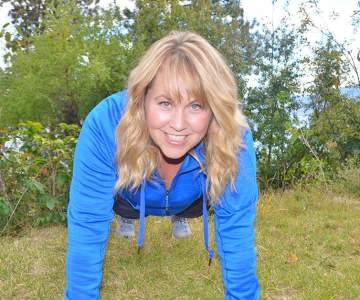
Jill is blond, fit and full of energy. She often wears her hair in a bouncy ponytail. But there is a sadness around Jill’s eyes that somehow conflicts with the spring in her step.
The Okanagan mother of two recently retired from a career as a renal nurse. She spends her days in the mountains, running and hiking. Her favorite place to go is the hills behind Penticton, where she can spend time in the quiet and lose herself in memories of time spent with her son Daniel, who also loved the outdoors. Sadly, Daniel fought demons even a mother’s love couldn’t help.
Daniel died in 2016 from a fentanyl overdose. It was a week before his 24th birthday. After years of battling addiction, he had been substance-free for 17 months. The family was getting ready to celebrate together. But he died alone in his car outside a Kelowna park. It was the car they had so much fun buying together – a G37 Infiniti that Daniel loved.
Looking back, Jill says she had underestimated the risk of relapse and the role of stigma. “He was too ashamed to come to us and tell us that he had relapsed, that he needed help,” she says.
Many people don’t realize that opioid use disorder is a chronic relapsing condition, and there can be tremendous stigma about relapse because it is felt to be a personal failure.
“I can't change what happened that day,” Jill says. “What I can do is use the pain of my loss to help me be more aware of the suffering of others, and try to be more open in sharing my emotions and vulnerabilities. I have learned so much from Daniel, both through his life and sadly his death. His death has transformed me. How could it not?”
“Living without one of your children is the most unnatural way for any mom to live out her years. I have learned how to connect more deeply and meaningfully with my family, friends and life… One of the many gifts that Daniel left for me.”
Watch the video and learn about Jill and Daniel’s story. Check out more resources about stigma and substance use. Help #EndStigma.
Jill's story is part one in a four part series of stories and videos about the stigma faced by those impacted by substance use.
Health & Wellness
It’s Valentine’s Day and Cupid’s arrow will strike far and wide. So let’s take advantage of this love-themed month to debunk a few myths about sex and older adults.
Sexual feelings do not disappear as you age
There are many taboos around sex and older adults. One such myth is that older people should not, cannot, or would not want to have sex.
“I typically get lots of questions about sex from clients at my clinics,” says Mary Kjorven, a nurse specialist in gerontology and nurse continence advisor at Interior Health. “Many older adults find it difficult to talk about sex because they feel there is a stigma about having sex at an older age. Their families, who might prefer to think of mom or dad as asexual, often perpetuate this belief. But sex and sexuality is really important to quality of life as you get older.”
Sexual experiences and how we express sexuality changes.
“As with all stages of life, personal relationships, experiencing joy in life and being present in the moment are very important to older adults,” says Shannon Paul-Jost, a clinical nurse specialist in gerontology. “Sex is a way to affirm these feelings. As people age, the frequency or ability to perform sex may modestly decline, due to physical abilities such as erectile dysfunction or vaginal dryness; however, the majority of older adults are enthusiastic about sex and intimacy.”
When Frank and Kathy’s kids left home, the couple discovered a whole new intimacy in their relationship – a side that had been somewhat restricted when teenagers were wandering the house at night.
“People assume older adults don’t have sexual desires. That’s just not true. In fact, it’s essential to revive or continue physical intimacy in our so-called golden years,” says Kathy, with a wink at her husband.
Illness, medication and health conditions can play a role in changing life in the bedroom.
A person’s health, as opposed to their age, can affect sexual ability and experience.
Poor health or chronic health conditions, such as heart disease or arthritis, make sex and intimacy more challenging. Certain surgeries and many medications, such as blood pressure medications, antihistamines, antidepressants and acid-blocking drugs, can also affect sexual function.
“Many older people feel embarrassed about asking their health-care provider about sex,” says Shannon. “They might feel unsure about the reaction to their questions, or worry there isn’t enough time in their appointment.”
While certain health conditions can affect desire and sexual ability, many people still want and need intimacy, and continue to have sexual desires as they grow older. “Often all that’s required is a little more creativity,” says Shannon. “Minor adjustments, such as taking more time, trying a different position or using props may be required to ensure sexual experiences continue to be fulfilling and satisfying.”
”Our decision to honour and protect our sex life is one reason we have such a close relationship even in our 70s,” says Kathy.
Health & Wellness
I’m already planning what I want to cook for the December holidays. I’m thinking of a dinner that’s a little less traditional this year and I'm looking at lemon risotto and stuffed squash recipes. I get excited about the holidays every year. For some reason cooking for celebrations is a completely different experience for me than the Monday to Friday grind of just getting a meal on the table.
As I was flipping through my cookbooks, my mind was drifting to all of the things that I take for granted and that I should give thanks for; things like being healthy and being able to afford the groceries for this meal.
Times are tough right now. More people are using food banks each year. I've been thinking about how difficult it must be to make a special meal when you're struggling to make ends meet.
People who don't have enough money to buy high-quality food are sometimes called "food insecure." Research shows that having enough nutritious food to eat is important to your health. Those who don't are more at risk of many health conditions including diabetes, heart disease, hypertension, back problems, and poor mental health. Kids with food insecurity have a higher risk of childhood mental health problems, asthma, and depression.
But why? Shouldn’t it be those folks planning rich holiday feasts who have a greater chance of heart disease? It turns out that it’s not that simple.
Not surprisingly, people who are able to buy healthy food are also more likely to have well-paid work, live in good neighbourhoods and afford a fitness pass. Living on a low income, having an unhealthy work environment, and paying a lot for housing, childcare and transportation are stresses that contribute to poor health. On top of all that, unhealthy, highly processed food is usually cheap, while fresh vegetables and fruit can be expensive.
It’s a problem with no easy fix. The good news is that there are many community organizations and local governments that are working to tackle these complicated problems, and Interior Health’s Healthy Communities Program is working alongside many of them.
-
Showing 675 of 675
Sign up for email updates
Receive news, alerts, public service announcements and articles right to your inbox.