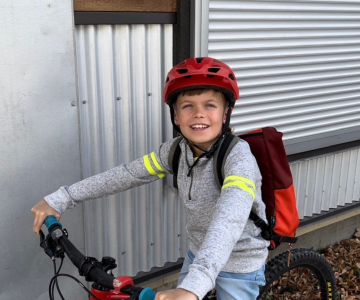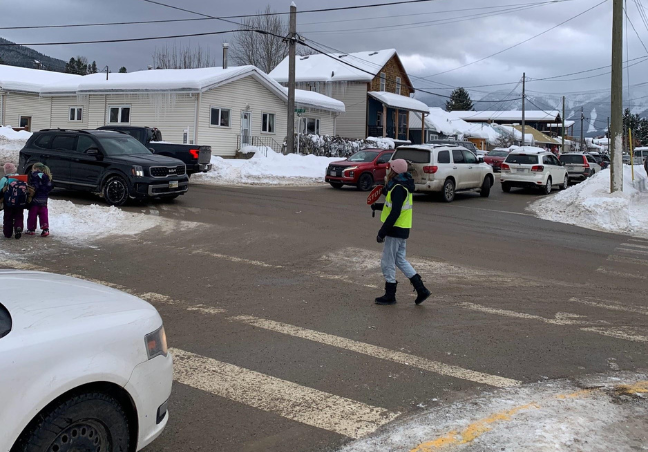
Community grants to help make roads safer in the Interior region
Residents in 50 communities across B.C. will soon be able to walk, cycle and move more safely, thanks to support for new infrastructure and traffic-calming measures.
The Vision Zero in Road Safety Grant Program awards funding to projects to improve road safety, make active transportation accessible and prevent injuries. This year, a record 17 Vision Zero grants were awarded in the Interior Health region to local and Indigenous governments, non-government organizations and parent advisory committees.
Find out if your community was awarded a grant
Shianne Bains is Interior Health’s (IH) Injury Prevention and Safety Promotion lead. She’s a member of IH’s Healthy Communities Team and the BCCDC Injury Prevention Team, and is on the Vision Zero selection committee.
“This year, funded projects included new and upgraded pedestrian crossings, infrastructure upgrades such as intersection narrowing and speed bumps to reduce vehicle speed, and construction of new multi-use paths for active road users,” says Shianne.
“These projects are not only making our roads safer, but also strengthening our partnerships with communities. When we invest in safer ways for people to move, we’re investing in health and reduced injuries and deaths on our roads.”
In this story, we highlight two of the award recipients and what they plan to do with their funding.
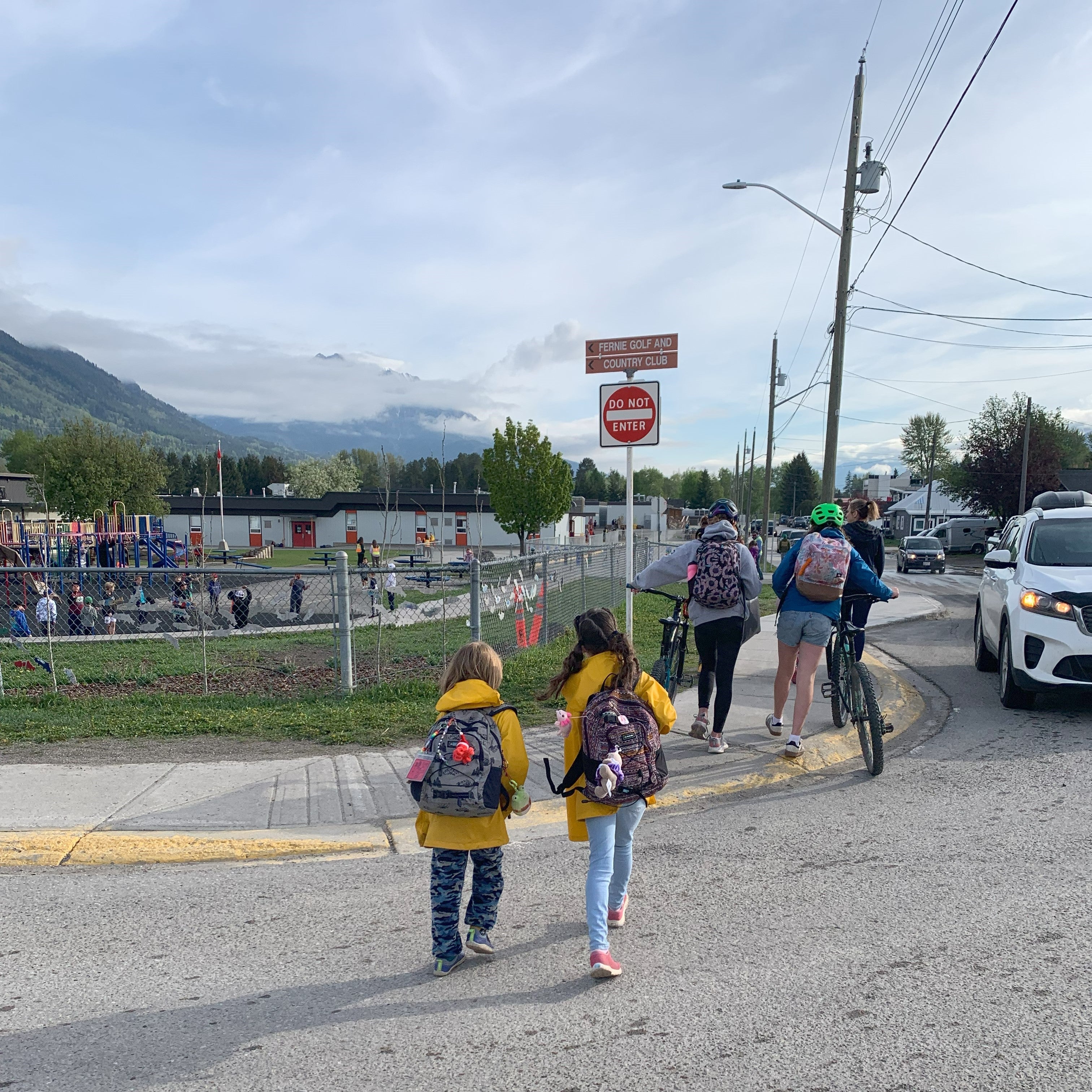
Fernie, B.C.: A safer school zone for a busy elementary school
Fernie is a rapidly growing resort town in the East Kootenays. The town’s only public elementary school, École Isabella Dicken School, is a hub for the small community of 6,300. A basketball court, two playgrounds and the city’s running track make the area around the school busy year-round.
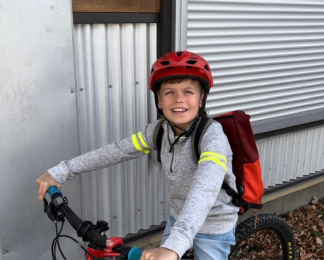
The school of 575 students is located on one of the town’s busiest streets. Before and after school, children and their caregivers travel on foot, by bike and by car, making for some very busy intersections. Many students live rurally, too, and four large buses enter and exit the school grounds each day.
School support staff have been asked to temporarily help manage both crosswalks before and after school as crossing guards.
The Parent Advisory Council (PAC) for École Isabella Dicken Elementary School was concerned for student, parent and staff safety.
“Fernie is a very active community. We knew that if we could improve the safety of the crosswalks that students use to get to and from school, that more of them would feel comfortable and confident travelling on foot or by bike,” says Scott Bailey, a school parent and PAC volunteer. “Encouraging active transportation would also help take a few more cars off our busy streets.”
The PAC applied for and was awarded a $20,000 Vision Zero grant to install a sign that flashes a driver’s speed, and flashing pedestrian beacons. These devices are designed to get drivers’ attention and aid pedestrians and cyclists in accessing and exiting the school safely every day.
“We are very grateful to Vision Zero BC, our school, School District 5 and the City of Fernie for working with us and coming together to support safer and more active routes to school for our kids!” adds Scott.
District of Lake Country: Protecting vulnerable road users
In early 2024, a citizen reached out to Dr. Silvina Mema, Interior Health’s deputy chief medical health officer, about road safety concerns in Lake Country. The citizen is part of a group called SAFR —Safety Awareness Friends & Residents—made up of residents in the area.
Tanya Osborne, a community health facilitator with IH's Health Community Development team, was inspired. “Collaboration is key to creating healthy communities,” she shares. “It was clear that SAFR had laid a lot of groundwork in the community, and by working together, we can create meaningful and lasting change.”
A community comes together
The SAFR project is about a community coming together in innovative and inclusive ways to create safer roads within the District of Lake Country.
In September 2024, SAFR hosted an idea generator workshop with interested parties, facilitated by Tanya, and featuring a talk by IH's Injury Prevention and Safety Promotion lead Shianne Bains.
“Through collaboration between residents, local organizations and our partners, we are taking meaningful steps to protect vulnerable road users while fostering a stronger, more connected Lake Country,” says Mayor Ireland. “This initiative reflects our commitment to innovative solutions that prioritize the well-being of everyone who travels these roads. Projects like this are an excellent example of the community and the municipality coming together to address issues that impact our daily lives.”
Tapping marketing students for innovative ideas
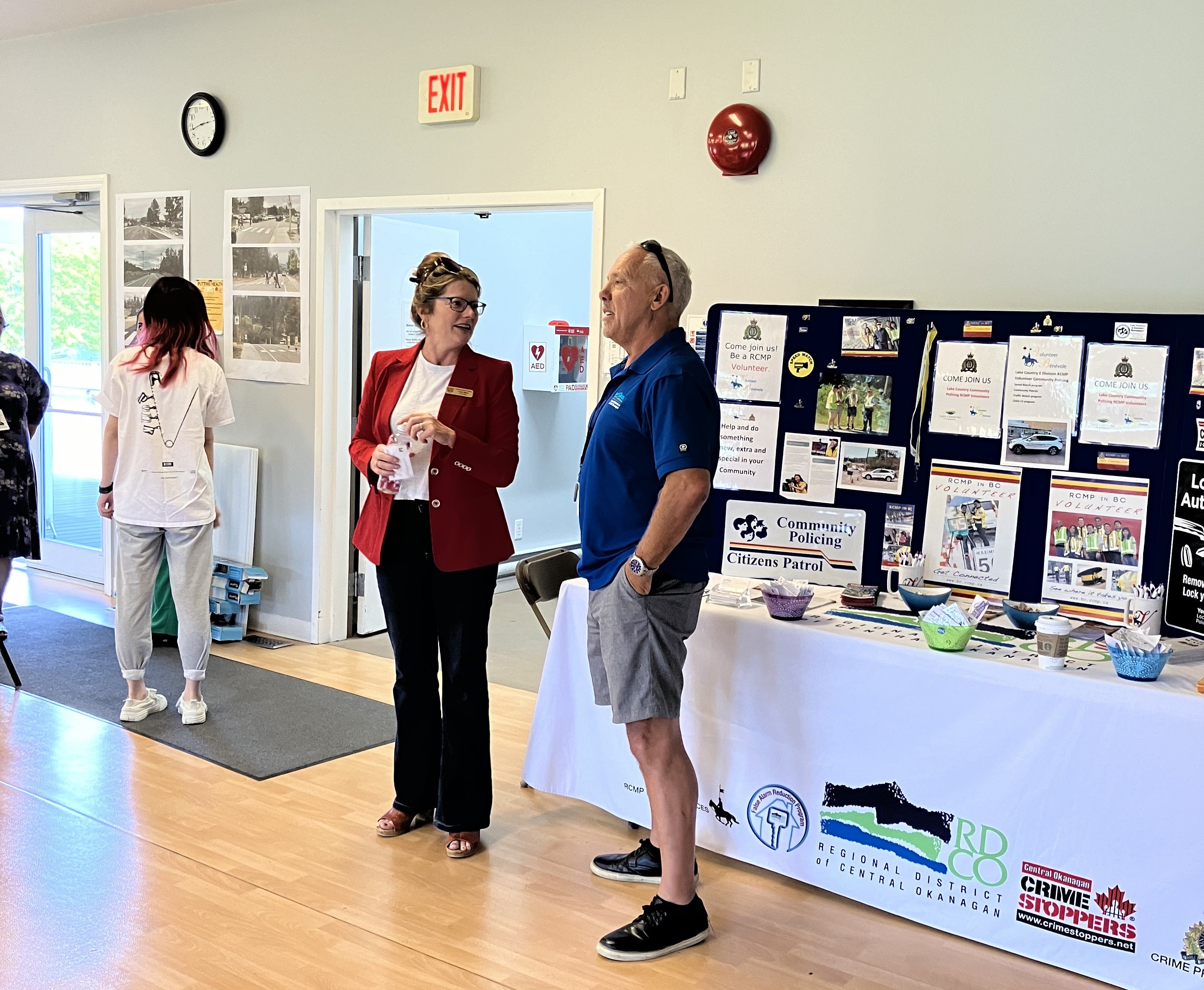
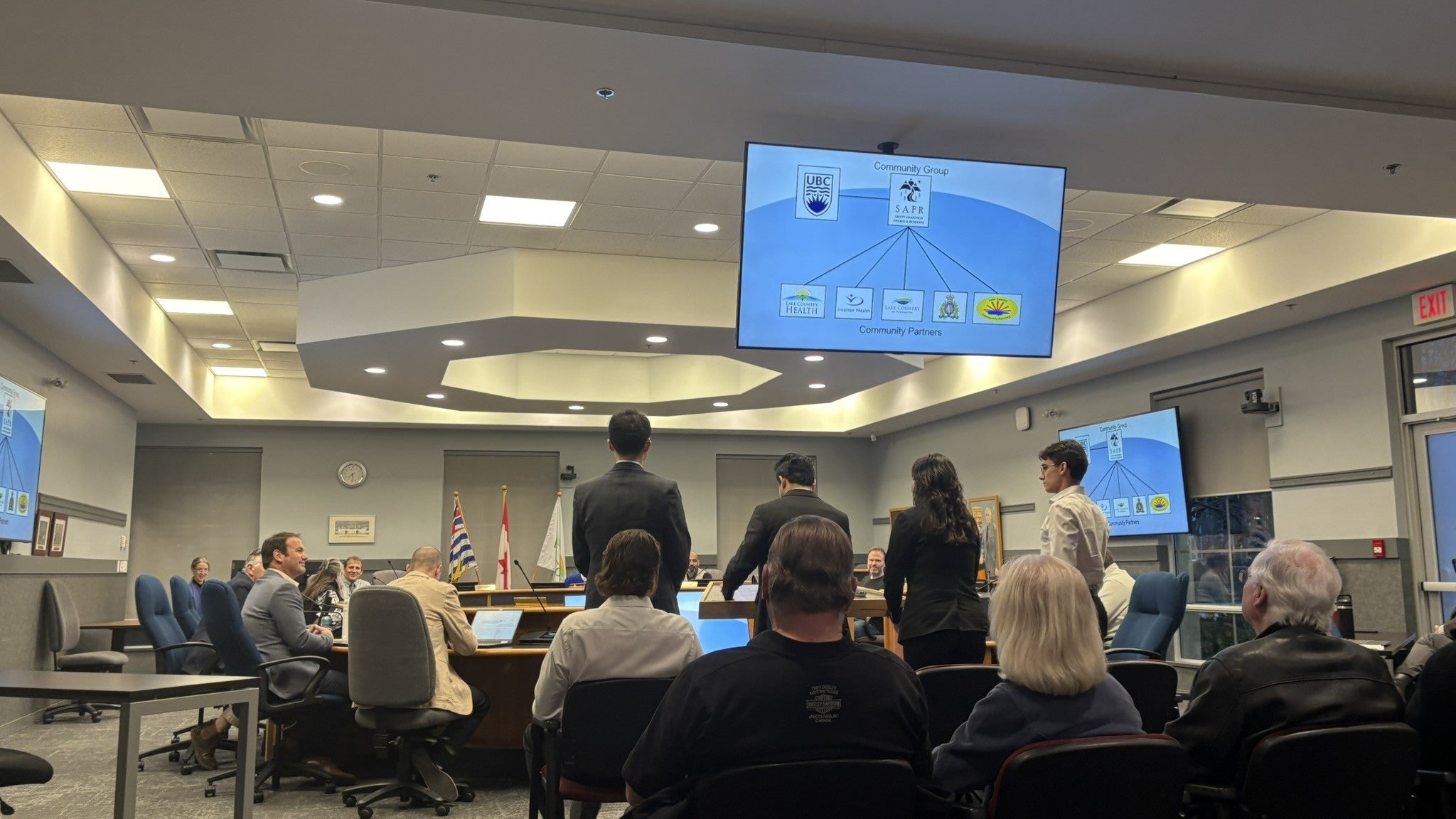
Through Tanya's connections, UBC Okanagan (UBCO) marketing management students have collaborated with SAFR to help create campaigns to share messages about road safety and boost community engagement around Lake Country.
In fall 2024, the marketing students proposed a branding and marketing campaign with the slogan, “Our Actions, Our Safety.” The next cohort of UBCO marketing students, in winter 2024, created a framework for a Road Safety Awareness Week campaign for the District. This included creating more than 20 social media posts targeting different road users, as well as content that could be used throughout the year. They also identified a wide range of activities that the District and partners can choose to implement to promote encourage safer road usage on the roads of Lake Country, such as and Okanagan Centre Rd. East and West, Oyama Rd and Carrs Landing Rd to name just a few.
What started as a grassroots effort has grown into a cross-District collaboration that includes Lake Country staff, SAFR, Interior Health, the RCMP, community policing, the Rotary Club, cycling groups and other community organizations.
A vision for enhancing safety for all road users
This year, the District of Lake Country applied for and was awarded a $10,000 Vision Zero grant. This will be used to install a flashing road sign at a sharp curve on Carrs Landing Rd. that alerts drivers to pedestrians on the road ahead. Carrs Landing Road is a rural road with limited shoulders that serves as the main route in and out of the community of Carrs Landing and a through-route to Predator Ridge and Vernon. It’s used by diverse groups, including residents, visitors, cyclists, pedestrians, and all types of drivers.
“Being awarded the Vision Zero Grant is an exciting opportunity to implement an innovative initiative focused on enhancing safety for all road users” says Conor Manahan, District of Lake Country engineering technician.
Vision Zero: Zero deaths and serious injuries
What started as a concept in Sweden in the 1990s is now used all over the world to plan transport systems.
Shianne highlights the need for local initiatives in the IH region like the ones shared here. “In 2023, 40 per cent B.C.’s 331 road fatalities—that's 133 people—occurred in the Interior Health region,” she says. “Between 2015 and 2019, more than 3,500 people were hospitalized due to motor vehicle crashes within IH, costing the health system up to $12 million annually.”
Simple changes can make a big difference. By creating safety for walkers, cyclists and those using other kinds of active transportation, we can improve the health of our citizens, combat climate change and provide more equitable access to more kinds of transportation.
For more information about Vision Zero, visit VisionZeroBC.
Check out more stories like this
Cottonwoods Care Centre coordinator Lia Sambrielaz has been sharing small acts of kindness at IH for 37 years.
/stories/we-are-ih-coordinator-motivated-help-long-term-care-clients
Our 9-part video series teaches about the purpose and importance of advance care planning (ACP) and why it gives peace of mind to you and your loved ones.
/stories/lets-talk-about-advance-care-planning-your-voice-your-choice
A funding initiative is helping the Cariboo Chilcotin Métis Association (CCMA) grow food security in ways that reflect knowledge, culture and community needs.
/stories/funding-helps-williams-lake-metis-community-support-food-security
Meghan Johnston became a registered psychiatric nurse after watching people struggle to navigate the health-care system and witnessing the barriers they faced.
/stories/we-are-ih-psychiatric-nurse-finds-meaning-crisis-team-role
Jasmine Mingaud found relief and stability after connecting with the Central Okanagan PCN where a team helped her manage chronic pain and life challenges.
/stories/how-primary-care-team-changed-one-womans-chronic-pain-journey
Behind every appointment, lab test and medical imaging test are a complex set of processes. A small but mighty team is transforming how that work gets done.
/stories/saving-time-improving-patient-care-intelligent-automation
STAY CONNECTED
Receive news, alerts, public service announcements and articles right to your inbox.