What to do if you have high levels of radon in your home
You’ve tested your home for radon or are thinking of testing. Perhaps you purchased or borrowed a continuous radon monitor to short-term test or watch levels daily. Or, maybe you bought your kit online and performed a long-term test for a minimum of 91 days during the winter months, the ideal method of radon testing.
Your results are showing your radon levels are over the Canadian Guideline of 200 Bq/m³ (Becquerels is a unit of radioactivity named after Henry Becquerel).
Now what?
In this story, we share why your results might be high and what you can do about it. We also cover special situations like new home builds and information for renters.

In this Story…
Why does my home have high radon levels?
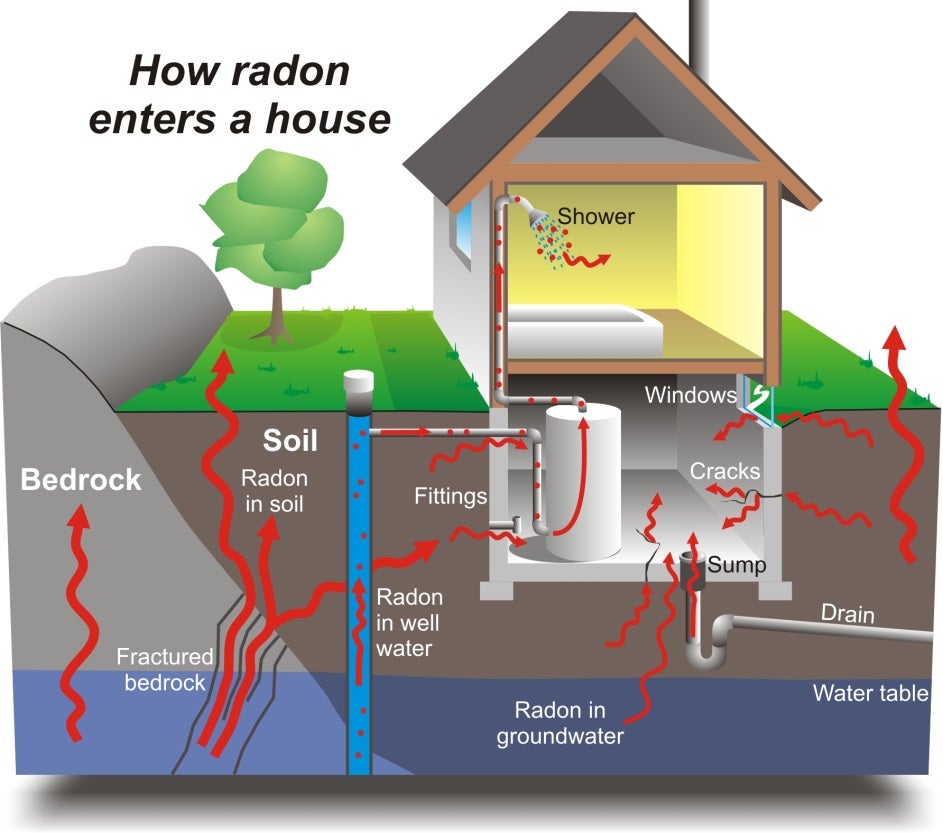
Radon, which is an odourless, colourless and tasteless gas, is released by the natural breakdown of uranium, a radioactive material. Radon can be found almost everywhere in Canada to varying levels. In the Southern Interior and Okanagan radon is more prevalent. It’s not necessary to be in a uranium-rich area, and even homes next to each other can have vastly different levels of radon no matter where they are.
Related Stories@IH: Meet Greg, an air quality expert who wants you to test for radon
It only takes very small openings in your foundation, joints, gaps around pipes or floor drains for radon to enter your home. Warm air, which rises and escapes through leaks in the mid to upper parts of your home, can draw radon up and into your home from lower levels. This is called the “stack effect.”
More radon can be drawn into your home by anything generating heat or a vacuum, such as furnaces, hot water tanks, exhaust fans and range hoods.
Why should I be concerned about radon?
Radon is the leading cause of lung cancer in non-smokers, and the second-leading cause of lung cancer overall.
The risk of cancer depends on the levels of radon, the duration exposed, and the amount of contact with radon and tobacco smoke over a lifetime.
How to lower radon levels in your home
There are quick and easy methods to lowering radon levels in your home, and longer term actions you can take.
In the short term, you can:
- Limit time spent in basements (radon comes from the ground, is heavier than air, settles in lower levels, but also makes its way throughout the home)
- Open windows on your main floor for flow through
- Increase air flow using your heating, air conditioning and ventilation system
- Sleep on the main our upper floor of your home
Longer term, you can:
- Seal cracks in your basement
- Seal dirt crawlspace floors
- Seal openings in the concrete floor of your basement or crawlspace, such as around sump pits, pipes and conduit
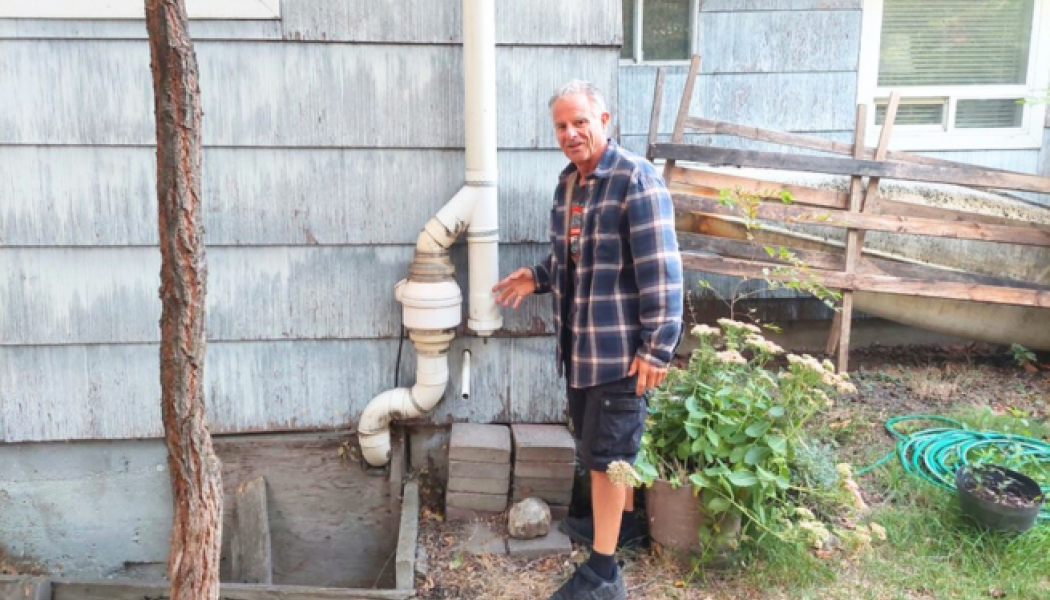
- Install a low wattage radon fan to capture the air below the foundation and redirect it outside. Also known as an “active soil depressurization (ASD)” system, this can be simple if your home was constructed with radon rough-in works.
A certified radon mitigation professional can assess your home, conduct tests and make recommendations for mitigation.
A Homeowner's Guide to Radon (Canadian Real Estate Association)
I moved into a newly built or newer home. Do I need to test for radon?
Since 2012, builders in regions of B.C. where radon prevalence is high have been required to install radon rough-in works when they construct a home foundation. Today, all buildings across the province occupied more than hours per day are required to have rough-in works.
Rough-in works are installed so as to be beneath the concrete slab that makes up the foundation of a home. It consists of a permeable gas layer separated from conditioned (heated/cooled) spaces that allows radon gas to escape through pipes to vent outside.
Rough-ins, however, don’t guarantee a low indoor radon level. Once you do a long-term test (91+ days) for radon, you’ll know if the rough-in needs to be boosted with a fan, which is not required as part of the rough-in works. Adding a fan creates to the active soil depressurization (ASD) system effectively helps in venting radon outside.
You should also re-test for radon if you undertake significant renovations, such as changing heating and ventilation equipment, installing new windows, adding weather stripping or insulation, or finishing a basement.
I’m in the market for a home, or plan to sell my home. What should I ask my realtor?
According to the BC Financial Services Authority (BC FSA), there are currently no legal requirements for radon testing in homes.
As a buyer however, you can ask the seller if they’ve conducted a long-term radon test and request a copy of the results. Radon levels above 200 Bq/m³ are considered a “material latent defect” and must be disclosed to a potential buyer by your real estate professional.
According to the BC FSA, levels below 200 Bq/m³ do not need to be legally disclosed. However, if you’re selling your home, and a buyer asks about radon levels and whether your home has been tested, you must provide a truthful answer, or acknowledge refusal to answer the question.
Real estate agents in B.C. are offered education on radon as well as checklists for both buyers and sellers. Don’t hesitate to ask your agent about radon testing, whether you’re buying or selling a home.
According to Jim McCaughan, professional services support advisor at the BC Real Estate Association, BCREA is continuously developing timely and effective resources for REALTORS®. Real estate agents can take an accredited self-paced professional development course. He says talking with clients about the risks of radon is important, and real estate agents have access to many resources and education to help clients understand and mitigate radon risks.
I’m a renter. Can I ask my landlord to test for radon?
As a renter, you have a right to live in a home that is safe from agents that harm your health.
Anyone – whether you’re a renter or owner – can test their indoor air, or ask that it be tested, and results disclosed.
BC Lung Foundation provides resources for both renters and landlords, including guides and template letters requesting radon testing.
Check out more stories like this
IH’s Healthy Community Development team worked with student nurses to help local governments make breastfeeding more supported and welcomed in communities.
/stories/breastfeeding-toolkit-helps-cities-support-inclusive-spaces
Talking to your teens about drugs shows you care they make safe choices—it doesn't encourage drug use. Here's how to have talks with an open heart and mind.
/stories/how-talk-teens-about-drugs-and-other-substances
Cottonwoods Care Centre coordinator Lia Sambrielaz has been sharing small acts of kindness at IH for 37 years.
/stories/we-are-ih-coordinator-motivated-help-long-term-care-clients
Our 9-part video series teaches about the purpose and importance of advance care planning (ACP) and why it gives peace of mind to you and your loved ones.
/stories/lets-talk-about-advance-care-planning-your-voice-your-choice
A funding initiative is helping the Cariboo Chilcotin Métis Association (CCMA) grow food security in ways that reflect knowledge, culture and community needs.
/stories/funding-helps-williams-lake-metis-community-support-food-security
Meghan Johnston became a registered psychiatric nurse after watching people struggle to navigate the health-care system and witnessing the barriers they faced.
/stories/we-are-ih-psychiatric-nurse-finds-meaning-crisis-team-role
STAY CONNECTED
Receive news, alerts, public service announcements and articles right to your inbox.