Explore Stories
Health & Wellness
Did you know that not all disAbilities are visible?
Mental illness, chronic pain or fatigue, sight or hearing impairments, diabetes, brain injuries, neurological disorders, learning differences and cognitive dysfunctions, are a few examples of invisible disAbilities.
Having a disAbility doesn't prevent me from going to university or competing for any type of job that I am qualified to do. Improved accessibility in the workplace gives me the freedom to live my life without stigma so I can contribute to society and support my family.
But I am also aware that many other people have not shared my experience.
Growing up in the era I did, people with disAbilities experienced segregation in schools, some were institutionalized, while others were prevented from having a family.
I have witnessed many positive changes toward how people with disAbilities are treated and included in society.
It is essential that we continue this work and focus on removing barriers for all people living with disability, both visible and invisible.
Want to learn more? Dec. 3, 2020 is the International Day of People with Disabilities.

Research & Innovation
An AIDS-free generation in B.C. is an ambitious goal, but it is also in sight.
Since launching the My Health Is Sexy campaign on World AIDS Day in 2016, Interior Health’s new testing strategies have resulted in earlier diagnoses and more effective connections to health care, prolonging and improving peoples' lives; and reducing HIV transmission.
As part a provincial initiative to expand access to earlier HIV testing and provide support for individuals to start and sustain HIV medication, the My Health is Sexy campaign promotes testing, engagement and treatment.
And it’s working.
Today, people living with HIV and receiving treatment can expect to live long, healthy lives free of symptoms. In fact, research has shown that early diagnosis of the disease in combination with antiretroviral therapy means HIV-positive people can expect to live as long as those without HIV.
Further, when people are consistently taking HIV medications, their viral load drops to an undetectable level, protecting their health by preventing progression to AIDS and AIDS-related premature deaths and stopping transmission of the virus to someone else.
This not only improves health outcomes, but making testing and treatment readily available to everyone also builds health equity. It reduces the stigma around HIV/AIDS, and builds dignity and respect. To ensure people get the treatment they need, testing is essential. But access to testing can be affected by a person’s location, the amount of stigma they experience from health-care providers, and even their own fear of getting a test.
That's why people living in B.C.'s interior have the option of:
On Demand Testing, where people can choose to go to partner labs and request a test without a health providers’ requisition
Get Checked Online, an online screening tool (delivered in partnership with the BC Center for Disease Control) that provides people with a blood requisition order they can take to any lab
Testing events throughout the year
A toll-free number for connection with a health outreach nurse
These services work alongside access to testing through primary-care providers, clinics and hospitals. In addition access to HIV pre-exposure prophylaxis (PrEP) and postexposure prophylaxis (PEP) have been expanded, which are critical to curbing the fight against HIV/AIDS. These have led to a consistent decline in new HIV cases across B.C.
In December 2018, Interior Health launched Emergency Department HIV Testing, a second key program to increase earlier diagnosis and treatment. When patients are admitted to emergency departments and require diagnostic blood work, an HIV test may be included.
"I have personally treated patients who were unaware they were HIV positive and who may have never thought to get tested, that were diagnosed through testing in the emergency department.”
Dr. Michael Murphy, medical coordinator for the STOP HIV/AIDS program, Interior Health
Testing is just the first step in a patient’s journey of living with HIV. Once an individual is diagnosed, they can receive treatment that supports them in living long, healthy lives. As of June 2020, the number of patients who, once diagnosed, remain linked to care, which means they see a nurse of doctor regularly, is at 90 per cent; more than 80 per cent of patients are receiving care and being treated with antiretrovirals; and nearly 50 per cent of people living with HIV currently have an undetectable viral load, which means they are unable to transmit the virus.
While these numbers are encouraging, the work is far from over. Through the STOP HIV/AIDS initiative, the My Health is Sexy campaign, and the ED HIV Testing program, we are working towards an end to the HIV epidemic.

Community & Culture
We are IH is a recognition campaign to spotlight Interior Health employees and medical staff – through pictures and stories.
Name: Ryan Lazauskas
Worksite: Kelowna Community Health Centre
Years of Service: 3
Job Title: Employee Relations Consultant
An adventurer at heart, growing up in the beautiful community of Kelowna in the Okanagan, Ryan has explored most trails on his road bike. His passion for exploring led him to travel abroad where he backpacked his way through over a dozen countries throughout Western Europe before starting his career.
Ryan traveling abroad in London, England.
Motivated to grow professionally, he embarked on his Bachelor of Business Administration with a major in Human Resources Management from Okanagan College at the Kelowna campus, where he learned valuable skills that have propelled his career forward. His work experience with non-profits and the private sector gave him the knowledge, skill set, and experience to land a job at Interior Health as a Service Partner for the Benefits Department.
Over the past three years at Interior Health, Ryan is proud of the way he has been able to learn, grow, and adapt continuously. As a motivated employee, Ryan has been rewarded for his hard work with multiple new positions. He was awarded a new position in Recruitment and then he gained experience with Labour Relations, allowing him the opportunity to take on the role as a Labour Relations Service Partner.
His love for helping others shines through in his work, granting him the recent role as an Employee Relations Consultant. His passion for serving others has helped him further exceed at Interior Health. As a results-orientated individual, Ryan is focused on getting the job done in the best way possible while providing excellent service.
Ryan’s hard work continued to pay off in his personal life, as he recently purchased his first home in the Central Okanagan with his girlfriend. They expanded their family with their French Bulldog, Frankie, who has quickly become the centre of their world as they adventure the outdoors together.
Ryan's French Bulldog, Frankie
Ryan's girlfriend and French Bulldog
This year may have travel restrictions, but when it is safe Ryan will continue his goal of traveling across the incredible province of British Columbia to further explore the outdoors of what B.C. has to offer! His love for his friends and family brings him so much joy, so he is looking forward to spending more quality time with his loved ones once it’s safe to do so.
A great perk of living in the beautiful Okanagan is having Big White close by! Ryan plans to spend lots of time on the slopes this winter season exploring the mountains. Thank you for all that you do, Ryan! We appreciate you very much.
Ryan Lazauskas in Switzerland
Check back each Friday for the next We Are IH feature.
For more information contact EmployeeExperience@InteriorHealth.ca.
Ryan's nomination of Katherine Semenoff keeps the We Are IH loop going:
Katherine has been an amazing colleague and big support for our team. She has been with Interior Health a long time. She is dedicated, driven and always looking to help you no matter what.

Research & Innovation
Interior Health, located within British Columbia’s interior, had just completed bringing the Vocera communications platform to its acute hospitals and long-term care homes when the COVID-19 pandemic struck with full force in March of this year.
It was excellent timing, as the technology enables staff and clinicians to instantly call each other by using handsfree badges, even when wearing personal protective equipment. The user can touch a button on the badge and simply say call Dr. John Smith, and he or she will be quickly connected.
Users can even find a person by role. For example, you can ask for the on-call cardiologist, and the system will find the person on its own. That was a big help when it came to managing patients and keeping staff free from infection.
“When COVID hit, we had to respond quickly,” said Andrew Povah, Manager of Mobility and Conferencing Services at Interior Health, who spoke at a webinar on real-time communication systems in health care, in October. “We let the staff know that communications would be essential.”
Interior Health serves a population of 801,000 in British Columbia and comprises numerous hospitals and long-term care homes, 44 of which utilize Vocera. It has an annual operating budget of $2.6 billion.
During his webinar presentation, Povah gave specific examples of how the Vocera platform has helped staff and clinicians with patient care in the time of COVID. He discussed the case of the region’s Princeton General Hospital, a community facility just outside Penticton, BC. While the centre is well-equipped for acute care and has an emergency department and its own lab, it didn’t have isolation rooms for patients infected with COVID-19.
The staff at Princeton General improvised and quickly created an isolation room, but it lacked windows, telephony and intercoms. “So, facilitating effective communication in this room was a huge challenge,” said Povah. Phones or intercoms to communicate with patients could have been installed, but it would have taken a fair amount of time. “When you’re cabling and you’ve got contractors coming in, it’s not a matter of days that you need, it’s weeks,” Povah noted. He said that since the facility was already using Vocera, the I.T. staff asked why they hadn’t extended it into the isolation room. It turned out that clinicians were using highly
plasticized, protective gowns, and the heavy PPE generated noise that made it hard to work with the Vocera badges, especially when used underneath the gowns.
A solution was found in wearing the badges outside the gowns and using a special protocol for cleaning the devices afterwards. Soon, it was found that clinicians could continue wearing the badges under their gowns by retraining the Vocera system to understand their muffled voices. As well, a badge was installed in the room using the auto-answer feature, so that it acted as a wireless intercom. “It meant we didn’t have to take badges in and out of the room anymore,” said Povah. Instead, staff outside the room could converse with clinicians who had entered, as well as with the patient.
“This was a very successful implementation, and we took the learnings and used them at our other sites in British Columbia,” said Povah.
Meanwhile, at the Kelowna General Hospital, a large tertiary facility, Povah said there was significant demand from clinicians who wanted streamlined communications. The strategy was to increase the number of devices being used by clinicians, such as in the emergency department. “This greatly improved their ability to communicate about the flow of patients in the ER,” said Povah.
Another group that hadn’t previously been onboarded were the respiratory therapists. With COVID-19 being a respiratory disease, their services were crucial. “This deployment was extremely helpful,” said Povah. He noted that the platform was also useful to security personnel and those controlling the entrances and exits of the hospital.
The purpose here was to assess visitors and determine whether they could come in. These staff members quickly found that they had a need to communicate amongst themselves. “Being a large facility with multiple entrances and exits, staff wanted to communicate about personnel levels and resource requirements – and to communicate about visitors who may have been prevented from entering, due to COVID-19 restrictions, at one entrance by trying to enter through another.”
Using the backend programming of the Vocera system, role-based communications were deployed and became important. This occurred in logistics and was helpful in replenishing PPE. As there were constraints in the supply of PPE, the wards were being stocked on an as-needed basis. “That meant when you needed top-ups, you needed them very quickly,” said Povah. “That role was very effective in getting the PPE to the right place and the right time.”
Another important role, and perhaps an unexpected one, was elevator cleaning. “After a patient transfer, we had to clean the elevator and communicate that it had been completed to ensure the safety of our staff and patients,” he said. “Vocera played a key role there.”
At Noric House, a long-term care home in Vernon, B.C., visits to the facility were limited, and at times were completely prohibited. However, the facility used the Vocera system to connect patients to visitors – outside their windows – by deploying a Vocera badge in the room of the patient. As with the Princeton General Hospital, the badge was set to auto-answer, so the patient didn’t have to manually operate the device. Visitors outside could be connected, even using their own cell phones, and they could communicate with their loved ones inside. “It bridged the communication gap while we weren’t allowing visitors inside,” said Povah.
“The quicker a message gets through to a nurse or other healthcare professional, the more likely there will be a good outcome,” said Dr. Kanter, Chief Medical Information Officer, Vocera
Dr. Ben Kanter, chief medical information officer at Vocera, asserted that an integrated communication system is essential for hospitals to respond quickly to a variety of patient alerts, and to connect staff and clinicians. Clinicians shouldn’t have to pause to look up a number, contact the switchboard, or find out who is on call in a hospital. An integrated system should be able to do this work for the clinician or staff member.
Indeed, Dr. Kanter said that “shortening the time to act – for clinical and operational processes – is critical to overall health-care delivery.” He noted that Vocera can be used to integrate the large number of alerting systems used in hospitals – such as cardiac monitors, telemetry and lab results – and when appropriate, to direct them to the right person, so the situation can be normalized. If a person is busy or doesn’t respond, the system can escalate the message to the next available and appropriate person. “To accomplish this, hospitals need technologies that can monitor systems and using rules and logic, can distribute information to staff based on their various roles and responsibilities.” Without a system of logical handoffs, he observed, a nurse could otherwise receive five alarms from five different systems in the space of five minutes. “That can be chaotic,” said Dr. Kanter.
“To alleviate this, the Vocera platform monitors clinical and operational systems, uses rules-based determinations to determine if information is actionable, and if so, makes sure it’s delivered to the most appropriate person or team.” He noted that messages can be sent to any and all devices, from hospitals with a bring-your-own-device strategy, to Vocera’s own badges or standard tablets, phones and desktops. Moreover, using the Vocera devices, communication can be done hands-free, using voice recognition and activation. “We’ve been doing this for 20 years,” said Dr. Kanter. “Long before Amazon and Google.”
This article was originally published in Canadian Healthcare Technology.

Health & Wellness
Expanded access to specialized care and reduced travel key benefits for patients and caregivers
New research from the UBC Southern Medical Program (SMP) supports the use of telehealth in the care of Parkinson’s patients in rural communities, particularly within the Interior Health region.
The treatment of Parkinson’s disease is highly complex and relies heavily on a patient’s changes in their physical features over time, such as the rigidity of muscles and movement of limbs. As these characteristics can vary significantly between patients, personalized treatment plans must reflect individual circumstances and other lifestyle factors.
Fourth-year SMP student Dakota Peacock and lead author of the new study underscores the need for Parkinson’s patients to have access to quality health care regardless of the size and location of their home community.
Within the B.C. interior’s vast and mountainous landscapes, lengthy travel times and hazardous road conditions, especially during the winter months, can provide additional barriers to patients and their caregivers. Additionally, the COVID-19 pandemic has led to a dramatic increase in the need for virtual health care options to support patients remotely.
“The focus of our study was to gain a deeper understanding of the challenges faced by Parkinson’s patients within Interior Health region in accessing specialized care,” says Peacock. “We also sought to assess their potential willingness to use telehealth technologies in supporting their health and well-being.”
Dr. Daryl Wile, neurologist with the Okanagan Movement Disorder Clinic and study co-author, acknowledges the effectiveness of telehealth in Parkinson’s care is yet to be established. However, he believes certain aspects of physical exams are less critical in follow-up appointments and could be delivered remotely.
“To use telemedicine for people with Parkinson’s Disease we need to understand how we can adapt the tools we have to the many different types of symptoms they may be facing,” says Wile, clinical assistant professor with the SMP based at UBC Okanagan.
Based on the survey results, 80 per cent of respondents indicated a willingness to use telehealth for follow-up appointments as part of their Parkinson’s treatment. Key challenges reported including difficulty accessing specialized care closer to home and the financial and emotional toll of travel on caregivers or family members.
“It’s encouraging that we could potentially minimize some of the barriers and stressors for Parkinson’s patients in accessing care, but fully recognize there is no one-size-fits-all approach,” adds Peacock.
The UBC study was recently published in the Canadian Journal of Neurological Sciences.
This article was originally published in UBC Okanagan News.

Community & Culture
We are IH is a recognition campaign to spotlight Interior Health employees and medical staff – through pictures and stories.
To help us celebrate National Nursing Students Week, we met with Mariah Perry, a recent 2019 graduate from the Practical Nursing Program at Okanagan College. As part of the incredible team at Kelowna General Hospital, Mariah stands out for her big heart, her desire to spread kindness, and her positive attitude. At first, Mariah may be shy but before you know it she is filling the room with her radiating energy!
Inspired by her desire to make a difference in the lives of others by working closely with them, she pursued a rewarding career as a Licensed Practical Nurse. As she was starting her career, the COVID-19 pandemic began, creating completely new challenges for everyone to navigate. We are so proud to see all of our health-care heroes rise to the occasion and continue to provide the best possible care amidst the pandemic.
Mariah Perry in PPE
Mariah reflects on the growth she has experienced throughout the pandemic.
“I feel for the patients in the hospital, especially with visitor restrictions, but it has been something special to me, as I have had the opportunity to be there for my patients. It’s been inspiring to see us come together to get through this pandemic. Everyone motivates me, and it shows how we are stronger together and we’re not alone.”
In the dynamic field of nursing, some days are better than others, but at the end of the day, you can end your shift with a sense of pride. Mariah shares one of her proudest moments at IH as she comforted a palliative patient. They shared meaningful conversation about life and he told her she was the nicest nurse he has ever had, really touching Mariah's heart. It's moments like these that make it all worth it.
“I love nursing because there is so much room to grow in this career. Right now, I do really love bedside nursing and the medical floors I work on, but I have the option to expand my knowledge in so many ways when I want to and I think that's amazing!”
Mariah Perry and her Grandfather
From a young age, her family has been extremely influential in her life. Mariah’s grandfather ingrained in her his favourite quote as a child: “Always forward, never back.” These words have helped propel her forward during tough times and encourage her to persevere towards a solution. She fondly remembers her grandfather’s quote regularly to quickly move from worry to action forward.
Young Mariah and her sibling
Surrounded by the natural beauty of the four seasons, Mariah feels extremely grateful to be born and raised in Kelowna, her forever home. Growing up as “Mariah Perry” she was surprisingly asked if she was named after the famous, Mariah Carey, and also blessed with her vocals. Despite a short stint in singing lessons, Mariah has concluded it did not help her singing abilities and no one wants to hear her sing.
You can find Mariah out shooting hoops playing basketball with her friends or taking on a DIY craft. Mariah knows how important self-care is, especially during these times in her career, so makes time to incorporate physical activity into her crafts to keep her mind in the right place.
The pandemic has shown us what's important and not to take anything for granted. Mariah looks forward to a time where hugs can be given out freely, quality time can be spent with family and friends, and all of the added stress can be removed from everyone’s life. Thank you for all that you do, Mariah! You have a very successful career ahead of you and we are honoured to have you at Interior Health.
Check back each Friday for the next We are IH feature.
For more information contact EmployeeExperience@InteriorHealth.ca.
Mariah's nomination of Mary Lynn Pallett keeps the We Are IH loop going:
Mary is an LPN on 6 West and she is the absolute best! Her nickname is Mamma Lynn, she has such a big heart and really looks out for everyone on the unit!

Health & Wellness
Have you ever heard the phrase "if you want to make a change in the world, start by changing yourself"?
Widespread change might seem difficult to achieve, but it's possible if we decide to do things differently.
If you want to fight addiction and stigma, and help end overdose, here are three easy steps to follow:
End stigma. Words have power. We can end stigma around substance use and people who use drugs by changing our language. Take the Addiction Matters Kamloops Every Word Matters pledge today.
Educate yourself. Visit stopoverdose.ca, which is home to many engaging articles, blog posts, videos and important resources. This provincial site is managed by the Ministry of Mental Health and Addictions and is a great “one stop shop” for information that can also be easily shared.
Have a courageous conversation. Prepare ahead and then talk with someone close to you about substance use and the overdose crisis. Honest conversations bring the issue of substance use and addiction from society’s shadows out into the light – and reaching out to someone to talk can make all the difference.
Facebook Contest
Interior Health and Addiction Matters Kamloops want to encourage as many people as possible to take these small steps.
You can make a difference in the world and win a great prize in the process!
Follow Interior Health on Facebook to enter the contest between Nov. 22-28. Simply comment and share the Interior Health Facebook post about National Addictions Awareness Week, and share your personal commitment.
Prizes include a copy of “Chasing the Scream” book about addiction; a Starbucks gift card, and a beautiful framed print from the Addiction Matters Kamloops Photo Voice project. Winners will be randomly chosen on Nov. 30 and notified through Facebook.
National Addictions Awareness Week is Nov. 22 -28. This year’s theme builds off previous campaigns to end stigma by declaring “Change Begins with Me”. Interior Health and its partners at Addiction Matters Kamloops invite you to consider the way you think about substance use and take action this week to learn more about addiction, fight stigma, and help end overdose.
Health & Wellness
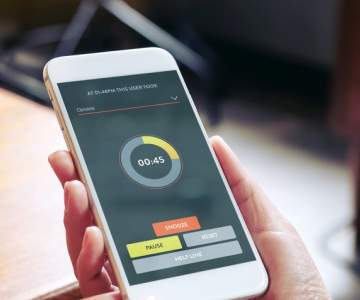
In the midst of ongoing dual public health emergencies, a new app has been launched to prevent overdose deaths in B.C.
Lifeguard Digital Health CEO Jeff Hardy was inspired to develop the application after losing a friend to a fentanyl overdose. Launched in May 2020, the app has continued to gain popularity among people who use drugs and those who support them.
The concept is simple: Once downloaded on a mobile device, the app is activated by the user before they take their dose. After 50 seconds the app will sound an alarm. If the person using the app doesn't hit a button to stop the alarm, indicating they are fine, the alarm grows louder and if the individual does not respond the app will trigger medical assistance.
Peer outreach has played a significant role in encouraging people to try the free Lifeguard app. Kelowna’s PEOPLE Employment Services has been providing hands-on tutorials about installation and use. Peers showing Peers how to download and use the app makes a big difference. Kelowna now has one of the highest numbers of people downloading the Lifeguard app in BC.
“It was a perfect fit with what we were already doing in the community,” says Executive Director Dhorea Ramanula. “We were seeing and hearing about a lot of folks who were feeling lonely and isolated due to COVID-19. Being alone and using drugs, especially now, is a dangerous combination and we wanted to do more to save lives.”
One Peer involved in promoting the Lifeguard app in the Kootenay region is Frank, who works as an advocate and identifies as an empowered drug user. Frank has personally used the app several times and describes it as a “kick-ass resource” that is well-designed, particularly for people who are using drugs alone due to shame and blame that so often accompanies substance use.
Frank says for some people using the app can be a first step to reintroducing self-care.
“It’s a way I can take care of myself. Any way I can get into self-care is positive, and the app is a simple way to do that. Once I switch from cloaking myself in shame to saying ‘I’m going to do this little thing to take care of myself’, everything changes. Nothing about my drug use changes, but actually everything changes, because I’m saying ‘I’m worth it. I deserve to live’. It can be a tipping point from ‘this is a shameful, dirty secret’ to ‘it’s ok for me to protect myself.’ And then that can develop into ‘I’m going to brush my teeth’ and ‘I’m going to talk to my care provider.”
“I can’t overstate the power that has.”
The Lifeguard app is expected to help address overdose rates among people who use drugs alone - the group at the highest risk of fatal overdose.
The Lifeguard app is continuing to improve since its initial launch. It now includes access to additional crisis lines as well as guides to perform CPR and deliver Naloxone.
“There are a number of reasons why people choose to use their substances alone, and while we encourage people to ideally access an overdose prevention site, or use with someone who can administer Naloxone, the Lifeguard app is a safeguard for those people who don’t have those options available to them,” says IH Substance Use Practice Lead Amanda Lavigne.
“You can drastically change the outcome of your use. Because it is incredibly risky,” says Frank.
To learn more visit www.lifeguarddh.com.

Did you know that health care careers are high in demand? These careers include a range of professions from administrative to nursing to social work and everything in between. With a variety of professions to start a career in, there is something for every skill set! The time is now to make a change a become a health care hero at Interior Health.
How do I start a career with Interior Health?
On Tuesday, November 24th, 2020, from 10 AM PST to 2 PM PST, Interior Health is hosting a virtual career fair for a variety of professions. This is your opportunity to learn more about Interior Health, how to start a career in a specific profession and virtually meet our team. You can chat directly with our team to have all of your questions answered and make connections.
What is a Virtual Career Fair?
Change has been the only constant this year. As we all adjust to the new normal amidst this pandemic, we have pivoted to hosting our own virtual career fair. Similar to past career fairs you will learn about Interior Health, job opportunities, and talk directly with our team of recruiters to help guide you through the application process.
Which careers are being featured?
Our team will provide an overview of Interior Health as an employer, our regions, and speak directly to the careers outlined below. If you are interested in careers outside the ones presented you can simply sign up for general inquiries to connect with the right team member.
How do I prepare for the virtual career fair?
All you have to do is register for the virtual career fair and attend!
Here are a few tips for best practice that can help you stand out: Connect with IH on Social
Facebook: @IHJobs
LinkedIn: @InteriorHealthAuthority
Instagram: @InteriorHealthBC.Careers
Explore career opportunities at Interior Health
General Website
Aboriginal
Social Work
Critical Care Nursing
Medical Device Reprocessing
Medical Laboratory
Cook & Support Services
Nursing
Pharmacy Careers
Surgical Operating Nurses
Administrative
Physicians
Questions?
We are happy to help! Please email careers@interiorhealth.ca for all inquiries.
-
Load More
Showing 738 of 836
Sign up for email updates