Explore Stories

Community & Culture
We Are IH is a new recognition campaign to spotlight our people in a real way – through pictures and stories that allow their authenticity to shine through! Every week Interior Health employees or medical staff will be featured through our News@IH website and our weekly In the Loop Roundup email newsletter.
Growing up in Squamish, British Columbia, Shaylene loved spending time with her friends and family and adventuring the beautiful outdoors with them. Throughout her life, she has always had a passion for helping others and giving back to her community. It wasn’t a surprise to those who knew Shaylene’s heart that at the young age of 17, she took the first step in her career as a Health Care Aide. Inspired by her desire to see the difference a healthcare team can make in a person's life, shortly after she advanced her education and began her career as a nurse. The majority of her career has been in acute care until this April when she was promoted to Team Lead of Home Support at 100 Miles House Hospital. Every time that she can make a difference in a palliative client/family’s life, she feels a sense of pride.
Shaylene’s peers would describe her as a passionate person who puts her heart and soul into her job, so her new role in Home Support was a step in the right direction of having an impact on the lives of others. The patients that Shaylene cares for are so grateful for her kind demeanor, caring heart, and positive attitude. Every day she continues to make a difference in the lives of her patients and make a positive contribution to Interior Health.
As Shaylene is very family-oriented and values the time she spends with her friends and family she ensures a work-life balance that allows her to spend quality time with her loved ones. Whether they are out fishing, boating, or kayaking, they enjoy taking in the picturesque views around them and making new memories. We are so thankful to have Shaylene as the Team Lead for Home Support at 100 Miles House Hospital where she continues to inspire and lead others to provide the best possible care possible. Thank you for all that you do, Shaylene!
Check back each Friday for the next We Are IH feature. For more information contact EmployeeExperience@InteriorHealth.ca.
Shaylene's nomination of Teressa Allwood keeps the We Are IH loop going: Teressa supports her staff in such an amazing way. She is a great manager and encourages the staff to continue to grow in their role. She is a dedicated team member who fosters a positive work environment. She encourages the staff to try to think positively about changes and hurdles. OMH is a better place because of her.
Health & Wellness
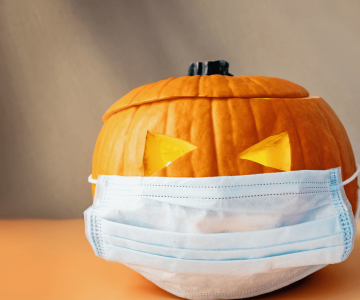
Struggling with how to make Halloween a little less scary this year? The BC Centre for Disease Control has some tricks for you.
Safer trick-or-treating
Respect homes by staying away if the lights are out.Keep to your local neighbourhood this year.Avoid trick-or-treating in busy areas or indoors (in places like malls) since there may not be enough space to distance. Indoor spaces may require a non-medical mask or face covering.Trick-or-treat in a small social group, stick to six people.Leave space between you and other groups to reduce crowding on stairs and sidewalks.Wash your hands before you go out, when you get home, and before eating treats.Keep hand sanitizer with you for eating treats on the go.You don’t need to clean every treat. You should instead wash your hands after handling treats and not touch your face.Try including a non-medical mask or face covering as part of your costume.Costume masks should not be worn over non-medical masks or face coverings as that may make it difficult to breathe.
Skip Halloween parties this year
Leave the parties behind.Indoor gatherings, big or small, put people at higher risk of getting COVID-19.Celebrate with your favourite Halloween movie or other traditions that you can do with your household or social group.If you host or attend a small party, keep it within your social group (Stick to six). You should know everyone who attends, no plus ones. Follow our guidelines for safer celebrations. Don’t pass around snacks, drinks, smokes, tokes, and vapesBe more outside, than inside. Keep your space well-ventilated with windows open. Avoid using props that can cause coughing, such as smoke machines. Be careful with hand sanitizer and open flames - hand sanitizer is very flammable!
Get creative handing out treats
Use tongs, a baking sheet or make a candy slide to give more space when handing out candy. Plan to hand out individual treats instead of offering a shared bowl. Only hand out sealed, pre-packaged treats.Wear a non-medical mask that covers your nose and mouth when handing out treats. Be more outside, than inside. If you can, stand outside your door to hand out treats. Then kids won’t need to touch the door or doorbell. If you’re unable to sit outside to hand out treats, clean and disinfect doorbells and knobs, handrails, and any other high touch surface often during the eveningHelp make trick-or-treating more accessible to everyone by handing out treats from the bottom of your stairs or at your curb-side.

Community & Culture
We Are IH is a new recognition campaign to spotlight our people in a real way – through pictures and stories that allow their authenticity to shine through! Each week we will showcase an Interior Health employee who is working to make a difference in their community.
Ken radiates positive energy and makes being at work a happy place simply with his presence. Over the past 12 years as a Housekeeper at Kelowna General Hospital (KGH), he has been inspired by working with patients in need, more recently in his current department, the Psychiatry Ward.
Whether it’s an ear to listen or helpful advice, Ken always shows up as his authentic self to help others. As a big believer in everyone working as a team, he is always looking out for one another and ensuring that he is offering help wherever it is needed.
Ken feels lucky to be working on the Psychiatry Ward where his team feels more like family. It's second nature for everyone to help each other as they work collaboratively as a team to do the best possible job.
Born and raised in Richmond, B.C., he is a true outdoorsman, and exploring new areas has always been a passion of his. When Ken isn’t working you can find him exploring the wilderness outdoors, in the woods setting up camp and catching fish for dinner. He loves a getaway with his wife and is looking forward to treating her very soon!
Ken feels grateful to work alongside her and be a part of the incredible housekeeping team in Psychiatry at KGH. Thank you for all that you do, Ken, we appreciate you so much!
Check back each Friday for the next We Are IH feature.
For more information contact EmployeeExperience@InteriorHealth.ca.
Ken's nomination of Amanda Burgess Moffett keeps the We Are IH loop going: “I would like to nominate my wife, Amanda Burgess Moffett, a housekeeper at KGH for over 17 years. She has been Shop Steward, JOHSC Committee, Former Supervisor of Housekeeping at KGH, and currently works as a Housekeeper in Psychiatry. Her constant goal is to help other workers with all of their problems.”

Community & Culture
We Are IH is a new recognition campaign to spotlight our people in a real way – through pictures and stories that allow their authenticity to shine through! Each month, four Interior Health employees or medical staff will be featured through our News@IH website and our weekly In the Loop Roundup email newsletter.
Sean Adams thrives in challenging and high-pressure situations, so naturally, being the Patient Care Coordinator (PCC) at the High Acuity Response Team (HART) is a position that he excels in.
He started his career in Ontario in 2002 in intensive care units (ICU) and made the move to Kamloops to work in ICU at Royal Inland Hospital (RIH) in 2012. From there, he transitioned into HART in 2014, and most recently he started as the HART PCC this year.
Sean has positively impacted the lives of many. His commitment and hard work were acknowledged by his peers with his nomination for the 2019 Steve Rogers Award. Congrats, Sean!
Born and raised in Southern Ontario, Sean was inspired at an early age to choose a career where he creates change and makes a difference in the lives of others. He loves helping people with his expertise and has provided a lot of value to IH with his wealth of knowledge. His peers would describe him as a dedicated and hard-working person who is always living life to its fullest.
Those who had the pleasure of seeing Sean’s sensitive side know how big his heart really is. When Sean isn’t working he loves to spend his downtime relaxing at home on his hobby farm with his three dogs with one more on the way!
As a volunteer for the Emergency Medical Response Team at Sun Peaks he hits the slopes regularly. He loves to travel though and he is crossing his fingers that he will be able to jet off on his vacation to Hawaii in 2022 (it was supposed to be 2021). We hope you can enjoy your well-deserved time off! Thank you for all that you do for the High Acuity Response Team (HART)!
Check back each Friday for the next We Are IH feature.
For more information contact EmployeeExperience@InteriorHealth.ca.
Sean's nomination of Jasmin Waterman keeps the We Are IH loop going: Jasmin is a housekeeper and dietary aid at Clearwater Hospital. I pick up in Clearwater quite often and I see Jasmin there on a regular basis. Jasmin is so uplifting and fun. She is super happy all of the time which resonates with everyone that she comes into contact with. If we could all be as spirited as Jasmin the world would truly be a better place, she is such a pleasure to work with. In addition, she is a very hard worker that takes pride in everything that she does in whatever position she is doing that day.
Health & Wellness
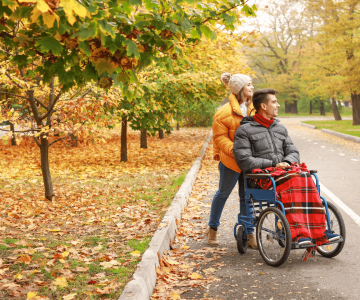
Autumn is the season to enjoy the leaves turning gold and crimson, the farmers harvesting their apple orchards, and families and loved ones feasting at Thanksgiving. Let's make the most of these activities and more by keeping ourselves safe from spread of COVID-19 in our communities.
We know what to do - it's back to the basics.
Here are eight layers of protection that we can incorporate to stop the spread of COVID-19 in our neighbourhoods, schools, workplaces and communities:
Have a plan to stay home when someone in your family is feeling unwell. Feeling sick? Stay home. Plan ahead with those in your household what you will do if someone is unwell. Be prepared for those days when you can stop the spread by staying in. When experiencing symptoms of COVID-19, get tested.Fewer faces in bigger spaces – keep your groups small. As we head into the colder weather, we’ll be indoors more. It’s more important than ever to keep close gatherings to the same small group of people.Keep your distance: Stop the spread by making space for yourself and others. Whether you’re at the store, at work or near others outside of your bubble, maintain a safe physical distance of two metres.Use masks when you can’t keep your distance: Keep masks on hand for your family when inside in public spaces, and in close contact with others.Pass on the shared meals: Avoid sharing food and drinks, including homemade foods like birthday treats or bake sale items. Students should label all their personal items and not share them.Wash your hands – especially during cold and flu season: As basic as it seems, this is one of the most effective ways to stay healthy and limit the spread of illness. Use soap and water, and do it often.Take time to talk: It’s ok to have questions and to share concerns or thoughts with your family and friends. Let’s encourage each other to talk about our plans, strategies and ways of staying safe this fall and winter.

Community & Culture
In modern society, we often undervalue the process of becoming older and instead focus on the end, of ‘being old’. The reservoir of knowledge that comes with time is one of the many values of aging.
There are many misconceptions and stigmas about aging. Unfortunately, these can prevent younger people from understanding the wisdom that comes with getting older.
As there are increasing numbers of older people in our society, new conversations have unfolded about the process of becoming older, including what it feels like and how it shapes the aging experience. These conversations are incredibly important as they demonstrate a person’s lived experience or human heritage, is a form of wisdom.
Cultivating the wisdom of aging requires a commitment to understanding the person and an investment in learning about the knowledge and experience they have acquired. Here are some ways you can learn from or with an older person, in order to cultivate wisdom:
Try unfamiliar things. Each time you try something unfamiliar you are opening yourself to learning or a growth mindset.Face your fears and do the uncomfortable. Look for things that challenge you and find meaningful growth in the experience.Talk to people with different perspectives or life experiences. Listen closely to the hardships, triumphs these will teach you about perspective, kindness and compassion.Pursue education. Purposely choose exposure to organized and well-researched points of view.Read. Use this quiet time to process and reflect on what you have learned.Lead with a beginner’s mind. Keep your mind open and curious.Review cause and effect. Being able to see patterns and linkages requires time for reflection.Slow down. Develop skills in meditation and mindfulness.Interested in learning more about cultivating wisdom? Check out the Change Maker Academy.
These are some of the techniques we explore in our work as gerontologists. Although often misinterpreted as the study of older adults, gerontology is the study of aging.
Health & Wellness
The harm experienced by Aboriginal peoples did not stop when the last residential school closed its doors in 1996. The effects of this policy are still felt today and are also inter-generational. Trauma-informed practice is an important tool in providing culturally safe health care to patients and clients who may be experiencing the long term effects of residential schools.
We must all work towards trauma-informed practice and culturally safe care for our patients and clients.
Susan Brown, IH President and CEO
Orange Shirt Day is observed on September 30, a day set aside to remember the harmful legacy of residential schools. This week on the Interior Voices podcast, Aboriginal Mental Wellness Practice Lead Jody Wagner joins hosts Vanessa Mitchell and Kris Murray to discuss Orange Shirt Day and the importance of trauma-informed practice.
Trauma-informed practice recognizes the long term health effects of trauma, seeks to understand where a person is coming from, and creates a safe space for the patient or client.
"Orange Shirt Day is a great example of how to approach trauma from a strengths-based capacity-building place," says Jody. "It can empower people to share and begin to heal from that trauma."
To hear the full conversation and learn more, tune in to the latest episode of Interior Voices.
Tune in to the podcast series
Interior Voices is a podcast that explores the intersection of health and culture in the workplace, everyday lives, and patient care. While it was created to help expand IH staff and physician engagement around cultural safety, many episodes will also interest community members. The series includes interviews with IH staff, physicians, and others living and working in the Interior region.
Learn more …
Check out the resources and concepts discussed in this episode:
One-And-A-Half Men: The Story of Jim Brady and Malcolm Norris
Aboriginal Mental Wellness Plan
Orange Shirt Day website
Truth and Reconciliation Commission
Residential school goes from tragedy to triumph (St. Eugene)
The wisdom of Mary Paul
Behind Closed Doors: Stories from the Kamloops Indian Residential School
Anahim Lake Dormitory (Ulkatcho) Residential School
Missing Children and Unmarked Burials report
United Nations Declaration on the Rights of Indigenous Peoples
Trauma-informed Care Toolkit
E-mail Jody Wagner

Health & Wellness
Cardiovascular disease (CVD) is the number one cause of death on the planet. Smoking, diabetes, high blood pressure, obesity, and air pollution can increase your risk for CVD.
But did you know at least 80 per cent of premature deaths from heart disease and stroke can be avoided?
In B.C., we know that 1 in 3 people have a chronic disease, we rely too much on cars instead of our feet, many of us do not have access to healthy foods, and in tobacco use rates are higher in the Interior Health region than elsewhere in the province.
How you can reduce our control your risk of cardiovascular disease
Use your feetSet a goal to walk for an hour a few times a week, or walk or cycle to work, or take the stairs instead of the elevator. Every step helps, and walking regularly is proven to reduce your risk of chronic disease.
Make healthy eating choices Helping out our hearts doesn’t have to mean giving up your favourite foods. Think about adding fruits and vegetables, choosing whole grains more often, and being mindful of your fat choices (choosing unsaturated fats such as olive oil or vegetable oil more often than saturated fats such as butter or coconut oil).
Quit smokingMany people who smoke have already tried to quit. Nicotine is incredibly addictive and can make it very difficult to quit without help. There are proven ways to improve your chances of success in ending the addiction – mainly by combining proven methods, such as Nicotine Replacement Therapy, medications and counselling. The health effects of quitting can be felt in as little as 20 minutes from that last cigarette! Within one year of being smoke-free, the risk of coronary heart disease drops by half, and continues to drop until eventually you have the same risk as a non-smoker.
Support health policies in your communityWe all live in communities that are shaped by policies. These policies can help us make healthier choices. For example, they can ensure streets and trails are safe and accessible for all ages and abilities, or increase the capacity of local food systems, or create equitable access to affordable healthy food. Our community plays a big role in our ability to adopt healthy habits and stick with them. Many local governments have passed smoke-free bylaws to reduce the risks of second hand smoke and reduce the likelihood the next generation will see smoking as socially acceptable.
Healthier communities lead to healthier hearts
A healthy community is when the built, social, economic, and natural environments provide people the opportunity to live to their full potential and to come together to make their community better for themselves, their family, friends, and neighbours.
Remember, big change starts with small steps. September 29th is World Heart Day
Research & Innovation
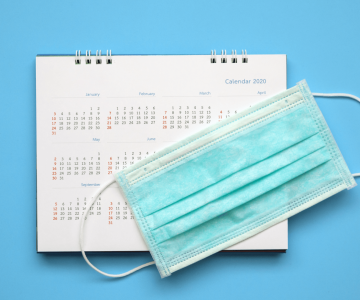
The past seven months reflect some of most turbulent times our country has seen, so if you are feeling anxious and confused, I understand.
The COVID-19 picture today is much clearer than it was when B.C. declared its first case on Jan. 28, 2020. That solid plan we all craved then has come into place and we are entering the next phase of the pandemic armed with increased knowledge and medical expertise about COVID-19.
It is nothing short of remarkable to look back to Feb. 14 when Interior Health recorded its first case of COVID-19. Our area of the province acted, we sacrificed, we kept our hospital admissions low, and our case counts down.
We have, tragically, had two deaths in the Interior Health region from COVID-19 and we know that no matter how low our numbers the impact is significant, especially for families who have lost loved ones. These losses are reason enough for all of us to continue to follow the safety precautions every day.
Our public health teams have dealt with a diverse range of COVID-19 cases and outbreaks since March.
We managed B.C.’s first outbreak of COVID-19 in a group of temporary foreign workers at an agricultural business. Later, illness at a South Okanagan farm was another example of excellent work as the spread was contained to the farm itself with only four people testing positive.
The same infection control measures and contact tracing went into high gear when outbreaks were declared at two long-term care sites. Swift action and teamwork resulted in only one person testing positive at each site and no residents becoming ill.
Similarly, outbreaks at the Okanagan Correctional Centre were kept to low numbers. In the second outbreak, declared over on Sept. 10, no inmates became ill.
Our contact tracers have worked tirelessly to reach anyone exposed to the almost 500 people in the Interior who have tested positive for COVID-19 since February. The efforts of our medical health officers, epidemiologists, environmental health, communicable disease and public health staff – all working together – are how we were able to bend the curve back in Kelowna after the July long weekend when a cluster of cases grew from a series of parties.
As CEO, I am proud of our teams, including the staff and physicians at COVID-19 testing sites, in hospitals, in the community, in long-term care, housekeeping, and assisted living facilities, in our labs, in our pharmacies and behind the scenes across all departments.
But – our success to date is not something health-care workers can do alone: we need you. In fact, we are counting on you to continue with the valiant efforts you have all shown to date.
None of the achievements listed above would have been possible without the outstanding commitment from the people who live in the Interior Health region. You stepped up. You washed your hands vigorously, you stayed close to home when you were asked not to travel, you are staying home now when feel ill, and you have maintained appropriate physical distance from others and have chosen to wear masks as an added precaution. These measures must continue in the months ahead.
Now, we’re re-starting our fall routines, including back-to-school.
We are watching this important and necessary step carefully. Our public health teams are ready to jump into action to support the school community and our children. Our medical health officers are working with school districts to answer questions from families and students and ease their fears.
While COVID-19 is new, dealing with communicable diseases such as meningitis and measles in schools is not. This is the role of public health and something we do very well.
We are also prepared at our testing facilities and have strengthened our IH lab capacity. More people have been trained and we’re ready to ramp up testing if required.
In some communities test results took longer than I wanted to see, so over the summer we focused our efforts on training more lab staff and stocking supplies to streamline testing. Today when you look at the B.C. Centre for Disease Control data page, Interior Health test results are typically a day or less.
As we head into the fall, we are urging everyone to keep their bubbles small. The precautions that help protect our long term care homes can be applied to schools. Together, fewer contacts and smaller bubbles will help prevent the spread of COVID-19 and its introduction to schools.
Our public health teams are equipped to follow up on COVID-19 cases, our primary care and hospital staff and physicians have the latest information on how to treat the illness, but none of us can stop the transmission of the disease alone. We need you.
I appeal to you to not be complacent and to continue to follow the safety precautions that we know works in stopping communicable diseases, including COVID-19. Stay home when you’re sick, maintain physical distancing, wash your hands frequently and keep your bubbles small.
We can do this together. Let’s renew and refocus our efforts to control this virus, to protect ourselves and loved ones from COVID-19.
-
Load More
Showing 765 of 836
Sign up for email updates