More than soup: the benefits of a universal school lunch program
This is part three in our three-part series that explores food literacy in schools in the Interior Health region.
The Souper Meals lunch program not only inspires students to try new foods and connect with each other over a meal but benefits our local food systems as well.
Across School District 83 and the Shuswap region, something simple is making a big difference at lunchtime: a warm bowl of soup.
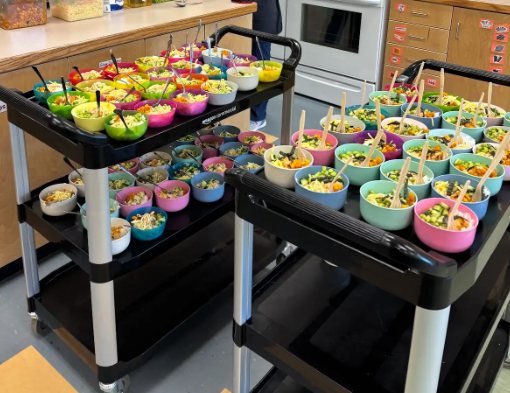
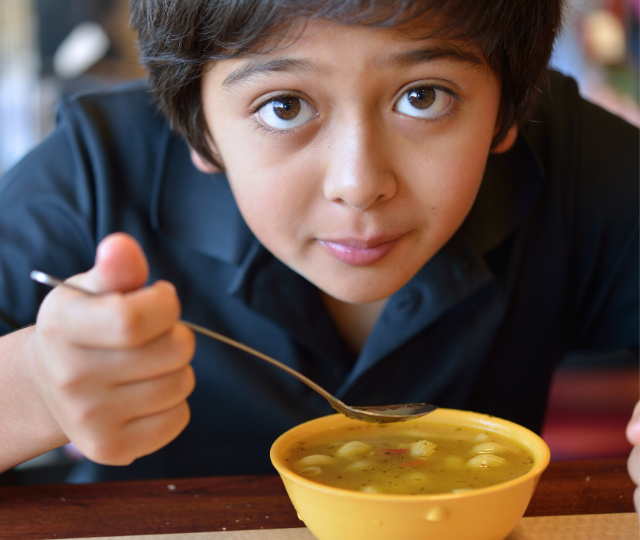
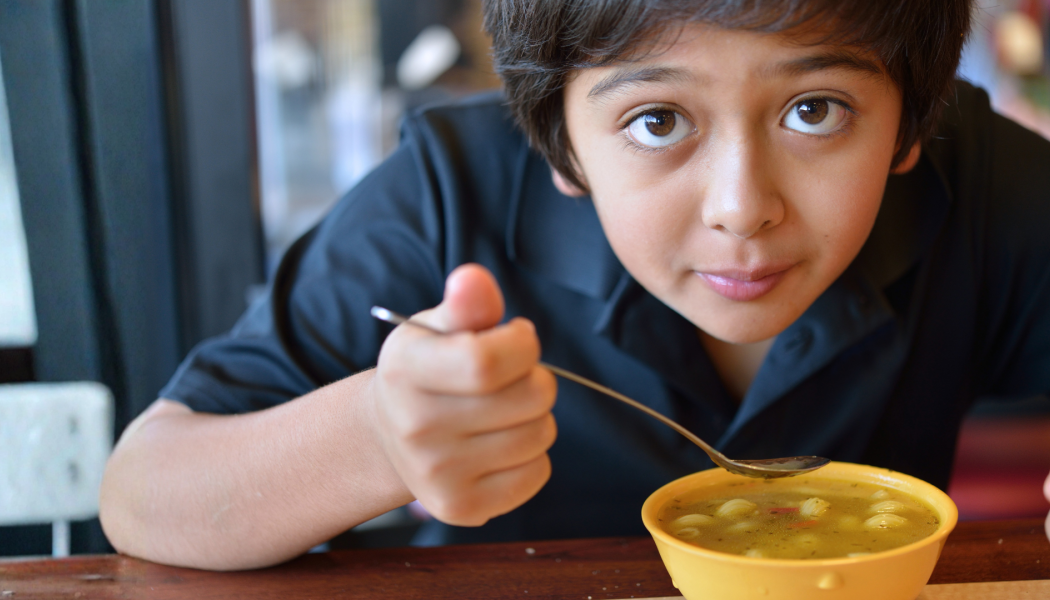
Souper Meals is a school lunch program where soup, made with local produce and meats, is served along with fruit, veggies and buns to students once a week free of charge.
The program not only inspires students to try new foods and connect with peers over a shared meal, but it also invests in the local food system.
School meal programs promote healthy eating
"Parents often wonder why their child will try new foods at school, even things like lentil soup, but are unwilling to try such foods at home." IH Public health dietitian Simone Jennings explains.
“When students see their peers eating food at school, they get curious about giving it a try and sharing the experience. School meal programs can be a great opportunity for kids to learn to enjoy new foods and expand their palate. This is an important step in developing healthy eating behaviours.”
Serena Caner, the School Food Coordinator for School District 83 and Souper Meals champion, observes first-hand the benefits of kids eating together and hears great feedback about the program.
“I think the most common feedback we get from parents is gratitude,” she says. “We hear parents saying, ‘My kid never eats soup at home, but they ate it today in school and really liked it!’ This helps open the door to eating new foods at home.”
Souper Meals is a universal program, meaning it’s available to all students. The benefit of this model is that there is less stigma for the students who are most in need of a free meal. All students can enjoy a meal together, try new foods, and have a positive mealtime experience.
Pandemic food deliveries inspire program
Serena started the program in response to the impact COVID restrictions had on a high school that did not have a food program or a cafeteria.
“During COVID, students were not allowed to leave campus, so the front office was inundated with random food deliveries,” says Serena, "I really wanted to have real food in schools.”
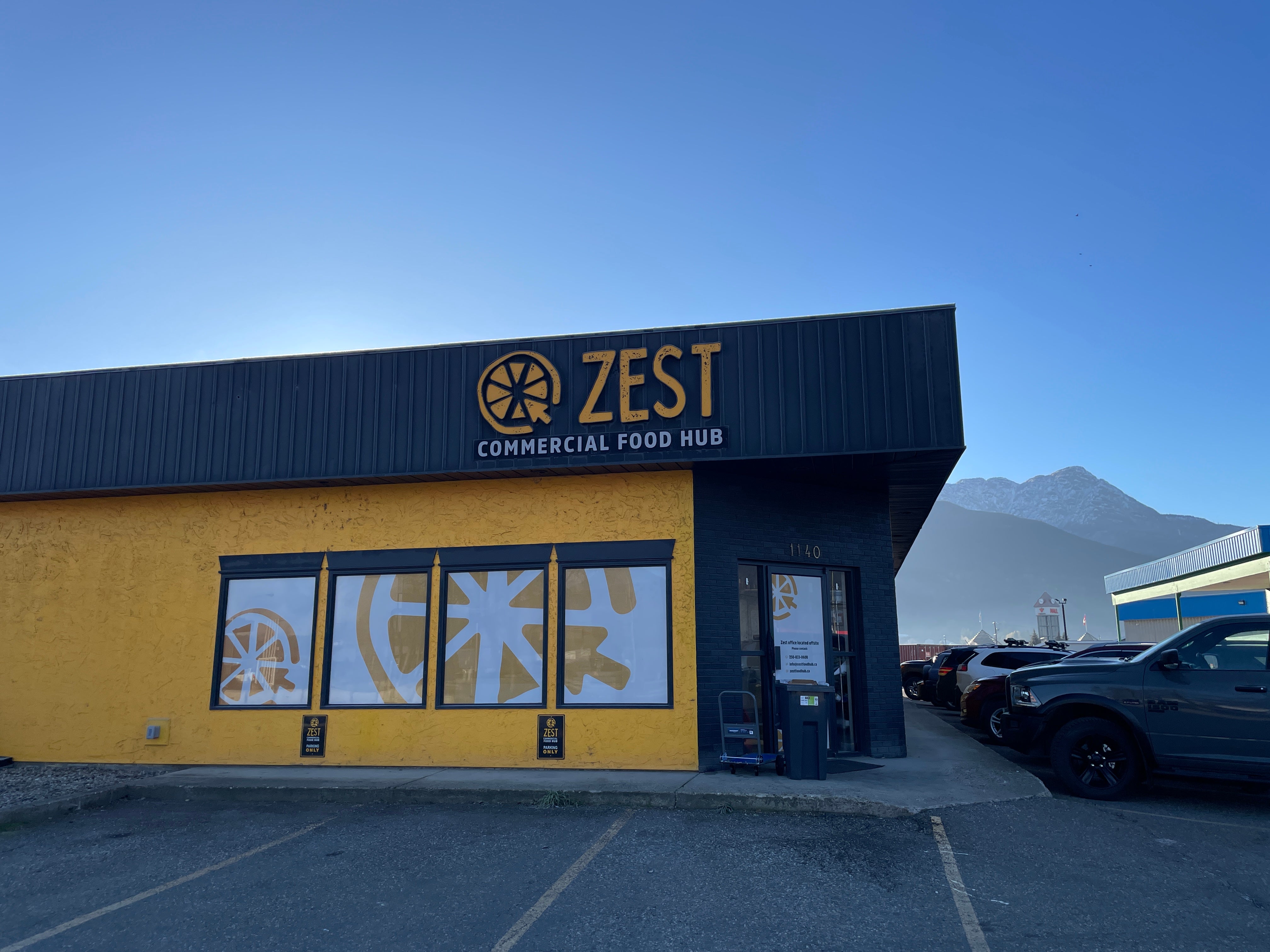
Serena coordinated with local organizations Shuswap Food Action Society and Zest Commercial Food Hub, to serve locally made soup for the school’s lunch, and in 2021, Souper Meals was born.
Today, the program continues to run as a partnership between the school district and the two community organizations, and they’ve expanded operations.
Every week Shuswap Food Action Society staff make soup from locally sourced ingredients in the commercial kitchen at Zest Commercial Food Hub and deliver the hot meals to schools.
In the 2024/25 school year, the Souper Meals program provided lunches to 23 schools, four Strong Start programs, and three community organizations, serving more than 90,000 meals.
Universal model is equitable and accessible
The program is able to provide free lunch to all students thanks to contributions from community organizations and voluntary donations that supplement existing funding from the provincial Feeding Futures funding. Launched in 2023, Feeding Futures commits $214 million over three years to strengthen school food programs—the largest investment in school meals in B.C.’s history.
Offering food in an equitable, accessible and non-stigmatizing way is one of the guiding principles of the Feeding Futures funding.
“Souper Meals is free, and because it's offered to everybody, it becomes very accessible,” says Serena, who believes that the universal model is part of the program's success.

Another guiding principle of the Feeding Futures funding is that students have access to nutritious foods. The Souper Meals program achieves this by using whole foods and ingredients sourced from local farms, including vegetables, dairy and meats. In fact, last year $180,000 of local produce and meats were purchased for the program.
This not only supports local farms, but it allows students to explore the tastes of locally produced food while also learning about where their food comes from.
“Everybody knows what a kohlrabi or winter radish is now and lots of kids like it. Same with salad turnips. Lots of kids like those,” says Serena.
Souper Meals is making a meaningful difference across the Shuswap region and is an example of an inclusive school meal program that nourishes students, supports local farmers and encourages connection to the community.
Learn more about creating healthy school food environments
The BC School Food Toolkit is a resource developed to support schools in creating and maintaining healthy school food environments. It includes guidance to support schools in their efforts to provide nutritious food for students through their school meal and snack programs, and through the Feeding Futures programs.
This article was written collaboratively by Kealani Wong and Alexandra Soanes, UBC student dietitians, and IH public health dietitians Simone Jennings and Leah Perrier.
Check out more stories like this
Tineke was the first policy specialist hired at IH. For two-plus years, she has helped organize many IH policies.
/stories/we-are-ih-policy-specialist-finds-joy-her-role
Recent regulatory changes are making it easier for U.S.-trained lab professionals to find a job in Canada. Attractive benefits make the move north enticing.
/stories/why-us-medical-lab-professionals-are-looking-work-canada
As a doula, Sage Thomas attended a home birth where the family integrated Indigenous ceremonial practices. She’s now practising midwifery in her home community.
/stories/tkemlups-te-secwepemc-grad-offers-midwifery-care-close-home
Thirty-five years into her career with IH, Elizabeth Adolph still loves what she does: taking care of residents at Mountain View Lodge in Lillooet.
/stories/we-are-ih-care-aide-proud-residents-consider-her-friend
In the 5 years since the In Plain Sight report was released, we’ve made strides towards being a culturally safe organization—but there’s more work to do.
/stories/ihs-fifth-plain-sight-response-supports-reconciliation
Inspired by her aunt’s career as a pharmacist, Angela became a pharmacy technician to use the hands-on aspect of compounding to benefit patient care.
/stories/we-are-ih-pharmacy-tech-enjoys-problem-solving-patients
STAY CONNECTED
Receive news, alerts, public service announcements and articles right to your inbox.