Content warning: This story deals with suicide, abuse and substance use.
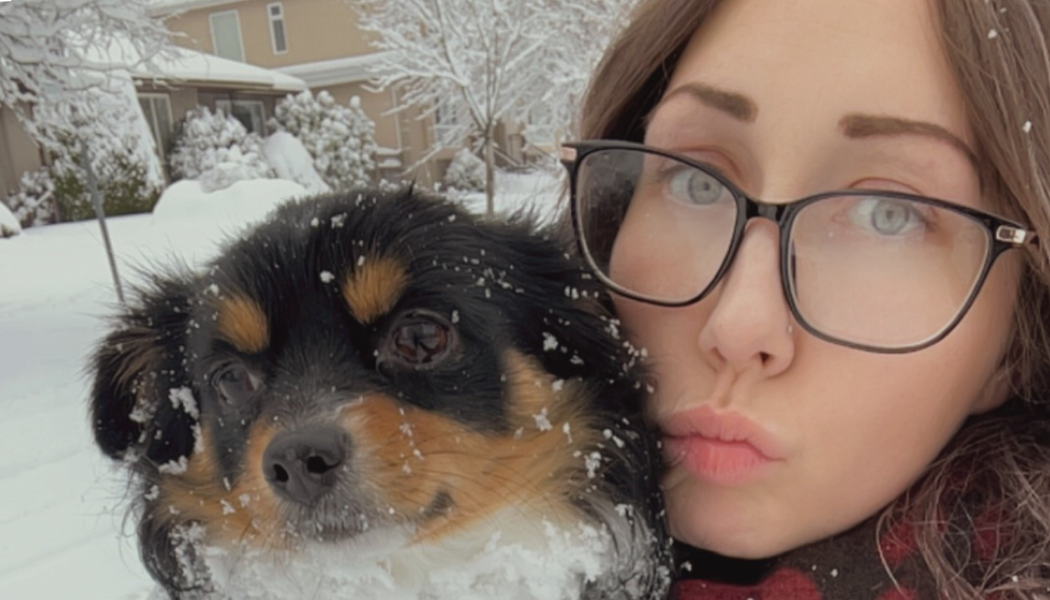
Jenn is sitting in her Kelowna apartment, her dark hair tied up in a ponytail. Her blue-green eyes shine behind large black glasses, and tattoos peek out from her white t-shirt. She’s bright and animated, and open about her journey in addiction.
Jenn recently joined Interior Health’s peer advisory group, and offered to share her story. “The more open and vulnerable I am, the less power addiction has over me,” says Jenn. “I made mistakes and I’m okay with that now. I’ve just always wanted to help people.”
In this Story…
Learn about Jenn's journey to recovery
Born and raised in Vancouver, the 30-year-old Kelowna resident came from a home marked by physical and emotional abuse and alcoholism. .
When Jenn was nine, she and her mom left her dad. Her brother had already left home when he was 13 to escape the abuse and beatings. By her early teens, Jenn had started drinking and doing drugs like mushrooms and ecstasy. She felt angry and aggressive.
At around 18 she quit all drugs and drinking. After high school, she went to college on an art scholarship and earned a diploma in social work.
While in college she started dating someone who liked to party and do cocaine. At a party one night, she was given a Xanax®—and that’s when everything started to go downhill.
“My addiction started with prescription pills like clonazepam and lorazepam,” says Jenn, which her doctor prescribed to her after she told him she had tried Xanax. “I wanted to feel the way they made me feel all the time to numb my pain. I thought, ‘These drugs are safe because they came from a pharmacy and I’m okay to take these.’”
She tried to wean herself off her prescriptions and Xanax and had a seizure while driving her car. “I woke up in an ambulance. That should have told me I have a problem,” she recalls. “But all I could think about is that I don’t have a car now—not that I could have killed people. The naïve part of me didn’t understand I was addicted to drugs.”
Jenn eventually turned to unregulated street drugs and was poisoned by carfentanyl-laced pills in 2019. She was in a coma for 12 days, had organ failure, and lost most of her hearing. But her addiction still had her in its grips, and all she could think of when she got out of the hospital was using again.
One year later, a few days before the pandemic in 2020, her brother died of an overdose at 36 years old. He had developed schizophrenia at 28. Feeling misunderstood by family and friends, and lacking the mental health supports he needed, he had turned to drugs.
Related Stories@IH: Penticton overdose awareness memorial bench to be unveiled Aug. 31
“Mental health and addiction go hand in hand. When you’re hurting inside, when you don’t like who you are, or don’t understand what you’re struggling with, drugs can fill that void,” she says. “My brother was a star pupil growing up. He wasn’t always sick, and that’s what humbled me. When you see someone walking down the street who you think looks crazy, know that they weren’t always like that.”
After trying rehabilitation and services like Union Gospel Mission, she was admitted to Hannah House in Maple Ridge.
“The first day I walked in one of the staff came up to me, hugged me and said, ‘I’m going to love you until you love yourself!’” says Jenn. “We’re still good friends today.”
Jenn moved to Clinton in early 2024 to get away from the Lower Mainland and to reconnect with her dad and her extended family. She was homeless by then, living on the Downtown East Side of Vancouver. Her dad had become a big part of her recovery journey, and had taken her in many times so she wasn't homeless. “I couldn’t fathom the fact I was literally the person who’s homeless on the DTES feeling sorry for other people. I had to get away from Vancouver,” she shares.
While staying with her aunt in Clinton, she relapsed and overdosed. “Clinton is small. I was alone. And alone in my head,” she says. “When you’re not using drugs to fill a void, you have a lot of free time on your hands, and that can be destabilizing.” After seeking addiction medicine treatment, she moved to Kelowna in spring 2024 with her partner, who she met in Clinton.
Today, Jenn is using her social work education and lived experiences to help others. “I like telling people I’m in recovery,” she says. “It’s such a big part of my life. When I say it out loud, my addiction doesn’t feel powerful. I’m not hiding anything. People tell me I don’t look like an addict, and I ask, ‘What is an addict supposed to look like?’”
Jenn also has a good relationship with her mom who has supported her throughout her journey. “I wasn’t using to hurt her, but when you’re in addiction, you take everyone who cares down with you,” she says.
“I’m a lot less judgemental than I used to be,” Jenn says. “Everyone’s trauma is different, and everyone reacts differently to their trauma. Addiction is a complex disease. We need more humility and open-mindedness to address this crisis.
“Although I’m not religious, I believe in a higher power,” she adds. “If addiction is greater than you, then there’s got to be something greater than addiction.”
Jenn is a member of the Interior Health Peer Advisory Group. The group is made up of people from across our region with lived and living experiences with substance use. In her role, she participates in panels about mental health and substance use and hopes to support others on their journeys.
Get help today
Call 310-MHSU (6478) to reach your local Mental Health and Substance Use Centre for support in your community.
If you’re experiencing feelings of hopelessness or thoughts of self-harm, you can call one of these numbers. These services are available 24 hours a day, seven days a week, including holidays:
- Interior Crisis Line Network - 1-888-353-2273
- Suicide Crisis Helpline - 988
- KUU-US (Indigenous) Crisis Line - 1-800-588-8717
- Métis Crisis Line - 1-833-638-4722
National Addictions Awareness Week (NAAW) is November 24–30, 2024. NAAW highlights solutions to help address alcohol- and other drug-related harms. It’s an opportunity for people in Canada to learn more about prevention and harm reduction, talk about treatment and recovery, and discuss solutions for change. Learn more.
Check out more stories like this
Cottonwoods Care Centre coordinator Lia Sambrielaz has been sharing small acts of kindness at IH for 37 years.
/stories/we-are-ih-coordinator-motivated-help-long-term-care-clients
Our 9-part video series teaches about the purpose and importance of advance care planning (ACP) and why it gives peace of mind to you and your loved ones.
/stories/lets-talk-about-advance-care-planning-your-voice-your-choice
A funding initiative is helping the Cariboo Chilcotin Métis Association (CCMA) grow food security in ways that reflect knowledge, culture and community needs.
/stories/funding-helps-williams-lake-metis-community-support-food-security
Meghan Johnston became a registered psychiatric nurse after watching people struggle to navigate the health-care system and witnessing the barriers they faced.
/stories/we-are-ih-psychiatric-nurse-finds-meaning-crisis-team-role
Jasmine Mingaud found relief and stability after connecting with the Central Okanagan PCN where a team helped her manage chronic pain and life challenges.
/stories/how-primary-care-team-changed-one-womans-chronic-pain-journey
Behind every appointment, lab test and medical imaging test are a complex set of processes. A small but mighty team is transforming how that work gets done.
/stories/saving-time-improving-patient-care-intelligent-automation
STAY CONNECTED
Receive news, alerts, public service announcements and articles right to your inbox.