How a primary care team changed one woman’s chronic pain journey
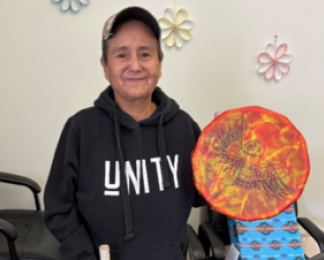
Jasmine Mingaud remembers the day she first started experiencing severe sciatic pain.
She felt the sharp pain the minute she woke up that morning. Multiple scans and MRIs revealed she had a compressed disc that was most likely pinching her sciatic nerve.
Jasmine was in and out of hospital—five times in one month—when the pain first cropped up. She says health-care professionals could not find the right combination of medication to ease her sciatic pain. At times she couldn’t get out of bed or get in and out of the shower.
She also could no longer work at her job stocking shelves at a local store.
“Nothing I tried helped,” says Jasmine. “They wanted me to go to physio. But because I couldn’t work, I had no income.”
Her doctor then told her about the Central Okanagan Primary Care Network (PCN).

“I felt someone was listening”
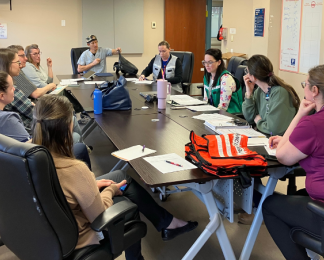
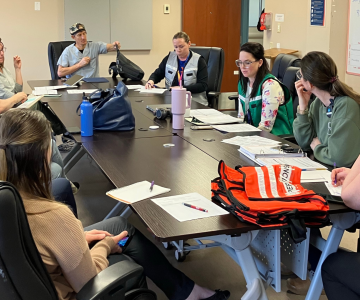
A primary care network (PCN) is a network of health-care professionals who work with patients as a team. The Central Okanagan PCN team, for example, is made up of family physicians, nurse practitioners, registered nurses, occupational therapists, social workers, registered dietitians, physiotherapists, pharmacists, and other clinicians.
When Jasmine started going to the PCN two years ago, it changed everything.
“They care about you,” Jasmine notes. “When I got connected with the network, it was the first time I felt someone was listening.”
Cara Hills, a clinical pharmacist with the PCN, was Jasmine’s first point of contact and continues to work with Jasmine to this day. Cara helped her optimize her medications and gave her resources to help with her chronic pain.
Pharmacists at the PCN do not dispense medications. Rather, they listen and make recommendations.
Pharmacist, dietitian collaborate for Jasmine's care
Through time, listening and relationship building, Cara learned more about Jasmine’s situation, which stretched far beyond her sciatic pain.
Cara soon learned that Jasmine also has celiac disease, which means eating any gluten damages her small intestine. Eliminating all gluten in the diet can be difficult in today’s world where there is “hidden” gluten in foods and additives and often requires the help of a dietitian.
Jasmine’s dietary restrictions and low income have made eating properly a challenge.
“Literally all I was eating for a few months was just rice because I can’t afford to get my gluten-free food,” she says. “The PCN dietitian has been really helpful trying to figure out different ways that I can get my protein and everything without spending a crazy amount of money.”
Cara referred Jasmine to Registered Dietitian (RD) Haeli Draper, who also works in the PCN.
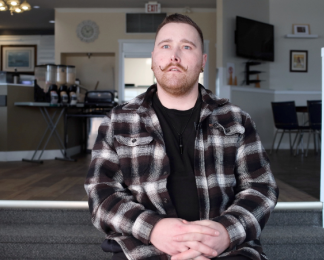
“Jasmine was initially referred to Cara for medication, and then to me for support with healthy food choices,” explains Haeli.
Haeli has enjoyed routine follow-ups with Jasmine.
“Her situation snowballed. Because of her low income, she couldn’t make the best food choices while trying to manage chronic pain,” notes Haeli. “With that, there is high risk for other metabolic conditions like high cholesterol, fatty liver and blood sugar issues.”
Knowing patients are receiving the best care is the best part of Haeli’s job.
“It's great when you can see patients like Jasmine progress,” says Haeli.
Jasmine’s story is one example of where different health-care professionals’ worlds intersect.
“We cover a lot of the same clinics and the same patients, and we share knowledge with each other,” says Haeli. “I would say dietitians and the pharmacists probably have the most crossover in terms of medication and supplements.”
Changing the way a patient fuels their body can have a major impact on the medications and supplements they need.
“This is especially true with things like blood pressure medications or blood sugar medications,” she notes. “If someone is super active, for example, and changes their diet, that can influence their health drastically. So that's something we're always screening for.”
Benefitting from the support of a social worker
From medications to diet to mental health, the PCN gives patients like Jasmine a wide variety of support.
Her journey, however, has admittedly taken a toll.
“Mentally, I struggled every day. I was always depressed and had severe anxiety,” she says. “I still struggle with anxiety and depression daily.”
This is where social worker Emily Kiryliuk has come in to help.
“We did a lot of counselling about Jasmine’s chronic pain journey,” notes Emily. “She wanted support navigating and processing her feelings. Her mother, who has been a big support for her, had also moved away during that time. We looked into finding other supports.”
Jasmine’s mom has now returned to Kelowna. That, along with a less physically demanding job, have also improved her situation.
Connected to other resources
Jasmine is so appreciative of people like Cara, Haeli and Emily, who’ve helped her during tough times.
The network connected her with other resources and social supports while she was in pain and couldn’t work.
Jasmine is much better now: not perfect, but better. Although the sciatic pain remains, she knows where she can go to get the help she needs.
Jasmine’s story is one that highlights how health-care professionals collaborate with people in their care to improve health and quality of life.
This month, we celebrate pharmacists, dietitians and social workers who support the health and well-being of patients and clients around the IH region.
Check out more stories like this
IH’s Healthy Community Development team worked with student nurses to help local governments make breastfeeding more supported and welcomed in communities.
/stories/breastfeeding-toolkit-helps-cities-support-inclusive-spaces
Talking to your teens about drugs shows you care they make safe choices—it doesn't encourage drug use. Here's how to have talks with an open heart and mind.
/stories/how-talk-teens-about-drugs-and-other-substances
Cottonwoods Care Centre coordinator Lia Sambrielaz has been sharing small acts of kindness at IH for 37 years.
/stories/we-are-ih-coordinator-motivated-help-long-term-care-clients
Our 9-part video series teaches about the purpose and importance of advance care planning (ACP) and why it gives peace of mind to you and your loved ones.
/stories/lets-talk-about-advance-care-planning-your-voice-your-choice
A funding initiative is helping the Cariboo Chilcotin Métis Association (CCMA) grow food security in ways that reflect knowledge, culture and community needs.
/stories/funding-helps-williams-lake-metis-community-support-food-security
Meghan Johnston became a registered psychiatric nurse after watching people struggle to navigate the health-care system and witnessing the barriers they faced.
/stories/we-are-ih-psychiatric-nurse-finds-meaning-crisis-team-role
STAY CONNECTED
Receive news, alerts, public service announcements and articles right to your inbox.