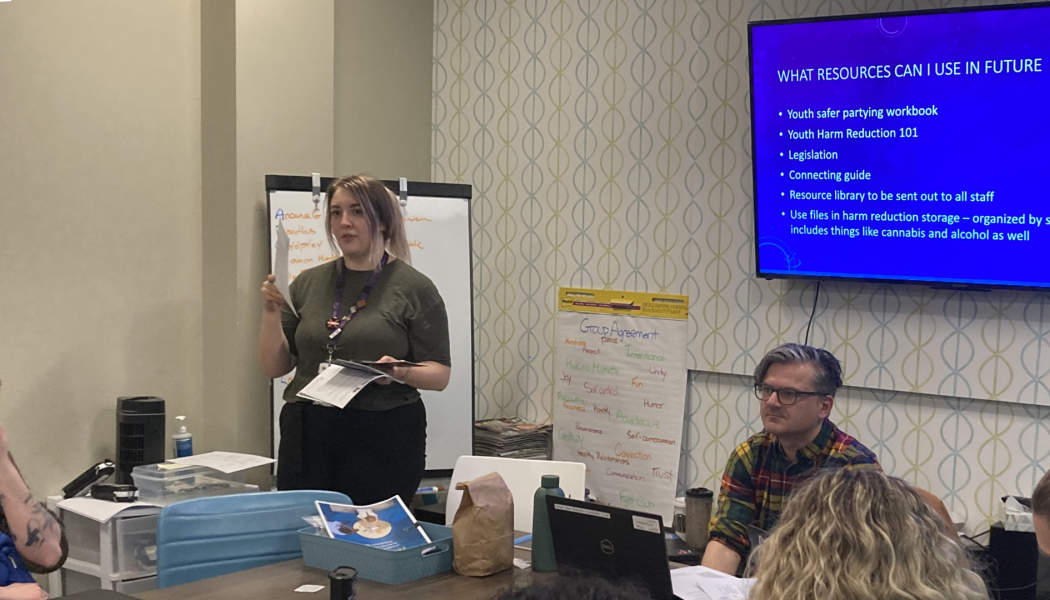
IH’s Youth Harm Reduction team makes inroads in training, policy
Three years ago, if you searched online for “youth harm reduction” you wouldn’t have found much at all. This is no longer the case.
Interior Health’s (IH) Youth Harm Reduction team has been around for just under three years. But in that time, their work has become highly regarded across B.C. and Canada.
Creating something “completely new”
Harm reduction is a term commonly used to describe programs, policies and practices that aim to reduce negative consequences that can be associated with high-risk behaviours like substance use. Harm reduction is also about reducing systemic harm (policies and practices) that contribute to isolation and oppression and create barriers to wellness.
Harm reduction programs have been around for decades in B.C. but there has never been a dedicated program for youth.
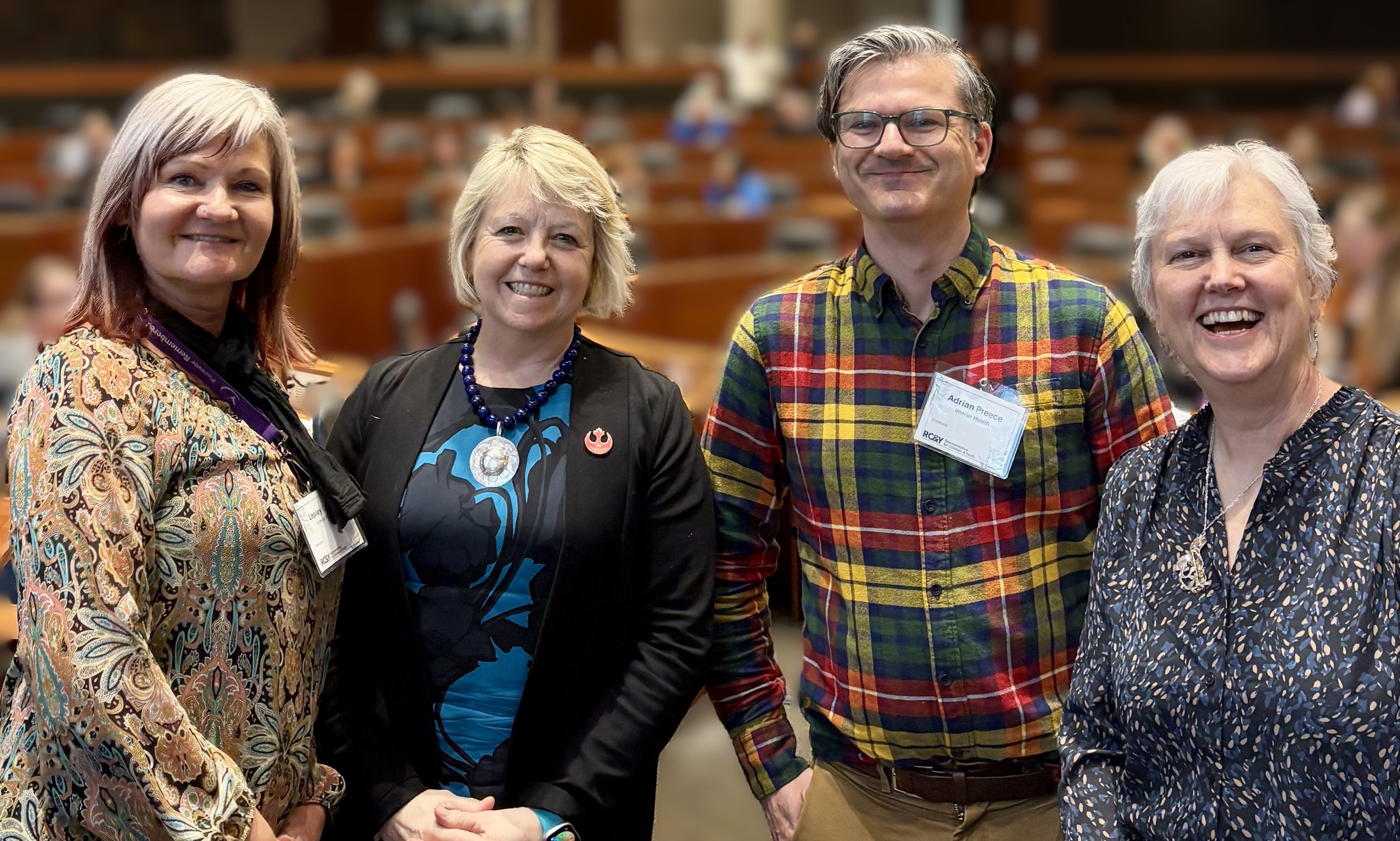
Lesley Coates was the first harm reduction coordinator to join the newly formed IH Youth Harm Reduction team in 2022. “When I started this role, I searched online for resources. It became apparent very quickly that there was almost nothing out there,” shares Lesley.
Five months after Lesley started her role, the team expanded to include two more youth coordinators. Together, they set out to create something completely new.
A needs assessment with youth services providers, IH staff and schools revealed the lack of information about harm reduction for youth was creating barriers.
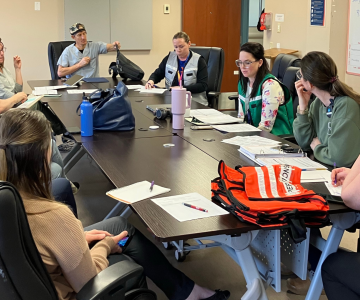
“Youth services providers didn’t know what they could and couldn’t do,” explains Adrian Preece, a youth harm reduction coordinator. “That resulted in one of two things: First, youth didn’t have access to services. Second, there was an incredible amount of emotional distress for those who were providing youth harm reduction services because they did not know what was allowed.”
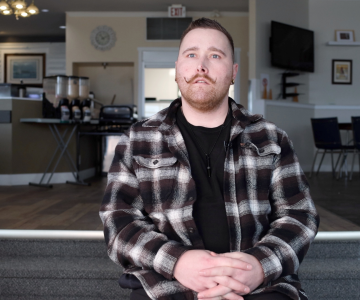
Our staff really appreciates the training and resources offered through the IH Youth Harm Reduction team. Not only do they help us to have a better understanding of the services available, but they have also helped staff finetune their skills so they can have safe and open conversations with young people about substances.
Reducing harms, supporting policies in schools
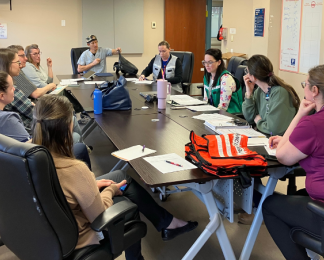
In addition to building the capacity of IH staff and community agencies to do this work, the team works with middle and secondary schools across the IH region.
“When we started, harm reduction in schools was a somewhat new concept. There were quite a few misconceptions about what harm reduction meant,” says Lesley. “Our work with schools is more about reducing harms like stigma, supporting school policy reviews and advocating for evidence-based, honest substance use education. It’s a more upstream approach.”
In 2023, the team launched the Naloxone Blue Kit Program for schools. The only one of its kind in B.C., the program provides training and free naloxone kits to help middle and secondary schools prepare to respond to an opioid drug poisoning (overdose). They also developed a Canadian version of Safety First: Real Drug Education for Teens Educator’s Guide, a ready-to-use learning resource on substance use aligned with B.C.’s secondary school curriculum.
Many teachers want to do a good job teaching about substance use but may not know where to start. Programs like Safety First are really needed and our teachers are excited to have an evidence-based resource that is easy to use and includes great tips to create a safe space for honest conversations.
From training to toolkits
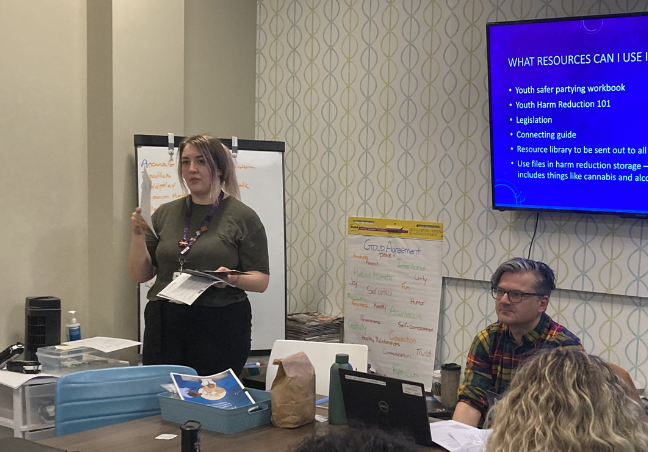
Since its inception, the Youth Harm Reduction team has trained close to 3,000 youth services workers, policy makers and government staff across Canada, including 400 staff from the Government of New Brunswick. They’ve developed self-paced training for IH staff and service partners, as well as a Youth Harm Reduction Toolkit for service providers and schools.
They’ve also consulted on provincial policy and practice with the BC Centre for Disease Control, Ministry of Child and Family Development, and the B.C. Representative for Children and Youth.
“The work this team is doing is generating important conversations and meaningful change about how we are responding to youth substance use," says Jessica Bridgeman, manager, Harm Reduction, Population and Public Health. "It’s really inspiring to see how many people in our health authority, province and country are interested in this work and having these conversations.”
Get in touch
For more information about IH’s Youth Harm Reduction training, programs and courses, contact a coordinator by email.
Check out more stories like this
Thousands of volunteers of all ages work alongside our staff across our region. Read how volunteers are making a difference in delivering outstanding care.
/stories/volunteers-bring-kindness-comfort-people-we-serve
IH’s Healthy Community Development team worked with student nurses to help local governments make breastfeeding more supported and welcomed in communities.
/stories/breastfeeding-toolkit-helps-cities-support-inclusive-spaces
Talking to your teens about drugs shows you care they make safe choices—it doesn't encourage drug use. Here's how to have talks with an open heart and mind.
/stories/how-talk-teens-about-drugs-and-other-substances
Cottonwoods Care Centre coordinator Lia Sambrielaz has been sharing small acts of kindness at IH for 37 years.
/stories/we-are-ih-coordinator-motivated-help-long-term-care-clients
Our 9-part video series teaches about the purpose and importance of advance care planning (ACP) and why it gives peace of mind to you and your loved ones.
/stories/lets-talk-about-advance-care-planning-your-voice-your-choice
A funding initiative is helping the Cariboo Chilcotin Métis Association (CCMA) grow food security in ways that reflect knowledge, culture and community needs.
/stories/funding-helps-williams-lake-metis-community-support-food-security
STAY CONNECTED
Receive news, alerts, public service announcements and articles right to your inbox.