Explore Stories

Community & Culture
We Are IH is a new recognition campaign to spotlight our people in a real way – through pictures and stories that allow their authenticity to shine through! Each month, four Interior Health employees or medical staff will be featured through our News@IH website and our weekly In the Loop Roundup email newsletter.
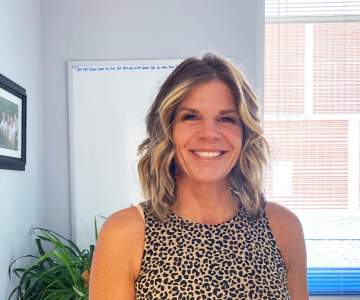
Currently a Program Coordinator for Staff Recognition at Cariboo Memorial Hospital, Anna has been with IH for eight years.
Born and raised in Williams Lake, British Columbia, in the ancestral area of Tsilhqot'in (Chil-co-teen)/ Chilcotin, young Anna was a happy, outgoing and kind-hearted girl who loved to show appreciation to loved ones. As the Program Coordinator for Staff Recognition at Interior Health located at Cariboo Memorial Hospital, the growth of her new role over the past year is a reflection of her genuine personality and her love of giving and showing appreciation for others' contributions.
As a goal-oriented person herself, Anna understands the importance of recognition and showing appreciation to staff at Interior Health. Currently leading the new staff recognition initiative, We Are IH, Anna’s generosity shines through as she works hard to help create a workplace where everyone feels appreciated.
"Always do one per cent better every day and always be kind," is Anna's favourite quote.
Inspired daily by the tremendous efforts and dedication of staff at IH, Anna continues to pave the way to growing staff recognition. In light of the current pandemic, she has been resourceful and innovative in staff recognition. One of her proudest moments at IH is organizing the Long Term Service Awards and this year Anna has pivoted to a virtual platform and continues to ensure that Interior Health employees are feeling appreciated for their hard work and dedication.
With a love of traveling, this year has looked a bit different for Anna and her loved ones, so when she hasn’t been working she has been out camping in the beautiful outdoors of British Columbia. Those who work alongside Anna sincerely appreciate her valuable contribution to the organization and her helpful and kind demeanour. We appreciate you so much Anna and are thankful to have you a part of Interior Health!
Check back each Friday for the next We Are IH feature.
For more information contact EmployeeExperience@InteriorHealth.ca.
Community & Culture
When the project to build a patient care tower at Penticton Regional Hospital began, a process of stakeholder engagement went with it. Groups of invested and impacted individuals including local residents, First Nations communities, and elected officials became part of a consultation process lasting several years.
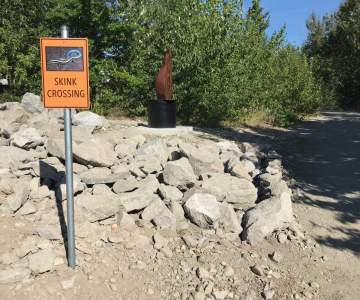
Despite the epic task at hand, a group of passionate environmentalists wanted to ensure the project considered the interests of even the tiniest of stakeholders. They championed a cause over three years to restore and protect the habitat of a small lizard known as the western skink.
The western skink has made its home in many parts of B.C. including the area surrounding Penticton Regional Hospital. It has been identified as a species-at-risk due to its dependency on dry rocky slopes, silt embankments and rocky creek banks to make its home.
A young western skink is recognizable by its bright cobalt blue tail
Alongside the monumental task of enhancing patient care through the building of a brand new patient care tower at Penticton Regional Hospital, this small group of environmental stewards worked to ensure the project would protect the smallest of local residents.
The work paid off. Thanks to their advocacy and fundraising efforts, the new landscape of the hospital grounds now includes artificial dens which provide critical shelter for winter and the careful placement of flat cover rocks.
In recent months as the skinks have returned to the area, staff and visitors around the hospital are reminded to tread lightly, thanks to a series of skink crossing signs.
Health & Wellness
International Overdose Awareness Day is a global event held each year on August 31 to raise awareness about overdose, and reduce the stigma associated with substance use.
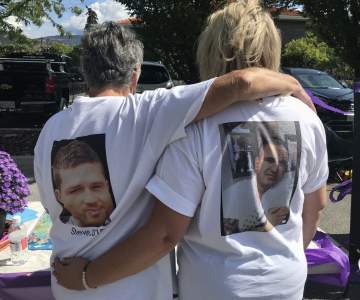
It is also an important day to recognize the loss and grief felt by so many people around the world who have lost loved ones to overdose.
This opportunity to build awareness and provide public education is more important than ever - recent trends are alarming. According to the latest report from the BC Coroner's Service, within Interior Health during the first seven months of 2020 alone there have been 143 overdose deaths. This is a drastic increase over 2019, when there were 139 deaths total in IH for the whole year.
“There is no doubt that communities across Interior Health have been greatly affected by the current overdose public health emergency. International Overdose Awareness Day gives us an opportunity to raise awareness about overdose and reduce stigma associated with substance use and drug-related death," says Interior Health Substance Use Practice Lead Jessica Mensinger. "As the impacts of overdose continue to be felt by individuals, families and communities across the region, we want to do everything we can to come together to make a difference. International Overdose Awareness day is an opportunity to do that on a broad scale.”
Within Interior Health this important day is being recognized in many different ways.
In Kamloops, RIH will be lighting its pedestrian walkway again this year, and the advocacy group Addiction Matters Kamloops will be working alongside a community group to fund a meal for people who are homeless and marginally housed, while also promoting the Words Matter pledge. Visit www.addictionmatters.ca for information about the Photo Voice project and the Words Matter pledge.
The pedestrian walkway at RIH in Kamloops will be lit in purple again this year, to mark International Overdose Awareness Day.
In Kelowna, people visiting the Community Health and Services Centre on Doyle and Ellis will have the opportunity to check out the Photo Voice Project, a gallery-style collection of photos by individuals and families with lived experience of substance use, helping others see the world through their eyes.
Examples of contributions to the Photo Voice Project that will be on display in Kelowna for International Overdose Awareness Day.
Activities planned in other parts of the region include the Okanagan Nation Alliance's Purple Ribbon Campaign, and an awareness campaign by Moms Stop the Harm. Local Community Action Teams are marking the day by providing Naloxone training and distributing wellness kits.
To learn more about the overdose public health emergency, including prevention tips, visit the Overdose Emergency Information webpage.
Community & Culture
We Are IH is a new recognition campaign to spotlight our people in a real way – through pictures and stories that allow their authenticity to shine through! Each month, four Interior Health employees or medical staff will be featured through our News@IH website and our weekly In the Loop Roundup email newsletter.
Currently the Peri-operative Manager at East Kootenay Regional Hospital in Cranbrook, AJ has been with IH for 15 years.
AJ continues to be inspired by the desire to empower others to succeed. Her colleagues, friends and family would describe AJ as very driven, and her career at IH is a reflection of her hard work serving others. Over the past 15 years, AJ has loved working with people and trying to improve the quality of service we provide.
AJ is very active and loves exploring the beautiful outdoors of her home in Cranbrook, where she was raised after being born in Trail, B.C. She headed to the big city, Vancouver, for 13 years before moving back to Cranbrook in 2005. A lot has changed since then, but her favourite band is still Motley Crue!
"Learn From Your Mistakes."
A.J.'s favourite quote.
You could say that health care runs through AJ's family line, with her mom's career as a Unit Clerk for IH and her sister working alongside them at IH as a Nurse Practitioner. This past January their roles suddenly changed as they were by their father's side during his cardiac arrest. AJ says he received incredible care in both Creston and Kelowna. The family is thankful he is healthy and that they were able to support him.
When AJ isn't working, you can find her out hiking with her bulldog, Ella, her two kids, ages 20 and 19, and her husband, or training for Ironman Triathlons and Ultra Marathons. An adventurer at heart, AJ is anxiously awaiting to be able to travel again and continue her global explorations with her family.
Check back each Friday for the next We Are IH feature.
For more information contact EmployeeExperience@InteriorHealth.ca.
A.J.'s nomination of Crystal White keeps the We Are IH loop going:
"Crystal is strong, independent, smart and decisive. She leads the Critical Care Network; she was my ‘person’ while I worked in the Emergency Network."
Community & Culture
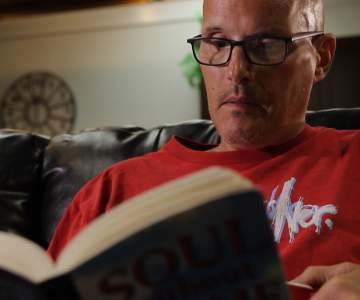
Brian is a familiar figure in his community. He is an avid reader who enjoys hiking and is sometimes seen walking with his pet Bearded Dragon draped over his shoulder.
“I love her. She keeps me out of trouble,” he says affectionately. “She was quite small when she was born - she was a runt. I wasn’t sure if she was a boy or a girl, so I named her Sasha.”
He is involved in multiple volunteer projects, such as community clean-ups and anti-stigma work, and provides harm reduction support at the local outreach centre.
“I volunteer doing outreach, giving out harm reduction supplies. I teach people how to use Naloxone. I work at the Cammy Lafluer clinic. I like to help out, steer someone away from using drugs if I can, but if not, I’ll teach them how to do it right, to be safer.”
Brian’s story began in a Vancouver hospital where he was born with serious health complications due to his biological mother’s heroin and alcohol use.
After spending the first year of his life in hospital, Brian was adopted. He grew up in Cranbrook, doing “normal kid stuff” like playing soccer, riding motorbikes, and fishing. But it was never easy.
“I was always awkward. I felt like I was in the way, like I didn’t fit in,” he recalls.
That feeling changed the first time he experienced an opioid. As a young teen he was given morphine in hospital following an injury. For the first time in his life, he says, Brian felt normal…like he belonged.
It is a sentiment supported by substantial research. "Literature shows a connection between trauma and opioid use. We know that early childhood trauma - like being in a hospital for a year - changes the brain and makes it vulnerable to the effects of opioids," says Interior Health Substance Use Director Corinne Dolman.
It was the beginning of a longstanding dependency on opioids, which Brian has managed with prescription methadone for more than 30 years.
“I’ve definitely been impacted by stigma. I see it every day.”
“Just accept people as they are. Just treat people the way you want to be treated.”
“It’s that simple.”
Watch the video and share Brian’s story. Check out more resources about stigma and substance use. Help #EndStigma.
Brian's story is part three in a four part series of stories and videos about the stigma faced by those impacted by substance use.

Health & Wellness
"There are only so many ways to fix a broken leg," says Debi Morris. "But if you have five patients with a mood disorder, there will be so many ways you will approach treatment."
For Debi, the field of Mental Health and Substance Use (MHSU) is fascinating, in part, because care and treatment needs to be individualized to be effective. What may be recovery for one person will be different for another person.
"It's the epitome of patient-centred care because if we're not [individualizing treatment], we're not going to get the outcomes that we need for people."
Debi serves IH West as the MHSU Administrator. Aboriginal Health Lead Vanessa Mitchell interviewed Debi recently for the Interior Voices podcast series. The pair discussed the importance of patient-centred care and reminisced about the time they spent together last summer on the Nlaka'pamux communities tour.
Vanessa Mitchell points out this approach very much aligns with trauma-informed practice and culturally safe practice. The Nlaka'pamux communities tour afforded managers like Debi the time and experience to see firsthand the unique health challenges experienced in communities.
"We have a lot of conversations in our day-to-day work about access," Debi says. "But if someone lives on a gravel road fifty kilometres or more from the nearest services, what does that look like compared to someone who lives in downtown Kamloops?"
Spending time in communities is also an important step towards building relationships and "relationship is a pathway to removing barriers in and of itself," says Debi.
To hear the full conversation and learn more, tune in to Interior Voices.
Listen to the podcastInterior Voices is a podcast that explores the intersection of health and culture in the workplace, everyday lives, and patient care. While it was created to help expand IH staff and physician engagement around cultural safety, many episodes will also interest community members. The series includes interviews with IH staff, physicians, and others living and working in the Interior region.
Health & Wellness
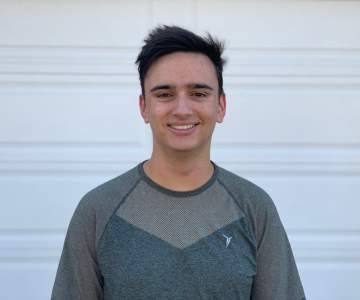
Jonathan Green is a recent high-school grad from Kelowna. His mom is also a physician at the Urgent and Primary Care Centre in town. As part of a recent class project he created a video to help spread the word about staying safe and protecting ourselves against COVID-19.
"I see my mom going to work every day and I just want her to be safe," says Jonathan. "So for her to be as safe as possible, I want to help spread the message of physical distancing and other precautions like staying home when sick and wearing a mask when distancing isn't possible."
Watch Jonathan's video and learn more about protecting yourself and your loved ones from COVID-19 by checking out our trusted information.
Community & Culture
We Are IH is a new recognition campaign to spotlight our people in a real way – through pictures and stories that allow their authenticity to shine through! Each month, four Interior Health employees or medical staff will be featured through our News@IH website and our weekly In the Loop Roundup email newsletter.
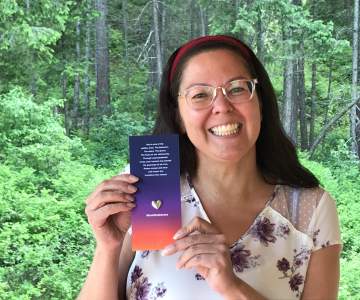
Vanessa Mitchell is an Aboriginal lead and program manager of the Journey to Aboriginal Cultural Safety program. She has worked at the Vernon Health Centre for five years.
Vanessa's life has been inspired by her ancestors and warriors, past and present, and their vision and fortitude to stand strong to ensure Indigenous peoples could hold positions of influence, such as her integral role here at Interior Health. Her philosophy of "hard work and heart work" is the driving force behind all the energy she gives to both her community and career.
Vanessa truly loves her family, community and Nation for their humour, resilience and heart that brings laughter and love into her daily life.
"The work of Cultural Safety and Humility is hard work and heart work."
Vanessa's favourite inspirational quote.
In the book We Get Our Living Like Milk From The Land, Sqilxᵂ (pronounced skay-lugh) is defined as the original people who learned to live together on the land in peace. As a Sqilxᵂ, this connection is held close to Vanessa's heart, as it always reminds her of who she is and where she came from.
Born and raised in the Okanagan/Syilx community and Nation, Vanessa has continued to give back to her community in her adult life as she has created a home for her family where she was raised.
As an Okanagan/Syilx woman, mother, and daughter, Vanessa understands first hand how much hard work and heart work goes into her career and community. Being acutely and intricately knowledgeable of Indigenous people, families, communities, and Nations with personal living experiences of cultural unsafety and racism, she balances both the hard work and heart work.
Check back each Friday for the next We Are IH feature.
For more information contact EmployeeExperience@InteriorHealth.ca.
Vanessa's nomination of Rose Melnyk keeps the loop going:
"Rose is a strong Secwépemc woman grounded in who she is and where she come from, with clinical front-line experience as an RN within IH whose heart is with the people and specifically with the Elders."

Health & Wellness
Have you ever thought what would improve the quality of life for people living in your community? What would make your community a better place to live? What matters most to you? Sharing your ideas, visions, and views during an Official Community Plan (OCP) process is a perfect opportunity to engage in local government planning to help shape your community.
Every 5-10 years, local governments must update their Official Community Plan. An Official Community Plan (OCP) is a bylaw, which contains goals and policies that guide land use into the future. The OCP reflects the values and priorities of the community. It serves as a guiding document for city staff and elected officials when making decisions about many aspects of community planning. Community planning with health in mind provides more opportunities and reduces barriers for all people to live healthy lives.
Research shows that approximately 60% of what influences our individual health is related to elements found within our everyday lives and the environment that we live in[1]. An OCP has the ability to significantly impact the way our communities are planned, and therefore significantly influence the individual health of community members. A healthy community is when the built, social, economic, and natural environments are well balanced to allow people the opportunity to live to their full potential and come together to make their community better for themselves, their family, friends, neighbours and others. Read the Link between planning and health: Official Community Plan for more information.
Best practices to support healthy community development include:
Compact and complete communities support walking, cycling, and use of public transit over cars. This leads to improved health outcomes, better physical and mental well-being, and greater opportunities for social connectedness.[2]
Prioritize diverse housing forms, tenure types, and mixed income development. Unstable housing can lead to poorer health outcomes. Stable and affordable home provides warmth, safe, and healthy environment to support your health as well as foster good mental and physical health and improved quality of live. Read Health & Housing Backgrounder & Case Study for more information.
Agriculture directly impacts health by influencing food choices and healthy eating patterns. For example the presence of local farmers’ markets encourages people to eat more fruits and vegetables.1
As a member of the public, it is important to become involved in local government planning. Local governments must consult with the public on planning and development processes. Visit your local government webpage to find out more on how you can become involved today – they often have a newsletter you can sign up for to receive updates.
Right now, the City of West Kelowna is in phase 1 of its OCP Update to create a new community vision and is seeking input from anyone that lives, works, or visits West Kelowna. Visit ourwk.ca to learn more.
For more information on the link between health and planning visit:
www.planh.ca
www.thinkupstream.net
[1] Canadian Medical Association. Health Care Transformation. 2013.
[2] BC Center for Disease Control. Healthy Built Environment Linkages Toolkit: making the links between design, planning and health, Version 2.0. Vancouver, BC. Provincial Health Services Authority, 2018.
-
Load More
Showing 783 of 836
Sign up for email updates