What’s in your kit? Packing emergency kits or grab-and-go bags
“Preparedness is not a luxury. It’s a necessity.”
That’s the message Interior Health’s (IH) Health Emergency Management BC (HEMBC) team wants to get across to our communities as British Columbia emergency agencies prepare for another unpredictable wildfire season. And, with temperatures warming up, now is the time to review your emergency plan and take stock of your emergency kit, so you’re prepared.
While there are some fundamental items that should always live in your kit—water, food, a battery-operated or wind-up flashlight and radio, personal medications, extra keys and cash—everyone’s personal situation is unique and there are no rules for what you can or can’t add to those basic supplies.

What our emergency team members pack
IH’s HEMBC team members share what they pack in their emergency kits or grab-and-go bags:
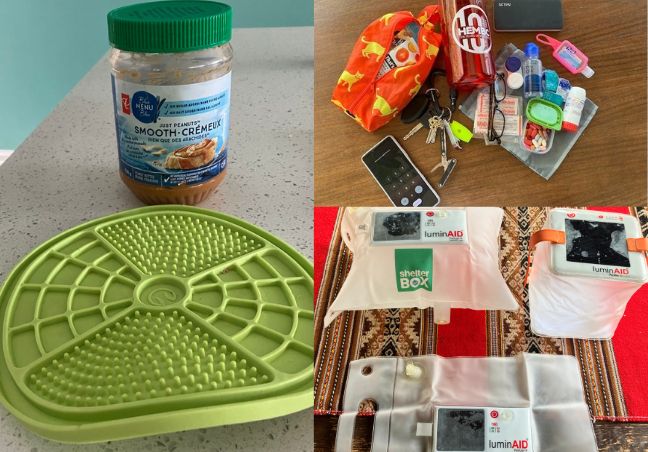
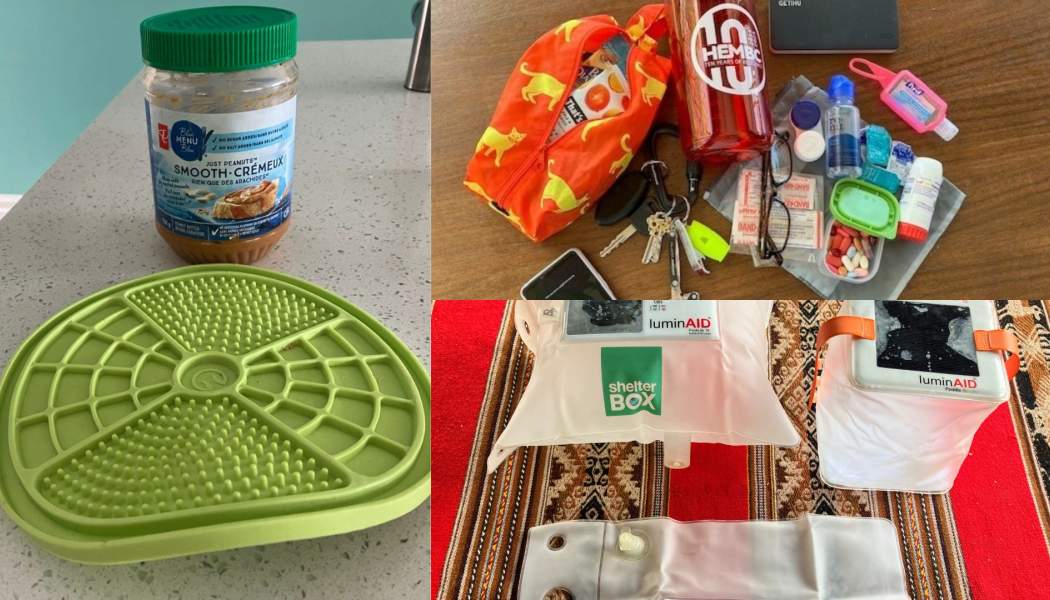
“As the owner of a very fluffy, white 22-month-old Samoyed boy, his evacuation go-bag is bigger than mine,” laughs Sue Gardner-Clark, director, Health Emergency Management, IH. “Angel needs brushing every night (with multiple brushes). A lick pad with peanut butter is required, otherwise I am wrestling the brush off Angel as he thinks it’s a great chew toy.”
In Sue’s kit:
- Toothbrush, peanut butter flavoured toothpaste, and peanut butter
- Dog bed and cool mat
- Water sprayer
- Dog food for two weeks, spare bowls, treats
- Dog toys
- Shampoo, detangle spray, towels, and pet wipes
- A spare lead
- List of pet-friendly hotels
- A spare crate, as needed
“With all that stuff and Angel, there is hardly any room left in the car for my stuff!”
Sue’s kit almost includes more items for her dog, Angel, than her. |
Angel is in good hands should Sue be faced with an emergency. |
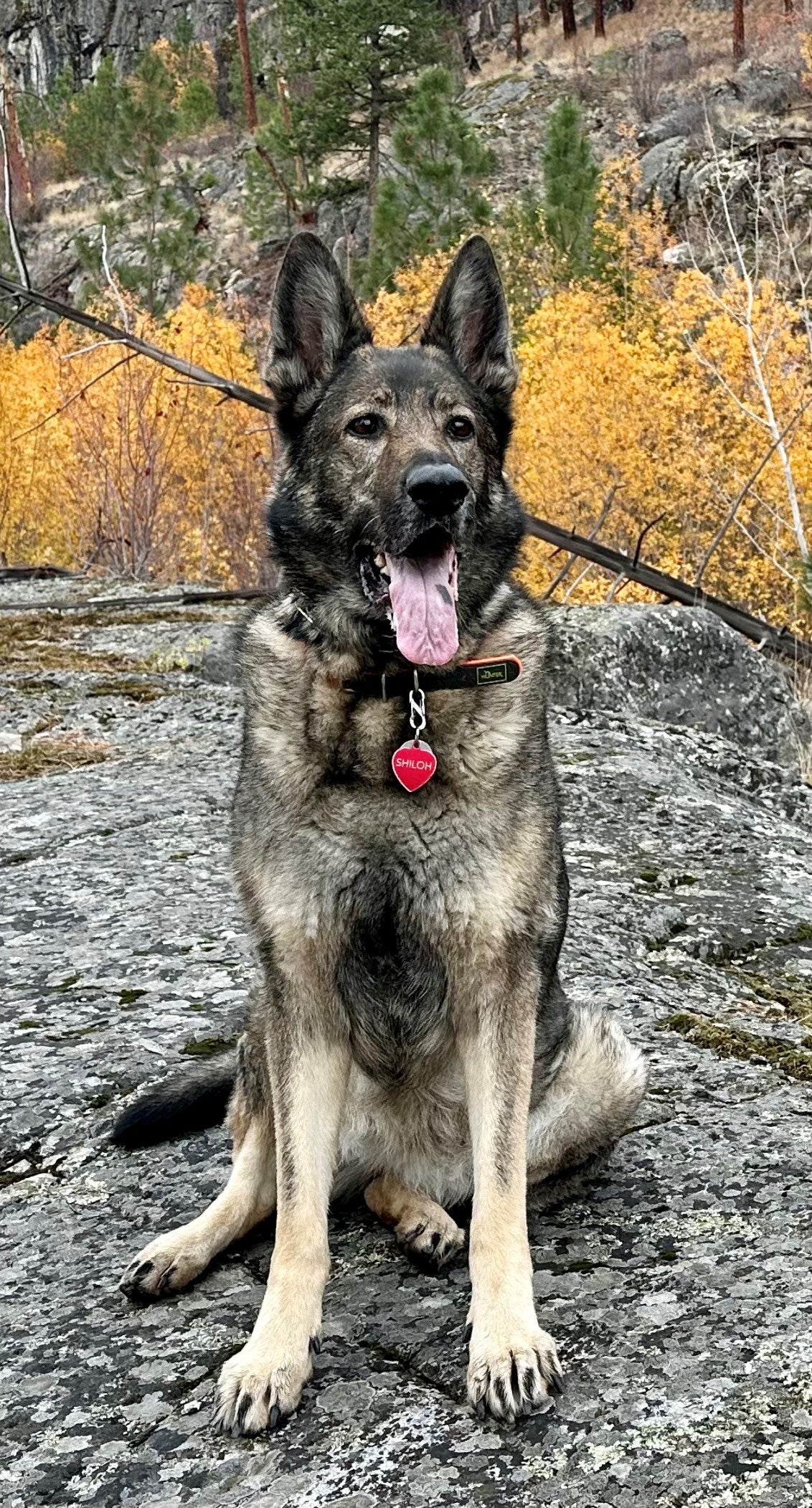
“As someone who has had caregiving responsibilities within my home and for others, I’ve had to ensure that I can not only care for myself, my wife and our senior dog, Shiloh, but that I can continue to function for those whom I’m responsible for,” says Anne Morgenstern, director, Emergency Response, IH. “As such, our evacuation kit has always included a box that contains important documents that is clearly marked, ‘Take in case of fire!’”
In Anne’s kit:
- Important document box and cash
- Photos of our IDs on our phones
- Spare glasses, contacts, medications
- Bottled water, water purifying tablets and dehydrated/canned foods for seven days
- Dog food for seven days plus a leash, meds, bed, toy and poo bags for Shiloh
- Battery bank with solar charging panels
- First aid kit, flashlight and candle
- Sleeping bags, warm clothes and shoes
- Emergency stove and cooking pot
- A tarp, rope, safety vest and gloves
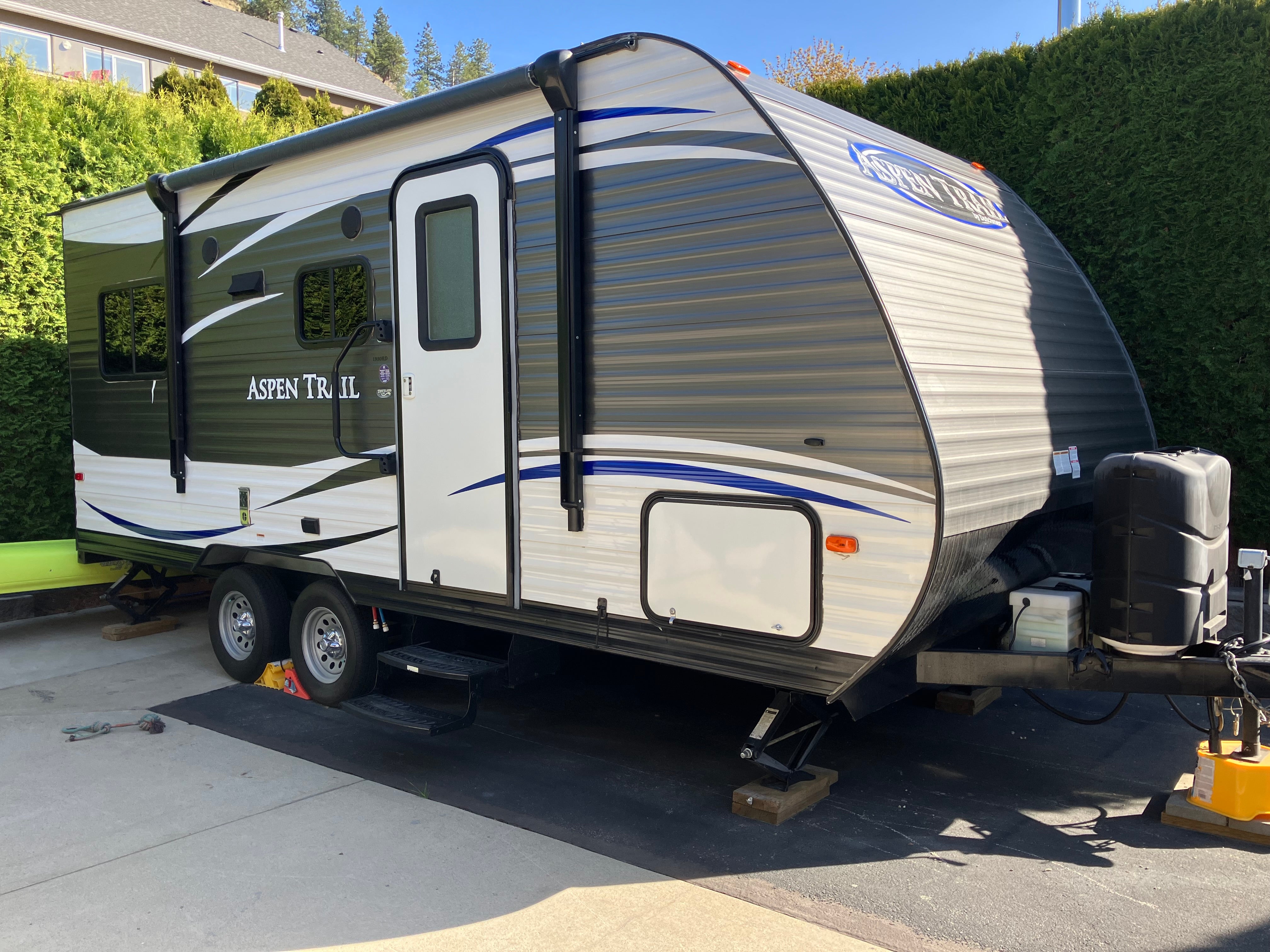
“Twelve months of the year, we have our grab-and-go bins ready at all times. For the spring, summer and fall, we have our trailer that can be mobilized within about 20 minutes. We always ensure vehicles are topped up with gas during fire season.”
|
Anne has planned her evacuation kit carefully so she can continue to function for those she is responsible for in the event of an emergency. |
|
Anne's evacuation kit has plenty of items for the family's senior dog Shiloh, including dog food for seven days plus a leash, meds, bed, toy and poo bags. |
|
During the spring, summer and fall, Anne's family has a trailer that can be mobilized within about 20 minutes. |
“Honestly, my trailer is my grab-and-go bag,” says Colin Swan, specialist, Health Emergency Management, Thompson/Cariboo – Chilcotin. “It offers comfortable accommodation for four and is ready for deployment in 20 minutes. It’s fully adaptable to city life or living off the grid. The trailer has water, food, sleeping quarters and a generator, and I can pull it everywhere.”
In Colin’s kit:
- A trailer stocked with potable and non-potable water
- A food supply
- Extra clothes
- A dual-fuel generator and batteries
“Throw in a sturdy bin with the important documents, and I'm good to go to the hills.”
Colin’s emergency kit is on wheels and ready to go in 20 minutes. |
|
The ‘Fun Finder’ is ready for adventures… and emergencies. |
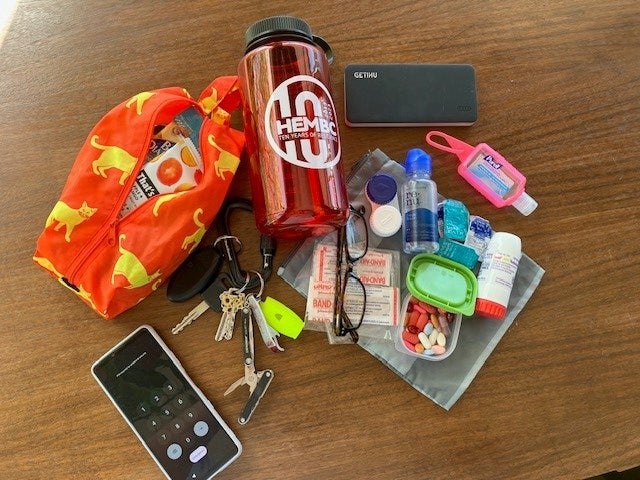
“I don’t have a kit per se, but I do have items that are always with me, either in my car, in my purse, or on my keychain or phone,” explains Anne Benn, specialist, Health Emergency Management, South/Central Okanagan.
In Anne’s kit:
- Car: First aid kit, water purification LifeStraw and water purification tablets, personal hygiene supplies, flashlight, some tools, clothes, flip-flops, blankets, towels, bathing suit
- Handbag: Water, snacks, medications, glasses, hand sanitizer, phone battery
- Key chain: Multi-tool, whistle, carabiner
- Cell phone with emergency alerting notification apps, and completed emergency contact information
“Have an in-town and out-of-town point of contact,” advises Anne. “In my case, if the phones don’t work, the family plan is to come home. And if that doesn’t work, we go to a central location within our community. We also have pictures of anything important in our home and stored in the cloud.”
|
Anne encourages people to carry with them their completed emergency contact information in case they’re injured or unable to respond during an emergency. |
|
Anne’s emergency items live in her car and handbag, as well as on her key chain and cell phone. |
“As Mike Tyson said, ‘Everyone has a plan until they get punched in the mouth,’” says Andre Bloemink, specialist, Health Emergency Management, East/Kootenay-Boundary. “I would not enjoy being punched in the mouth, but you cannot have a plan without information. Any good plan allows for self-sufficiency and does not burden the system further when everyone else is scrambling.”
In Andre’s kit:
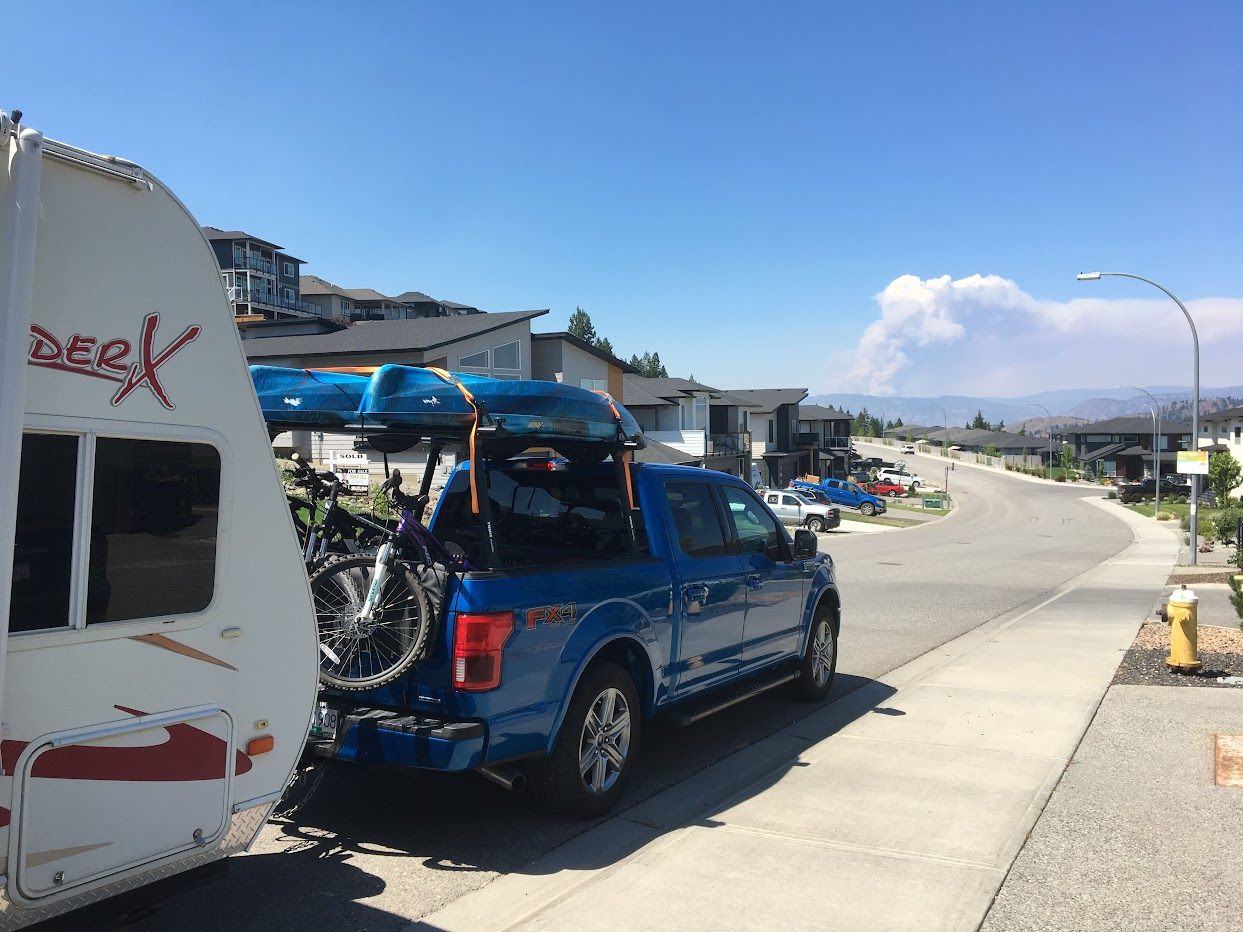
- Small solar-equipped RV stocked with fuel, water and non-perishable food
- Second vehicle topped up with fuel to carry other necessities such as small family heirlooms, photos, hard drive and pet essentials
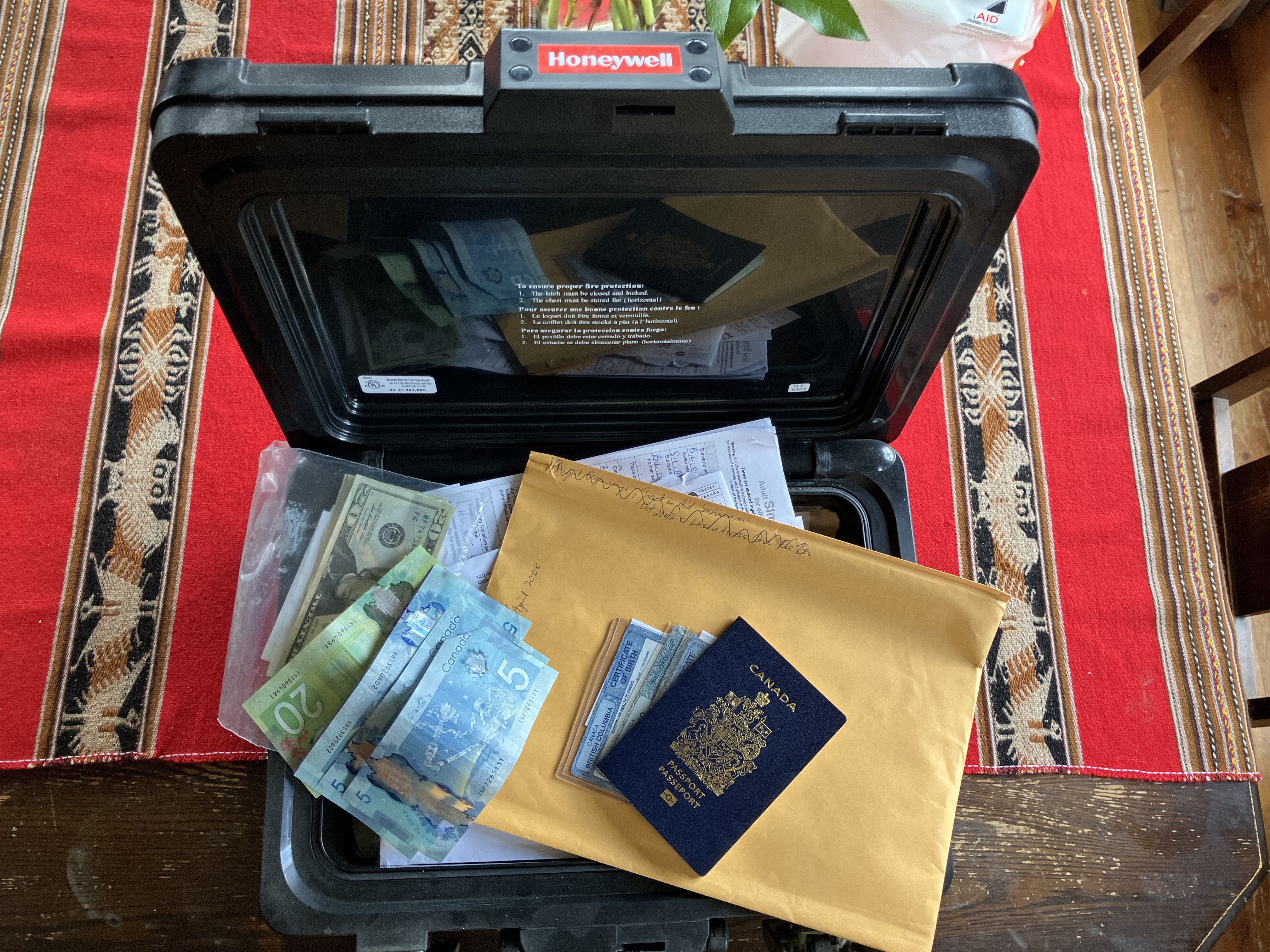
- Fireproof box with essential documents, ID and cash
- LuminAID solar lights
“Our family lives in three locations at any time of the year. We still maintain a family plan that includes local hazards, egress routes and 48-hour check-in time if communication systems are affected,” he explains.
“Everyone is equipped with various phone apps that will provide their area’s source of truth information and alerting, such as Voyent Alert or Alertable, the BC Wildfire app, or the WeatherCan app.”
|
Andre advocates for self-sufficiency wherever possible. |
|
In addition to the fire-proof box, Andre recommends packing a personal power bank and rechargeable solar lights. |
Get prepared and build your kit
Emergency Preparedness Week is a great time to educate yourself about the hazards and emergencies your community could face, as well as take steps to get better prepared, make a plan and build a kit.
It’s important to remember that during an emergency, grocery stores, gas stations, pharmacies and banks may not be available, and critical public services can become quickly overwhelmed or under-resourced to operate at full capacity. Your emergency kit should include enough supplies to last at least 72 hours.
- Learn about hazards and emergencies (Government of Canada)
- Know your local hazards — use the interactive BC hazard map (Government of BC)
- Make an emergency plan (Government of Canada)
- Build an emergency kit (Government of Canada)
- Prepare your pet guide (PreparedBC)
If you’re on a tight budget, here are some tips to prepare cost-effective emergency kits.
You should also consider putting together a grab-and-go bag for your home, workplace and vehicle, which is easy to take with you in case you need to leave immediately.
More stories in this series
Read our series of blog posts on emergency preparedness and evacuations, and to protect yourself from summer heat and wildfires.
Check out more stories like this
Tineke was the first policy specialist hired at IH. For two-plus years, she has helped organize many IH policies.
/stories/we-are-ih-policy-specialist-finds-joy-her-role
Recent regulatory changes are making it easier for U.S.-trained lab professionals to find a job in Canada. Attractive benefits make the move north enticing.
/stories/why-us-medical-lab-professionals-are-looking-work-canada
As a doula, Sage Thomas attended a home birth where the family integrated Indigenous ceremonial practices. She’s now practising midwifery in her home community.
/stories/tkemlups-te-secwepemc-grad-offers-midwifery-care-close-home
Thirty-five years into her career with IH, Elizabeth Adolph still loves what she does: taking care of residents at Mountain View Lodge in Lillooet.
/stories/we-are-ih-care-aide-proud-residents-consider-her-friend
In the 5 years since the In Plain Sight report was released, we’ve made strides towards being a culturally safe organization—but there’s more work to do.
/stories/ihs-fifth-plain-sight-response-supports-reconciliation
Inspired by her aunt’s career as a pharmacist, Angela became a pharmacy technician to use the hands-on aspect of compounding to benefit patient care.
/stories/we-are-ih-pharmacy-tech-enjoys-problem-solving-patients
STAY CONNECTED
Receive news, alerts, public service announcements and articles right to your inbox.