Explore Stories
Community & Culture
The Health Sciences Academy (HSA) in Kamloops is marking another milestone with a second cohort of students having successfully completed the unique program.   HSA connects local youth with real-world health-care experiences thanks to a partnership between School District 73 (Kamloops-Thompson) and Interior Health (IH). This program provides students an up-close look at a wide range of health-care environments where they learn from the professionals who work there. “By shadowing a variety of departments at Royal Inland Hospital (RIH) and across IH, students gain meaningful experience that broadens their understanding of the many career possibilities in health care,” says Michele Mansus, staff educator at RIH.
Community & Culture
In the early years of life, particularly from birth to five years old, a child’s social and emotional development is just as vital as their physical growth. Early childhood experts say the years before kindergarten are a critical time that shapes how a child expresses feelings, manages stress, builds relationships and learns about themselves and others. “You know the famous saying ‘The early years last forever,’” says Interior Health’s (IH) Population Health program specialist Rhonda Tomaszewski. “That’s why we jumped on board to participate in the Feelings First program when the province approached us.” IH helps implement and deliver the program and its resources in this region.
Community & Culture
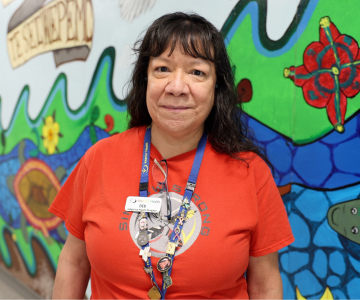
Name: Sarah Pilar Dares (she/her/hers) Job Title: Clinical Operations Manager Length of Service: 20 years Worksite:  Royal Inland Hospital Community: Kamloops Ancestral Territory: Tk'emlups in Secwépemc Nation. Favourite Quote / Advice to Live By: "People will forget what you said and what you did, but they will never forget how you made them feel." —Maya Anjelou  For more than two decades, Kamloops has been home for Sarah Dares, who lives, works and provides care on the traditional and unceded territory of the Secwépemc Nation.   Since arriving to Kamloops in 2001, she has dedicated most of her nursing career to serving families within the area, and building relationships rooted in trust, humility and deep respect.  Her work has taken her across the region as a regional educator, supporting communities throughout Secwépemc, syilx/Okanagan, Nlaka’pamux, Ktunaxa, St’át’imc and Tsilhqot’in territories, an experience she describes as an honour and a privilege.  Born and raised in Whitehorse, Yukon, her family’s Tlingit roots and lived experiences have shaped her understanding of reconciliation in a profound way. She carries this with her every day.  “Several members of my family are Tlingit and have been directly affected by the intergenerational impacts of residential schools, racism and systemic inequities. Because of this, reconciliation is deeply personal and connected to the lived experiences of my family and community.”  Sarah adds reconciliation means listening deeply, honouring Indigenous knowledge, validating lived experiences, and fostering health-care environments where Indigenous families feel respected, safe and welcomed. “Reconciliation, to me, means creating space for truth, humility and meaningful change,” explains Sarah.    “It's an ongoing commitment to learning and meaningful relationship-building and doing everything in our power not to repeat history.” 
Health & Wellness
Experts say creating a community that supports people living with dementia creates safer spaces, ensuring people of all ages and abilities meet their needs close to home. The Alzheimer Society of Canada estimates more than 1.7 million people in Canada are expected to be living with dementia by 2050. It’s about triple the roughly 600,000 Canadians currently living with the illness. Vernon, in particular, is a rapidly aging community with a median age of 49.2 years and a significant portion of its population (28 per cent) being over the age of 65. The City, in partnership with Interior Health and other community agencies, worked on creating the City’s Age and Dementia Community Plan to lay the groundwork for helping to create a more dementia-friendly community. “By helping to demonstrate that communities can make meaningful, tangible improvements for older adults and people living with dementia, we can create environments that benefit everyone,” says Janelle Rimell, a community health facilitator with IH.
Community & Culture
For many patients, having access to news and entertainment can make a hospital stay feel less stressful and isolating. Interior Health (IH)’s Bring Your Own Device program encourages patients to bring their own smartphones, tablets or laptops to the hospital for entertainment and communication. Bedside TVs are no longer available. Bringing your own device gives you more control over your experience and a choice in how you stay connected and entertained. All our hospitals offer free, upgraded Wi‑Fi, so you can: Watch your usual streaming services Check your newsfeeds Play your favourite games Stay in touch with family and friends through messaging or social media If you plan to bring a device, don’t forget your charger and consider packing headphones for privacy. Packing thoughtfully and bringing the right items helps your admission go smoothy, gives you peace of mind, and lets you focus on rest and recovery.
Health & Wellness
Eight teens have been selected as winners for the 2025 Beyond the Buzz 2.0: Youth Voices on Substance Use poster contest.   Youth in Grades 6 to 12 living in the Interior Health region were invited to participate in the contest. Teen judges from the Interior Health YOUTHWISE Advisory Group evaluated and scored each poster based on a specific set of criteria in each theme category.  Rather than centering messages on the health risks associated with substance use, IH’s contest invites young people to take the lead in shaping the conversation. By elevating youth voices and their lived experiences, the initiative fuels authentic peer‑to‑peer communication that makes this contest for youth, by youth.  This year, the contest had four key themes:  Alcohol: Choices on Tap: Alcohol, Youth & Consequences   Tobacco: Tobacco Impact: Commercial Tobacco’s Environmental and Community Impacts*  Vape: Unmask the Vapour: Nicotine, Addiction & Hidden Dangers   Cannabis: Mind at Risk: Cannabis, Brain Development & Youth Well‑Being   *Commercial tobacco is not reflective of traditional, ceremonial, sacred and medicinal uses of raw tobacco by Indigenous and other cultures. 
Health & Wellness
Dr. Mark Szynkaruk—known simply as Dr. Mark to his patients—is a family doctor based in the small town of Grand Forks. A graduate of the University of Toronto’s medical school, he came to the Kootenay Boundary region over a decade ago as part of the first cohort of UBC’s newly-launched rural family medicine residency. He was drawn to the variety of work that medicine in a small, rural town offers and knew early on he wanted to work in addiction medicine. Today, his practice encompasses emergency, general medicine, long-term care, pediatrics, geriatrics and the addiction medicine program. In 2020, he was recognized with the patient-nominated My Family Doctor Award for the Interior Health region, one of five doctors recognized B.C.-wide. We chatted with Dr. Mark about how he became interested in addiction medicine, the changes he has seen since he launched the program, and what he wants people to know about addiction.
Health & Wellness
Interior Health (IH) is reminding residents to protect themselves and their families by purchasing food only from approved food businesses. In 2025, IH received 60 complaints about unapproved food vendors—a number that continues to rise. More people are turning to home-based food businesses to earn extra income or test out a new business idea with minimal personal investment. “Life is just getting more expensive,” notes IH Environmental Health Officer (EHO) Marion Masson. “Some people are selling food as a secondary source of income.”
Community & Culture
Name: Tineke Dineen (she/her/hers)  Job Title: Policy Specialist  Length of Service: 2 years  Worksite: Kelowna Community Health & Services Centre  Community: Kelowna  Ancestral Territory: sylix    If you have a question about developing an Interior Health (IH) policy, reaching out to Tineke Dineen is a smart idea. Tineke was the first policy specialist hired at IH. For two-plus years, she has helped shape the role and organize many IH policies.  “I was excited to take the time to really learn about what needs the organization has for my position and what I should pursue to be of most use and value,” Tineke says. “Policy is such an interesting and unique area of the organization. I have the opportunity to review work that spans across all topic areas; I learn something new every day.   “I have always been interested in health,” she adds. "While I didn't always know what position I would end up in, or where my schooling would lead me, I have always been drawn to work that makes a positive impact on the health of individuals and communities.” 

Sign up for email updates

Receive news, alerts, public service announcements and articles right to your inbox.

mail