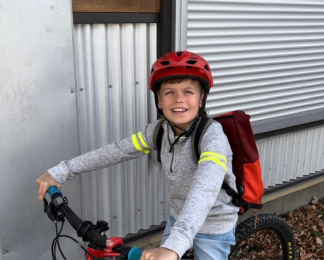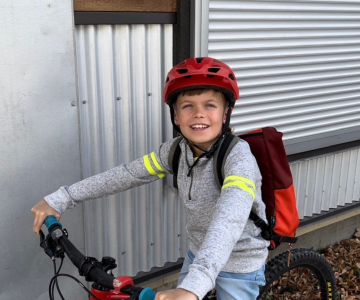

Body image refers to how a person sees or perceives their appearance, and the feelings associated with that viewpoint. As humans, we often compare ourselves to those around us and this comparison may affect the way we eat, dress, or treat each other.
Our body image is connected to our self-esteem. Self-esteem is how we value and respect ourselves as a person. Self-esteem affects how we take care of ourselves emotionally, physically, and spiritually.
It's important to embrace ourselves and our differences to realize the beauty every person has and how uniqueness enhances life experience.
“Positive body image isn’t believing your body LOOKS good. It’s knowing that it IS good, regardless of how it looks.” – Dr. Lindsay Kite
What does it mean to be body positive?
Learning how to have, and teach others, about body positivity is important for communities, parents, guardians, and educators alike. The Body Image Fact Sheet has a lot of information that everyone can benefit from. Here are outlined key actions to take to create a body positive environment.
Key actions to incorporate in your day-to-day life:
- Avoid connecting food, eating or activity to body size
- Avoid talking about our own, or other people’s body size or weight. Even positive comments can reinforce certain ideas we have about bodies.
- Learn more about who gains when we feel bad about our bodies (i.e., the diet and weight loss industry)
- Disassociate weight loss from healthy living activities, such as eating and exercise
- Remind ourselves and our friends, family, and colleagues that all bodies, no matter their shape, size, or ability, have inherent value
Embracing body image and acceptance of one’s body includes body neutrality. Body neutrality means being at peace with your body wherever it’s at. A stance toward body neutrality can help cultivate and maintain self acceptance when the body moves through different phases such as puberty, pregnancy, illness, and health.
5 tips to view your body positively
University of British Columbia doctorate and psychologist Kaylee Misener is an expert in positive body image. Her research focuses on clarifying what it means to have a positive body image, and how to get it.
Kaylee’s tips:
- Respect your body. Protect and accept your body by rejecting unrealistic media images and accept your body despite perceived imperfections. Learn more about media literacy.
- What are you giving up? What would you rather be doing than feeling bad about your body? Focus on enjoyment, movement, and functionality.
- Self-compassion is a skill – be your own best friend and champion
- Self-compassion is self-kindness + common humanity + mindfulness, which helps us stay in the moment without evaluation
- Keep good company – surround yourself with body positive people and influences
Getting help with your body positivity
At IH there are programs with Registered Dietitians that help people of all age (especially youth) work on developing a positive body image and body neutrality.
- Get free trusted advice from a dietitian by calling 8-1-1 or contact a dietitian online at www.healthlinkbc.ca/dietitian (anywhere in BC). Interpreters are available in over 130 languages.
- A physician or Nurse Practitioner can refer people to outpatient programing and eating disorder treatment services in Interior Health
- Private practice dietitians can be found using the find a dietitian page on Dietitians of Canada site
Resources
- Raising Kids with a Healthy Body Image
- National Eating Disorder Information Centre (NEDIC) offers a hotline, can connect to treatment resources, offers awareness and prevention information
- Embody offers many prevention and awareness resources
- To learn more about Interior Health’s recommendations for nutrition, visit our nutrition and food security page.
Get more stories like this
Sign up to receive the Stories@IH email digest twice a week to your inbox.
IH’s Healthy Community Development team worked with student nurses to help local governments make breastfeeding more supported and welcomed in communities.
/stories/breastfeeding-toolkit-helps-cities-support-inclusive-spaces
Talking to your teens about drugs shows you care they make safe choices—it doesn't encourage drug use. Here's how to have talks with an open heart and mind.
/stories/how-talk-teens-about-drugs-and-other-substances
Cottonwoods Care Centre coordinator Lia Sambrielaz has been sharing small acts of kindness at IH for 37 years.
/stories/we-are-ih-coordinator-motivated-help-long-term-care-clients
Our 9-part video series teaches about the purpose and importance of advance care planning (ACP) and why it gives peace of mind to you and your loved ones.
/stories/lets-talk-about-advance-care-planning-your-voice-your-choice
A funding initiative is helping the Cariboo Chilcotin Métis Association (CCMA) grow food security in ways that reflect knowledge, culture and community needs.
/stories/funding-helps-williams-lake-metis-community-support-food-security
Meghan Johnston became a registered psychiatric nurse after watching people struggle to navigate the health-care system and witnessing the barriers they faced.
/stories/we-are-ih-psychiatric-nurse-finds-meaning-crisis-team-role
STAY CONNECTED
Receive news, alerts, public service announcements and articles right to your inbox.