Want healthier indoor air? Test your home for radon gas
With the cooler months here, many of us are spending more time indoors. We keep doors and windows shut tight to keep the cold out and turn the heat on.
We may be warm and cozy, but the combination of closed doors and windows, and higher indoor heat, may be drawing in more of a harmful gas: radon.
A leading cause of lung cancer
Radon is the leading cause of lung cancer in non-smokers. And it’s the second-leading cause of lung cancer after smoking. In Canada, 16 per cent of lung cancer deaths are estimated to be caused by radon exposure, resulting in more than 3,000 lung cancer deaths each year.
Importantly, radon exposure—and the risk of cancer—can be prevented.
How do you know if you have radon levels in your home that exceed the Canadian Guideline? The only way to know for sure is to test.
Here we’ve broken down the steps to test your home for radon and take action if needed.

1. Purchase or borrow a radon detector or monitor
Get a long-term radon detector or electronic monitor that’s been approved or reviewed by a professional Canadian organization such as the Canadian Association of Radon Scientists and Technologists (CARST) or the Canadian National Radon Proficiency Program (C-NRPP).
A long-term detector is relatively inexpensive and very easy to deploy. You simply open the package and let the detector sit in your home for a full three months (91 days or longer). After 91 days, you mail the detector to the lab for analysis.
We recommend these options if you’re interested in a long-term detector.
- Order a detector test kit from BC Lung Foundation. The Radtrak3 Alpha Track Detector is sold for $49.99 and includes shipping to your door and lab analysis.
- Order a do-it-yourself radon detector test kit from one of the Canadian Association of Radon Scientists and Technologists (CARST) list of recommended do-it-yourself radon test kit suppliers, or Take Action on Radon’s list of companies. Prices vary.
- Order a radon detector test kit from Evict Radon and participate in Canada’s national research study.
A continuous electronic monitor operates on batteries or plugs in. While they’re more expensive, you get continuous, average readings 24/7 on a display or via a mobile app. You can also reuse them to test different locations around your house, test different buildings and even lend one to your friends and family.
Consult this comparison report published by the Canadian National Radon Proficiency Program (C-NRPP) to find a monitor that has passed the C-NRPP’s performance test.
You can also borrow a continuous electronic radon monitor through the BC Lung radon library lending program. Note that you can borrow a monitor for up to four weeks only, which is less than the recommended 91 days. We suggest you follow up with a longer-term test.
2. Test for radon
Here are some general guidelines for testing.
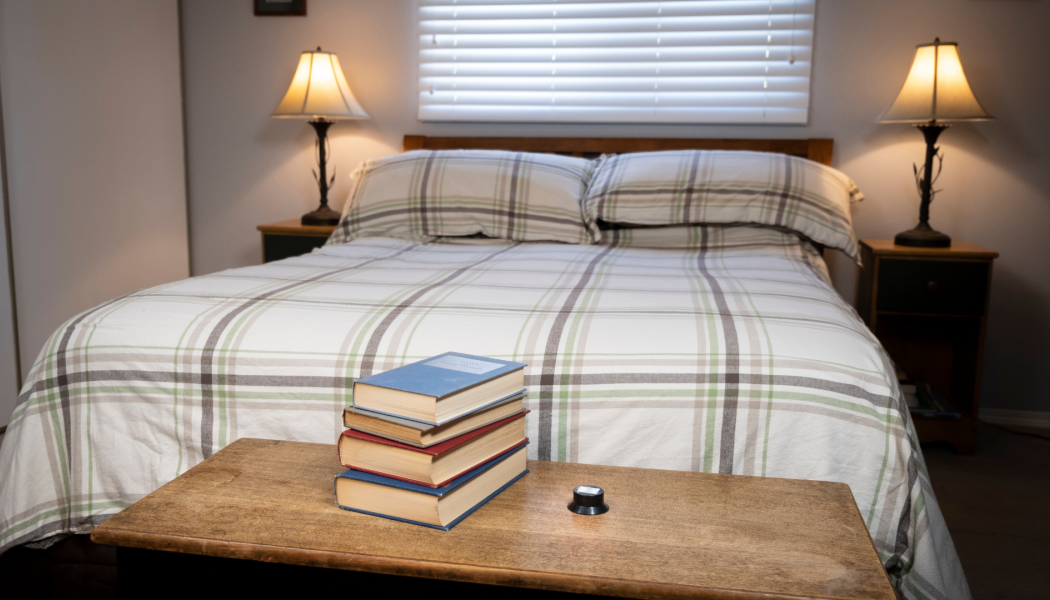
- Place the detector or monitor in the lowest level of your home where you might spend on average four or more hours per day, for example, a spare bedroom in the basement.
- Leave the detector or monitor in the same spot for the entire test period and for at least 91 days. Electronic monitors can provide data in as little as two weeks, but longer-term (91 days or more) testing is recommended.
- Test during the winter (November to March) when radon levels are likely to be higher.
Read Health Canada’s dos and don’ts for long-term detector testing
3. Take action to lower radon levels in your home
There are quick and cost-effective methods to lowering radon levels in your home, and longer-term actions you can take.
In the short term, you can:
- Limit time spent in basements (radon comes from the ground, is heavier than air, settles in lower levels, but also makes its way throughout the home)
- Open windows on your main floor to increase air flow
- Increase air flow using your heating, air conditioning and ventilation (HVAC) system
- Sleep on the main or upper floor of your home
Longer term, you can:
- Seal cracks in your basement
- Seal dirt crawlspace floors with a skim coat of concrete or sheets of poly (vapour barrier)
- Seal openings in the concrete floor of your basement or crawlspace, such as around sump pits, pipes and conduits
- Understand that even the best sealing will not stop all the radon; you must still test after sealing
- Install a low wattage radon fan to capture the air below the foundation and redirect it outside. Also known as an active soil depressurization (ASD) system, this can be simple if your home was constructed with radon rough-in works
A certified radon mitigation professional can assess your home, conduct tests and make recommendations for mitigation.
A Homeowner's Guide to Radon (Canadian Real Estate Association)
I live in a newly built or newer home. Do I need to test for radon?
The short answer is yes.
Even well-constructed homes with a vapour barrier below the foundation slab, thick concrete and sealed joints can have high radon levels.
Since 2012, builders in regions of B.C. where radon prevalence is high have been required to install radon rough-in works when they construct a home foundation. In late 2014, the B.C. Building Code changed such that rough-in works had to be extended outdoors so that it was easier for homeowners to add a booster fan.
Today, all buildings across the province occupied more than four hours per day are required to have rough-in works.
Rough-ins, however, don’t mitigate radon: they provide the infrastructure to activate a mitigation system. Once you do a long-term test (91+ days) for radon, you’ll know if the rough-in needs to be boosted with a fan, which is not required as part of the rough-in works.
You should also re-test for radon if you undertake significant renovations, such as changing HVAC equipment, installing new windows, adding weather stripping or insulation, or finishing a basement.
In general, testing every five years is recommended, and every two years if you’ve installed a mitigation system to make sure it’s still protecting your home.
Learn more
Learn more about radon gas, its health hazards, and how to lower your exposure on our radon gas page.
BC Lung Foundation hosts annual radon webinars. Learn about new research, case studies and community action. Everyone is welcome.
Check out more stories like this
Inspired by the strength and openness needed to care for families during one of life’s most transformative moments, Rachel pursued a career in health care.
/stories/we-are-ih-midwifes-journey-care
Hantavirus is a rare but serious disease caused by inhaling hantaviruses in old rodent droppings or urine. Learn how to protect yourself while cleaning.
/stories/cleaning-shed-attic-cabin-or-barn-protect-against-hantavirus
Living well at home as you grow older is possible with some forethought and planning. Explore IH services and community resources that support you in your home.
/stories/how-live-well-home-well-your-senior-years
Two new modular homes have arrived at Sunnybank Retirement Centre, marking a major step in the Town of Oliver’s Housing for Healthcare Workers Initiative.
/stories/new-modular-homes-oliver-support-health-care-workers
When Dr. Elena Schroeder decided to pursue medicine, her goal was to always learn and grow. Today, she’s a leader helping shape the future of health care.
/stories/we-are-ih-cranbrook-hospitalist-continues-learn-and-grow
If you’re concerned about your child’s communication skills, the earlier they see a speech-language pathologist, the better the outcomes—and it’s free.
/stories/your-child-never-too-young-see-speech-language-expert
STAY CONNECTED
Receive news, alerts, public service announcements and articles right to your inbox.