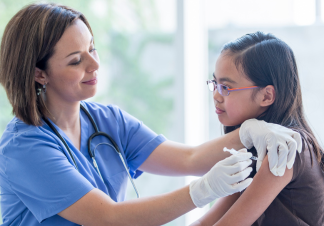
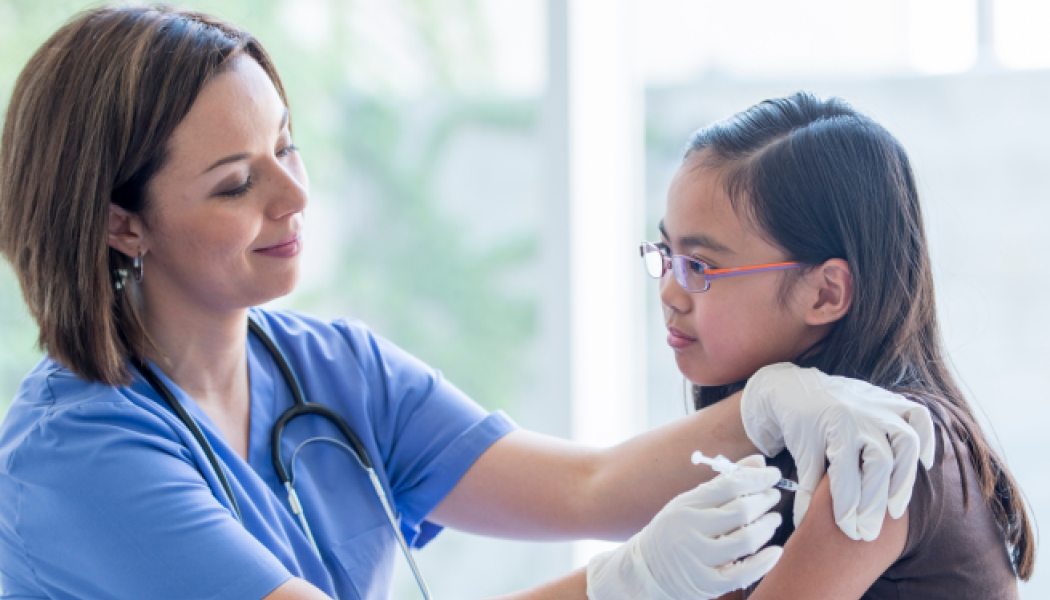
Immunization and vaccines are important throughout your life. Vaccines are products that produce immunity to a specific disease. Immunization (or vaccination) protects people from disease by introducing a vaccine into the body that triggers an immune response.
Read on to find out five important things you should know about immunizations and vaccines, and visit our Immunization and vaccines page for more information.
In this Story…
1. Immunization starts early in your child’s life and continues as they grow up
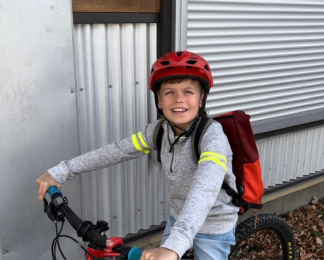
Getting your child vaccinated, and vaccinated on time, is one of the most important things you can do to make sure they’re protected from diseases like whooping cough, meningitis and chickenpox. You’re able to get your baby immunized against diseases soon after they’re born. Your baby will be offered vaccines at two, four, six, 12, and 18 months of age. Visit our Infant & Child Immunization page to learn how to get your child immunized and how you can keep track of your child’s immunization record.
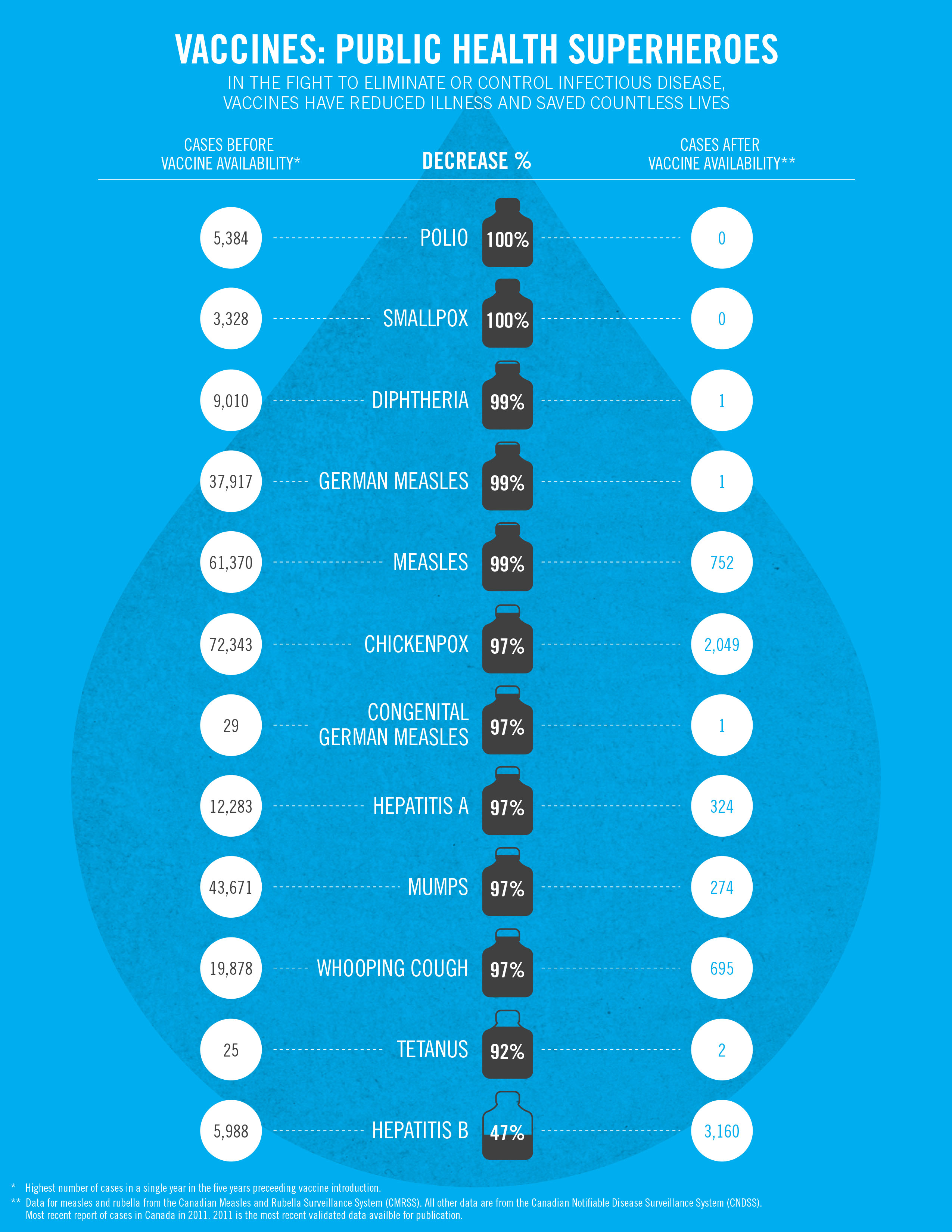
Check out this infographic from the British Columbia Pediatric Society about how vaccines have reduced illness and saved countless lives.
The vaccination process continues as your child gets older and begins school. Their protection from childhood vaccines can wear off, putting them at risk of new disease as they enter their pre-teen years. Check out our School-Age Children & Youth Immunization page to learn how children are immunized based on their grade level. The page also explains how all B.C. students are required to have their complete immunization record in the Provincial Immunization Registry.
2. Vaccines are recommended in adulthood
The need for vaccinations does not stop as you get older, as there are many vaccines recommended for adults. Some of these vaccinations are given for free. All adults in British Columbia can get a booster of tetanus and diphtheria vaccine every 10 years. If you missed your basic series of vaccines in childhood, or depending on your health, age and other risk factors, you may also be able to get more free vaccines to protect against harmful diseases. Visit our Adult Immunizations page for a complete overview.
3. Vaccines prevent diseases like the flu, COVID-19 and certain cancers
Vaccinations stops transmissible diseases from spreading from person to person and infecting communities. Annual vaccines are provided for the flu, a contagious respiratory infection that can in some cases lead to serious illness, hospitalization, and death in severe cases. Visit our Influenza (Flu) Vaccines page to learn how to get your flu shot.
Vaccines also help stop the spread of COVID-19. Data has shown that people who receive the booster dose (highest level of protection) of the monovalent vaccine (targeting the original COVID-19 virus) have significantly higher protection than people who are unvaccinated.
A bivalent COVID-19 vaccine targets two COVID-19 strains: the original COVID-19 virus and the Omicron BA.1 virus. Health Canada has approved the Moderna Spikevax Bivalent COVID-19 vaccine for use as a booster dose for people 18 years of age and older. This is the first COVID-19 vaccine with two strains available in Canada. This vaccine is expected to provide better protection against the Omicron strains that are making people sick in the community.
Visit our COVID-19 Children Under 12 Vaccines to learn how to register your child, book their appointment and what the appointment process is like. For those over the age of 11, visit our COVID-19 Immunization Clinics page.
Human Papillomavirus (HPV) vaccines protect against infection from types of human papillomavirus that cause certain cancers like cervical and mouth cancers. A 2019 study showed that the HPV vaccine cut pre-cervical cancer rates in B.C. by more than half. The HPV9 vaccine is provided free to girls and boys in Grade 6. Learn more at HPV (Human Papillomavirus) | Immunize BC.
4. Travel immunizations protect you from illness on your trip
Trips are great ways to explore new and exotic places, but can also expose you to illnesses. If you plan on travelling, it’s important to get the recommended or required immunizations before you go. Some countries require you to have certain immunizations before you enter the country. Visit our Travel Immunizations page to see what immunizations you will need based on your vacation plans and how you can get immunized.
5. Vaccines save lives – no one is safe until everyone is safe
As noted on ImmunizeBC’s Reasons to vaccinate webpage, vaccines have saved more lives in Canada than any other medical intervention in the past 50 years. For example, in the early 1900s, before introduction of the polio vaccine, thousands of Canadians were paralyzed or died from polio. Thanks to vaccination, Canada has been polio-free for the last 20 years.
Check out this infographic from the Government of Canada illustrating the effectiveness of vaccination.
It's also important to be aware of vaccine equity, which means that not all people have the same access to vaccines. To help other countries fight the COVID-19 pandemic, Canada has pledged to donate the equivalent of 200 million vaccines (in actual doses and funds to purchase doses) through COVAX by the end of 2022. There is still more to do in Canada and globally to ensure equitable access to life-saving vaccines.
Driven by a passion for helping others, former lifeguard Tomas Hucul entered health care to make a positive impact on people’s health and well-being.
/stories/we-are-ih-recruitment-assistant-driven-values
Kathleen Johnson cares full-time for her 88-year-old father, Don. Apple Valley Adult Day Services gives her much-needed respite a few days each week.
/stories/adult-day-services-supporting-father-daughter-their-own-social-outings
Keep you and your loved ones safe with these tips to prevent drowning when enjoying water activities.
/stories/how-enjoy-lakes-pools-and-rivers-safely-summer
Learn about the many steps you can take to reduce exposure to wildfire smoke and protect your health.
/stories/tips-protect-yourself-poor-air-quality-wildfire-smoke
Bats play an essential role in our ecosystem, but can carry diseases like rabies. Learn the steps to take if you come in contact with a bat, alive or dead.
/stories/what-you-need-know-about-bats-and-rabies
After 16 years in the UK, nurse Chinenye “Phina” Uwakwe chose Interior Health and Vernon, B.C., for a new chapter in her nursing career.
/stories/uk-nurse-moving-vernon-looks-forward-new-chapter
STAY CONNECTED
Receive news, alerts, public service announcements and articles right to your inbox.