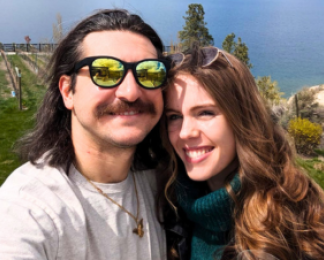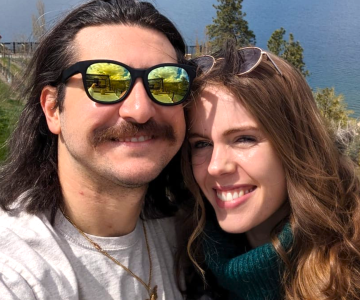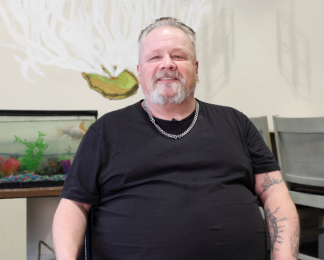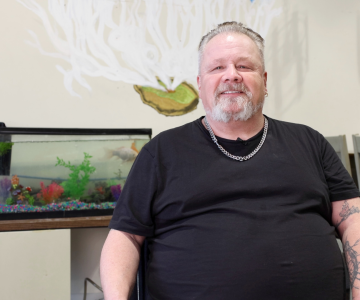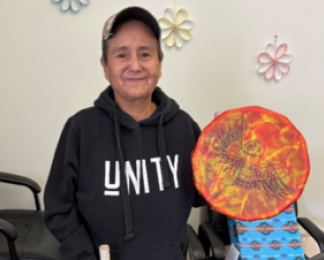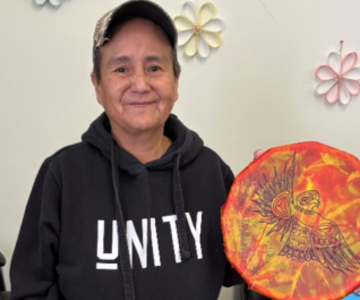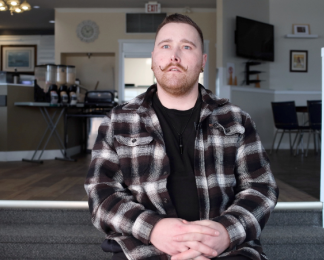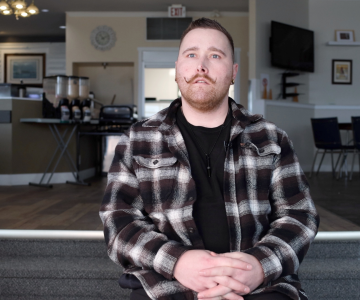
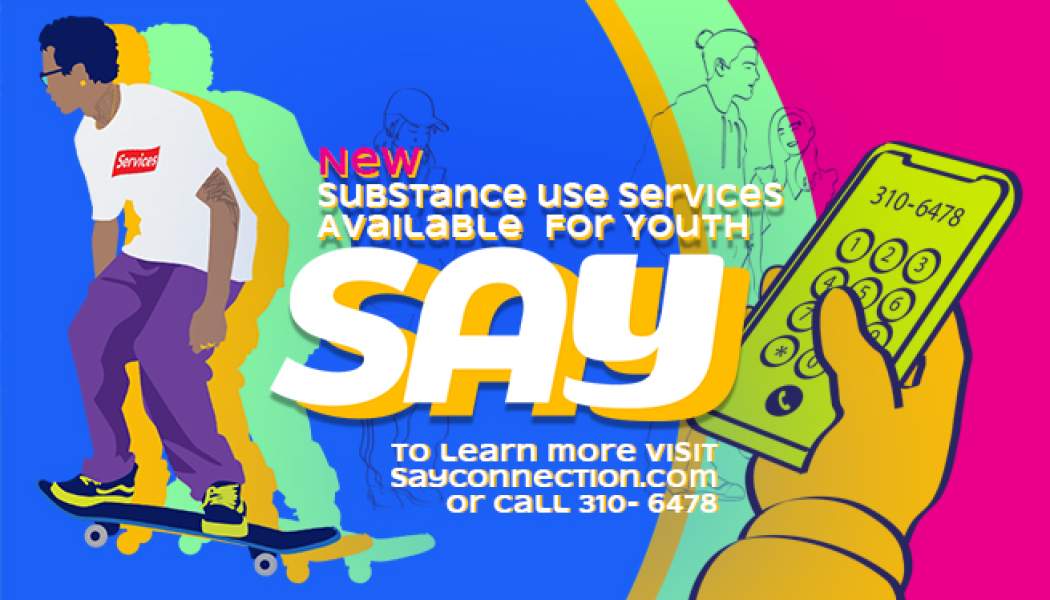
Brynn and Hayden are youth in the Interior who have lived experience with substance use. They teamed up with Interior Heath to promote new services for their youth peers.
The SAY project was launched in 2023 to promote the new substance use services Interior Health created specifically for youth across the region. Hayden and Brynn (not their real names) helped create the campaign to spread the word about these services.*
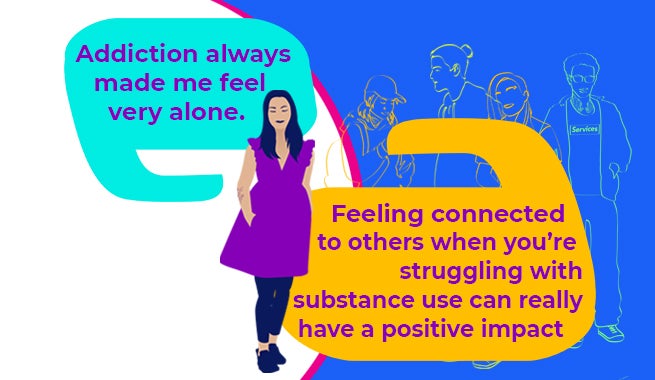
Addiction always made me feel very alone
Brynn: When I was struggling with starting my recovery journey, one thing that really helped was talking to others who understood the struggles I was going through, others who didn’t judge my situation but encouraged me to believe in myself. Addiction always made me feel very alone. But even working on the SAY campaign with another youth who has been through similar struggles made me feel like I wasn’t alone.

Hayden: I have been able to take action as a youth with lived/living experience of substance use, and take some of the stigma I have experienced and turn it into learning opportunities for other people. In my eyes, being involved in an Interior Health-wide large-scale project is also a good way to break misconceptions about youth with lived/living experience of substance use.
Brynn: I really enjoy being a part of the SAY project because I think it’s really important for youth to be able to have a community of people who are non-judgmental.
Feeling connected has a positive impact

Brynn: Feeling connected to others when you’re struggling with substance use can really have a positive impact and can make starting your recovery journey a little bit easier. I know for me personally, when I felt alone, I didn’t feel like I had the strength to reduce my substance use or start on my recovery journey. I think when people who are struggling with substance use are empowered and feel supported and listened to, it’s easier for them to stay on that recovery path. For me it definitely was.

Hayden: Stigma and shame often push people who use substances away from their prior and present support systems. Whether the stigma be at school, work or home, or from friends, family or community, it all has an impact.
Stigma happens and it never helps anyone
Hayden: Partly due to stigma, my social connections often diminished over the period of experiencing a substance use disorder. Creating new or re-establishing old connections was often an important part of the process when trying to change my relationship with substances.
Addiction is not a moral flaw
Brynn: One thing I’d like to say to youth struggling with substance use is that addiction is not a moral flaw. You can get through this, keep trying, every day counts, every step counts. Just because you struggle with these things doesn’t mean your character is flawed, it’s okay to not be okay. It’s also okay to ask for help, you don’t have to do this alone, there are people out there who want to see you be successful and who want to support you. If you think you aren’t strong enough, prove yourself wrong. Recovery is possible for anyone. Having those non-judgmental connections when you’re struggling with substance use can really make a difference.

Brynn: I think it’s really important for youth struggling with substance use to be able to feel seen and heard. In my opinion, when you have someone who can see past your struggles and help you realize your own strength, it’s a lot easier to take those steps towards your end goal.
Dismantling internalised stigma helps with self-perception
Hayden: These networks supported me in restructuring the way I saw myself. The people I got connected with assured me that I still deserved love, respect and compassion, no matter what drug I was using, or no matter how much someone told me I was not deserving. Dismantling some of the internalized stigma that I felt helped me to see myself in a more positive and caring way.

Brynn: Somebody who really helped me through my recovery journey was my substance use counsellor from Foundry. I felt heard by her, I felt like she saw past my substance use and actually saw me. She was really good at helping me change my language to be more positive and forgiving to myself. For example, when I would tell her I went a certain amount of time without using substances but ended up using them again at some point, she would focus on the positives of that situation. Instead of me saying “I went a day without using substances but I ended up using again so that was pointless,” she said, “You went a whole day without using substances! That’s great, the smallest steps count and that’s one step closer to where you want to be.”
Brynn: When I felt like that person actually wanted to see me succeed and they understood the cause of the struggles, not just the struggles themselves, I was able to have more confidence about my recovery and it was easier for me to stay on the path I wanted to be on.
Hayden: Getting connected isn’t just connecting with services, treatment and formal support. Getting connected also means trying to find community or getting connected to your culture and traditions. For example, I got connected to communities, networks and organizations made up of bright, intelligent and successful people who currently use and who formally used drugs.
Hayden: I often participated in the weekly meetings that one of these networks held, where I was able to share, learn and connect with others and feel supported. Getting involved with this network helped me make more positive choices around my health and substance use, connected me with other services in our community, and I met people who supported me in a non-judgmental way.
Connect with someone non-judgmental and supportive

Brynn: One of the goals of the project is to encourage youth to call the phone line at 310-MHSU (6478) to find out what is available where they live. When a youth calls the number, they get connected with someone who is non-judgmental and supportive about all the options they have. I think it’s really important to not feel judged when trying to start your recovery journey because it can make you feel more alone which makes the journey a little harder. It’s okay if you don’t actually know what you need when you call. The person on the other end wants to support whichever path you end up choosing, and most importantly they can help you discover all the different options that best suit what you feel you need.

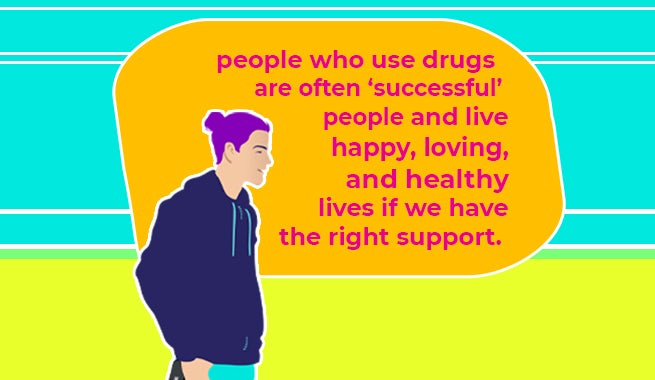
Hayden: When someone cared about my health and wellness and saw through all the stereotypes and stigma against me, it helped me to care about myself. It helped me make better health choices for myself. And it gave me reassurance and hope that the people who told me I would grow up to be nothing, were wrong. It was proven to me over, and over and over again that people who use drugs are often ‘successful’ people and live happy, loving and healthy lives if we have the right support.
Hayden: These organizations also empowered me to speak up about my experiences and use the positive and negative experiences I have had to help support other youth. I have also been supported in informing and collaborating with all kinds of service providers, health organizations and even the provincial health authorities! I have gotten so many amazing opportunities (including this one) through getting connected to networks. One I got connected to was the Interior Health Peer Engagement & Inclusion Program. Through this network, I was supported in informing service providers, services and others using my positive and negative experiences. I was also connected to a strong network of other people who use/used substances, allies and advocates who could support me in connecting with services or support all across the province.
See related SAY posts
Brynn and Hayden have a SAY to help youth find substance use help
Reducing harm is an empowering approach, part of a recovery job
Enjoyed this story?
Sign up to receive the Stories@IH email digest twice a week to your inbox.
*The opinions in this blog are those of individuals with lived experiences.
Tineke was the first policy specialist hired at IH. For two-plus years, she has helped organize many IH policies.
/stories/we-are-ih-policy-specialist-finds-joy-her-role
Recent regulatory changes are making it easier for U.S.-trained lab professionals to find a job in Canada. Attractive benefits make the move north enticing.
/stories/why-us-medical-lab-professionals-are-looking-work-canada
As a doula, Sage Thomas attended a home birth where the family integrated Indigenous ceremonial practices. She’s now practising midwifery in her home community.
/stories/tkemlups-te-secwepemc-grad-offers-midwifery-care-close-home
Thirty-five years into her career with IH, Elizabeth Adolph still loves what she does: taking care of residents at Mountain View Lodge in Lillooet.
/stories/we-are-ih-care-aide-proud-residents-consider-her-friend
In the 5 years since the In Plain Sight report was released, we’ve made strides towards being a culturally safe organization—but there’s more work to do.
/stories/ihs-fifth-plain-sight-response-supports-reconciliation
Inspired by her aunt’s career as a pharmacist, Angela became a pharmacy technician to use the hands-on aspect of compounding to benefit patient care.
/stories/we-are-ih-pharmacy-tech-enjoys-problem-solving-patients
STAY CONNECTED
Receive news, alerts, public service announcements and articles right to your inbox.